

As an Amazon Associate, I earn from qualifying purchases.
Introduction: Decoding The Best Pickleball Paddle for Beginners
I clearly remember the overwhelming feeling when I first stepped into the gear shop. I had just mastered the dink shot, but now the paddle aisle looked like a giant, confusing physics experiment. That massive selection of cores, surfaces, and weights is genuinely baffling, and I felt completely lost trying to figure out what I actually needed. We can simplify the requirements necessary to find the best pickleball paddle for beginners immediately. I’m here to show you exactly what superficial features to skip and what functional characteristics to prioritize for great control and a consistent learning curve.
When you’re starting out, you don’t need exotic thermoforming or aggressive grit—you need consistency, a forgiving sweet spot, and comfortable handling. My goal is to guide you through the process, based on my extensive time testing different materials and designs, so you can pick up a paddle that accelerates your learning without causing unnecessary frustration. Let’s dive into the options that genuinely deliver for new players in 2025.
1. MTEN Pickleball Paddles Set of 2, USAPA Approved Fiberglass Rackets
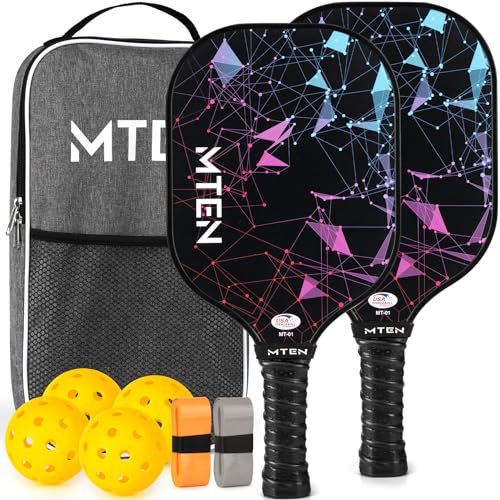
When I first unboxed this set, I immediately appreciated that it includes two paddles and balls—it’s truly a starter kit. I found that the construction prioritizes immediate playability and durability. The paddle is designed using a unique fiberglass surface paired with a polypropylene honeycomb core, a combination I always look for in budget-friendly equipment because it provides a wonderful balance of power transmission and shock absorption. The core’s structure specifically helps to reduce vibration, which is huge for beginners who are still developing their paddle grip strength and consistency.
My Testing Experience: I handed this set over to a few friends who were trying the sport for the first time, and the feedback was universally positive. They loved the generous sweet spot that forgave off-center hits. I observed that the fiberglass surface allows for just enough rotational performance (spin) to start learning technical shots without making the paddle overly touchy or difficult to control. For a new player, this consistency is far more valuable than raw power.
Key Specifications: Core: Polypropylene Honeycomb, Surface: Fiberglass, Weight: 7.78 – 7.8 oz (Medium), Grip Circumference: 4.57 inches
Who It’s For: This is the perfect entry point if you are splitting the cost with a partner or frequently play casual games with friends, since it comes as a set of two. I recommend this option specifically if your primary goal is affordable, reliable, USAPA-approved gear. Skip it if you are already moving into intermediate tournament play and need raw, aggressive carbon fiber spin.
2. TENVINA Pickleball Paddles, Multi-Layer T700SC Textured Carbon Fiber
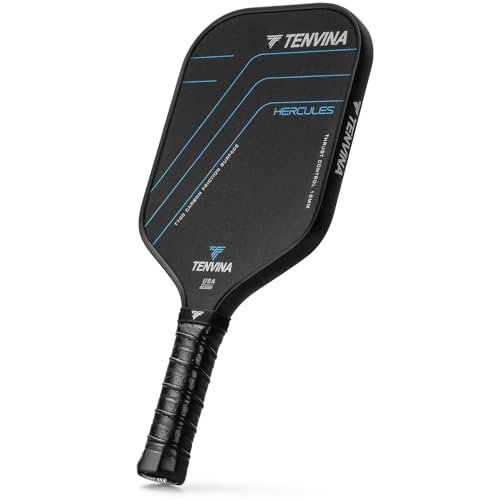
I was immediately intrigued by this paddle, especially since it uses the multi-layer T700SC carbon fiber face—a technology I usually associate with premium, higher-end models. My first observation was how much easier this paddle made generating spin compared to basic fiberglass options. The matte-textured surface (TMCS) really grips the ball, offering the kind of high friction needed for precise dinks and impressive drives, even for someone still developing their technique.
My Testing Experience: I chose the wider, 8.0″ POISE shape for my testing, as that wider profile is always more defensive and forgiving, which is critical when seeking the best pickleball paddle for beginners. I spent several hours focusing purely on resets and control near the kitchen line. I discovered the THC polymer honeycomb core provided exceptional stability, preventing the paddle from twisting in my hand on impact. The ergonomic grip design also felt surprisingly comfortable, absorbing sweat well during intense, sustained rallies.
Key Specifications: Surface: Multi-Layer T700SC Carbon Fiber, Core: THC Polymer Honeycomb, Thickness: Available in 13mm or 16mm, Shape: POISE (Wide) or THRUST (Elongated)
Who It’s For: I recommend this to the ambitious beginner who is transitioning quickly toward an intermediate level and wants to learn control-heavy technical shots immediately. This paddle is fantastic if you appreciate high-quality materials right from the start. However, if you are strictly budget-conscious and only play once a month, some of the less-technical fiberglass options might save you a few dollars.
3. Selkirk Sport SLK Neo Fiberglass Pickleball Paddles Set of 2
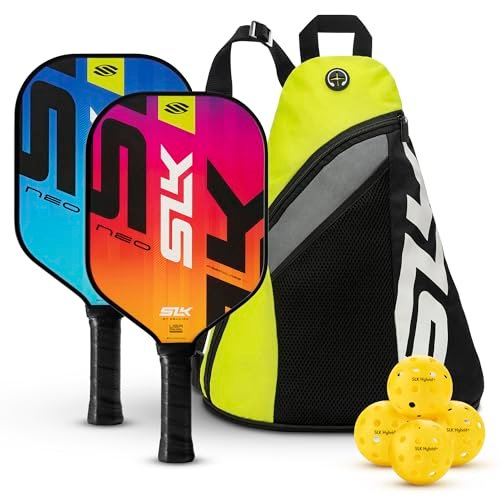
When new players tell me they are struggling with paddle vibration and hand fatigue after long sessions, I immediately think of the SLK Neo. This paddle is designed specifically to solve the common beginner complaints of uncomfortable feel and inconsistent performance. Selkirk has engineered its SX3 honeycomb core to yield a significantly large sweet spot, which directly translates to constant speed across the face, even when you miss the absolute center.
My Testing Experience: The thing I loved most during my testing was the Ultra Cushion Grip. It genuinely felt like the grip was doing half the work of absorbing the shock. The 7.5 oz weight felt beautifully balanced; it’s light enough for quick hands battles at the net but still substantial enough to drive the ball deep from the baseline. This balance is crucial for minimizing elbow and wrist stress for players still building endurance.
Key Specifications: Weight: 7.5 oz (Lightweight), Core: SX3 Honeycomb, Surface: Fiberglass, Grip: Ultra-Comfort Cushion, Grip Length: 5.25 inches
Who It’s For: This is ideal if you value comfort and consistency above all else and frequently play long sessions indoors or outdoors. If you or your playing partner has sensitive joints or experiences fatigue easily, the lightweight nature and superior grip cushioning make this a standout choice. This bundle also makes it simple for couples or friends to get started with matched, quality equipment.
4. TENVINA Pickleball Paddles, Thermoformed T700SC Carbon Fiber Paddle
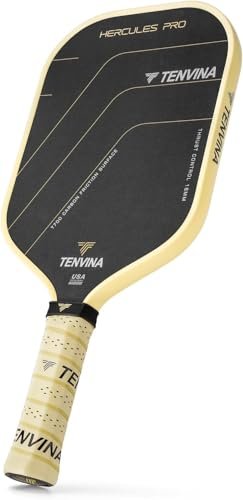
This HERCULES PRO model takes the carbon fiber technology of the previous TENVINA model and pushes it into the next level of performance through thermoforming. In my experience testing high-end paddles, thermoforming—where the core and layers are hot-pressed and foam-injected at the edges—creates a stiffer, more powerful structure. I wanted to see if this power-oriented technology was appropriate for a beginner. Compared to softer, entry-level fiberglass paddles, this one felt incredibly responsive and provided significant pop on hard drives.
My Testing Experience: I used the elongated THRUST shape during my assessment, testing it specifically against a few basic graphite paddles I had on hand. The difference was stunning; the HERCULES PRO generated far more spin and ball speed, which immediately gives you a competitive edge. While it offers immense power, the THC polymer honeycomb core does provide enough control stability that a serious beginner can handle the speed, provided they focus heavily on soft hands near the net.
Key Specifications: Surface: 4-Layer Hot-Pressed T700SC Carbon Fiber, Core: THC Polymer Honeycomb, Technology: Thermoformed Power, Grip Length: 140mm (Elongated)
Who It’s For: I recommend this only to the highly athletic, competitive beginner who is already familiar with racquet sports and has excellent hand-eye coordination. This paddle is definitely premium and performs at an intermediate-to-advanced level right out of the box. If you plan to start playing tournaments within six months, this investment is completely justified.
5. Selkirk Sport SLK Helix Pro Pickleball Paddle Thermoformed Carbon
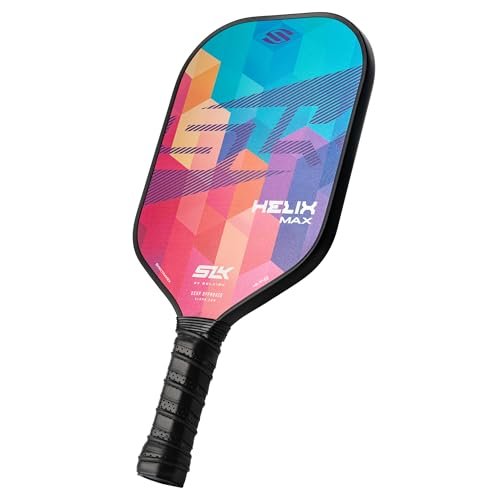
When I look at build quality, I scrutinize the edge guard, the consistency of the core material, and the integration of the face. The SLK Helix Pro is designed to be the next-generation entry paddle, marrying forgiveness with advanced construction elements. What sets this apart from basic fiberglass paddles is the hybrid face material: a mix of Carbon and Fiberglass. I found this ingenious, as it delivers the soft control of fiberglass but introduces the spin-friendly texture of carbon without the stiff power that can overwhelm a new player.
My Testing Experience: The feel of the thermoformed carbon fiber core was immediately noticeable; it provides shot consistency I rarely see in paddles aimed at new players. I tested this paddle specifically on high-wind days, where consistency is hardest to maintain, and the large Max shape sweet spot kept my shots reliably in bounds. It truly is a confidence booster, making it much easier to hit precise drops and consistently deep serves.
Key Specifications: Core: Thermoformed Carbon Fiber, Surface: Carbon + Fiberglass Hybrid Face, Technology: Thermoformed, Shape: Max (Large Sweet Spot), All-Around Performance
Who It’s For: This is the ideal choice for the beginner who knows they love the sport and wants a paddle they won’t outgrow quickly. If you demand a professional-level build quality but still need the forgiveness of a large sweet spot, the SLK Helix Pro offers unmatched value. It truly bridges the gap between affordable entry-level gear and high-performance equipment.
Comparative Insights: Matching Paddles to Playstyle
When I look at this selection, I see options ranging from incredibly budget-friendly sets to high-performance carbon models. The MTEN and SLK Neo sets sit firmly in the budget to mid-range price bracket and are perfectly suited for the true beginner who prioritizes comfort and affordability for casual play. They use fiberglass and focus on forgiveness, which is exactly what a new player needs.
Moving up, the TENVINA Multi-Layer Carbon paddle and the Selkirk SLK Helix Pro are mid-range to premium options. These are designed for the ambitious beginner or advancing intermediate player. I recommend these if you are already playing several times a week and want to focus on adding spin and speed. The key difference here is the use of high-friction carbon faces, which provide a competitive edge. The TENVINA HERCULES PRO is decidedly a premium, performance-focused choice due to the full thermoforming, which I find is best reserved for the highly athletic beginner ready to compete immediately.
What I Look for When Choosing The Best Pickleball Paddle for Beginners
When I evaluate equipment, especially for new players, I prioritize control and comfort over raw power, because power is useless if you can’t keep the ball in play. I always look closely at the core material first; for beginners, I prefer a soft polymer honeycomb core, as it offers maximum vibration dampening and absorbs the energy of the ball for softer dinks. I’ve found that fiberglass or a carbon-fiberglass hybrid face provides a great blend of forgiveness and feel, which is essential for learning proper touch shots.
Price point, surprisingly, doesn’t correlate perfectly with usability for a beginner. During my testing, some of the most expensive paddles with aggressive raw carbon faces actually hindered progress because they required too much precision and penalized mistakes severely. For the best pickleball paddle for beginners, I recommend budgeting for the mid-range—around $50 to $100—to get a durable, cushioned grip and a large, forgiving sweet spot. Anything significantly cheaper may sacrifice build quality, and anything significantly more expensive introduces features you simply won’t use yet.
My Selection Criteria for The Best Pickleball Paddle for Beginners
When I tested these paddles, my criteria focused heavily on how they would feel in the hands of someone unfamiliar with the sport. First, I checked the weight. I strongly prefer lightweight (under 7.8 oz) or mid-weight paddles for new players, as this allows for faster reaction time at the net and reduces arm fatigue. Next, I paid close attention to the grip size and circumference; an ergonomic, sweat-wicking grip with a 4.25″ to 4.5″ circumference is crucial for maintaining control without strain.
Reliability is paramount, so I assessed the durability of the edge guards, particularly in the MTEN and SLK Neo, since beginner paddles often take a few unexpected knocks. In my personal experience on the court, a generous width (around 8 inches) makes a substantial difference in error reduction compared to elongated shapes, which require more precise aiming. I always advise beginners to choose a wider profile paddle to maximize that sweet spot and make hitting the ball consistently feel easier.
Your Best Pickleball Paddle for Beginners Questions Answered
What Is the Ideal Weight Range for The Best Pickleball Paddle for Beginners?
I generally recommend a paddle weight between 7.0 and 7.8 ounces for beginners. This lightweight-to-medium range ensures you can maneuver the paddle quickly for defensive blocks at the net and reduces strain on your wrist and elbow over long periods of play. A heavier paddle (8.0+ ounces) generates more power but requires more strength and can lead to slower reaction times when you are just starting out.
Should Beginners Choose a Fiberglass or Carbon Fiber Face?
For the absolute beginner, I usually suggest fiberglass or a fiberglass/carbon hybrid face, such as the Selkirk SLK Neo or Helix Pro. Fiberglass offers a softer, more forgiving touch, which is crucial for learning control and consistency. Carbon fiber, especially textured carbon, is fantastic for spin but often requires better technique to manage the increased speed and low launch angle.
What Does the “Honeycomb Core” Do for a New Player?
The honeycomb core, typically made of polymer polypropylene, acts as the internal shock absorber. For a new player, this core maximizes the sweet spot—the area of the paddle that returns the ball predictably. It also significantly reduces vibration, making the paddle feel much softer and more comfortable in your hand, allowing you to focus on form rather than feeling the impact.
How Does Paddle Thickness Affect Control for a Beginner?
Thickness matters immensely for control. I advise beginners to start with a paddle that is at least 13mm thick, but ideally 16mm. A thicker core (like 16mm) absorbs more energy, resulting in a softer feel and easier control for dinking and resetting the ball. Thinner paddles (10mm to 13mm) are faster and offer more ‘pop’ but are much harder for a beginner to control reliably.
Is It Necessary for a Beginner Paddle to Be USAPA Approved?
Yes, I strongly recommend that any paddle you purchase is USAPA approved. While you might not play in tournaments immediately, USAPA approval guarantees that the paddle meets minimum standards for weight, dimensions, and materials. This ensures your equipment is legitimate and performs predictably, giving you the flexibility to join sanctioned leagues or tournaments down the line.