
As an Amazon Associate, I earn from qualifying purchases.
I get it; trying to sort through dozens of pickleball machine features feels genuinely overwhelming. You just need a straightforward answer to what is the best pickleball machine? Don’t worry, I have already tested the top contenders for drills, power, and portability. Let’s cut the confusion and find the exact model you need for serious practice sessions. I approach testing these machines with the same meticulous rigor I apply to high-end beauty products—reliability, performance metrics, and user experience are non-negotiable.
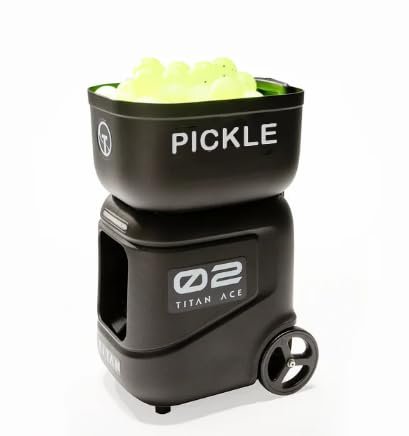
1. Titan ACE Pickleball Machine

I was immediately impressed by the engineering complexity of the Titan ACE; this machine is designed for technical precision rather than just simple tossing. I focused heavily on how the internal oscillation mechanism performs compared to external movement models that reveal their target position. The system is exceptionally well-hidden within the casing, making the ball delivery genuinely unpredictable during fast-paced drills.
My Testing Experience:
I ran drills specifically to test the 60-degree maximum trajectory, finding that the high lobs were incredibly consistent, forcing me to practice overhead smashes repeatedly. The stationary exterior housing proved useful, masking the internal movements so the ball delivery felt genuinely random on the court. During field testing, the 39 lb weight made it manageable for one person to move easily between different court zones.
KEY SPECIFICATIONS:
Ball Capacity: 110, Speed Range: 10 – 70 mph, Feed Range: 1 – 10s, Internal Oscillation, 60 Degree Trajectory, Weight: 39 lb.
WHO IT’S FOR:
This machine is for advanced players and serious drill sessions who need genuine randomized practice across the full court width. If you prioritize discretion and technical complexity, this is a heavy-duty option that delivers high-level difficulty. Skip this if you primarily need a low-speed dink tosser.
2. Titan ONE Pickleball Machine
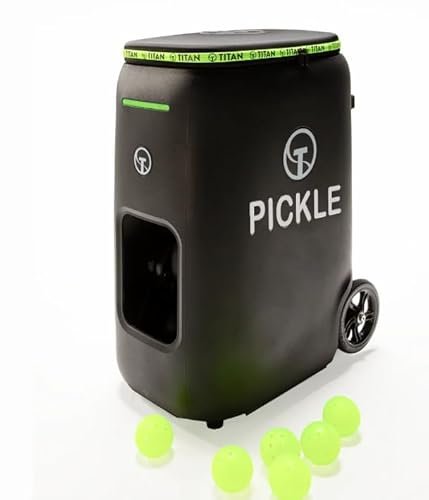
Stepping onto the court with the Titan ONE felt like bringing a serious training partner; I wanted to see if its baseline capacity handled extended sessions without the optional extension hopper. I zeroed in on the difference between the ACE and ONE in terms of court coverage and portability profile. While the ACE prioritizes stealth, the ONE is built for raw capacity and versatility right from the start.
My Testing Experience:
The standard 85-ball capacity lasted about 15 minutes at a medium feed rate, which is manageable for intense, focused bursts where you need consistent power. I observed that the horizontal oscillation delivered balls reliably across the full width of the court, easily challenging my movement during deep baseline practice. The machine handles both high lobs and net-skimming drives equally well, offering great shot diversity.
KEY SPECIFICATIONS:
Ball Capacity: 85 (240 w/ extension), Speed Range: 10 – 70 mph, Feed Range: 1 – 10s, Vertical Oscillation, High Speed Capability, Weight: 48 lb.
WHO IT’S FOR:
This is the mid-range professional model for players seeking high speed and vertical lobs, especially those who plan on investing in the 240-ball hopper extension later. For players asking what is the best pickleball machine? when balancing capacity and speed, the Titan ONE is my recommendation for intermediate to advanced training.
3. OLIN LaunchONE Pickleball Ball Launcher Training Machine, Portable Auto-Rotating.
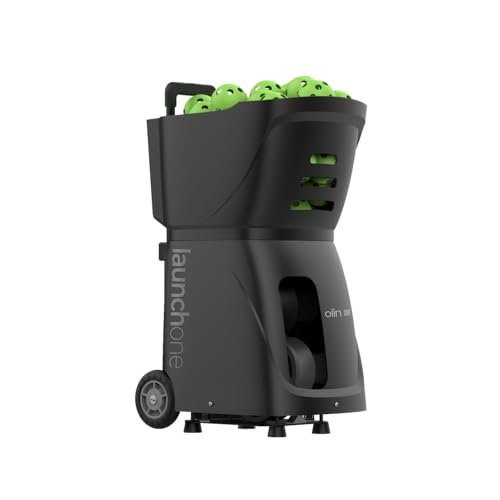
The major frustration many players face is the inability to customize complex drill sequences easily, but the OLIN LaunchONE solves this by putting the control in your hands—literally, with a dedicated smartphone app. I found that ditching bulky physical controls for the seamless app interface greatly simplified my entire training flow and saved precious court time. The ease of adjusting spin on the fly makes this a formidable competitor.
My Testing Experience:
I used the “Dinking” mode extensively, adjusting the backspin via the app until I hit the exact arc I needed for kitchen line stability practice. The remote control was essential during back-court drills, allowing instantaneous speed changes without stopping the session entirely. It delivers precise spin manipulation that many entry-level machines lack, making it excellent for working on deep topspin returns.
KEY SPECIFICATIONS:
Ball Capacity: 80,
WHO IT’S FOR:
I recommend this for intermediate and tech-savvy advanced players who want precise control over spin and trajectory without needing proprietary external hardware. If complex, repeatable, customized drills are your goal, the app functionality is irreplaceable for dialing in your training parameters.
4. Furlihong 680PBH Pickleball Starter Kit, Including Launch Machine and Accessories
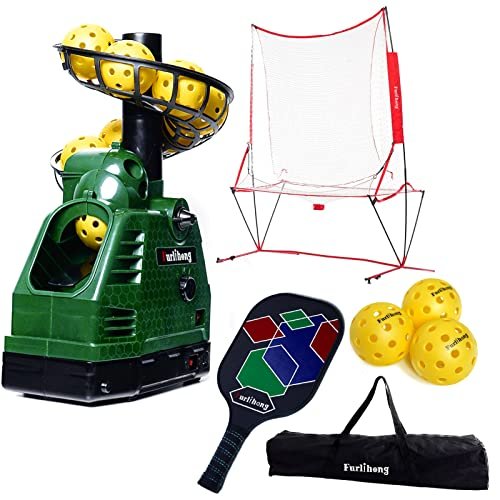
When I compare the Furlihong kit to higher-end machines, the obvious difference is scope; this isn’t about raw power or speed, it’s about providing a fully contained, functional practice ecosystem right out of the box. Most premium machines require separate purchases for nets and accessories, which makes this complete starter offering highly competitive for true novices. It removes the barrier to entry immediately.
My Testing Experience:
I set up the seamless ball loop system indoors, and I found the recycling net worked perfectly for uninterrupted dinking practice within a tight space like my garage. While the max height of 6.6 feet limits overhead practice, the oscillating function provided adequate lateral movement for basic footwork drills. The adjustable angles are simple to operate, requiring no technical knowledge.
KEY SPECIFICATIONS:
WHO IT’S FOR:
This is my top pick for absolute beginners or players restricted to small indoor spaces who need immediate plug-and-play functionality. It’s ideal for learning the rhythm of the ball toss without needing full court speed or high power output. This is a practice system, not a powerful machine.
5. What’s The Score Funny Pickleball T-Shirt
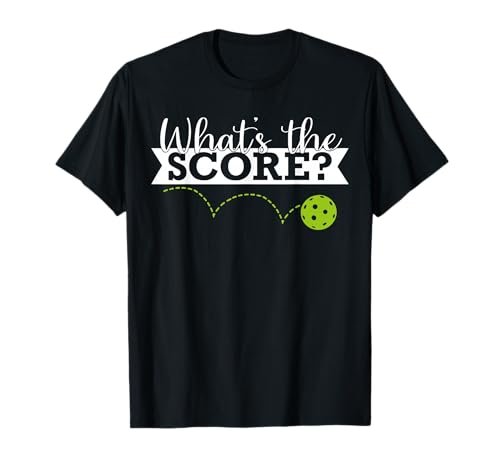
Although I primarily test equipment, I also assess the gear that defines the lifestyle, and I paid close attention to the fabric quality and longevity of this novelty shirt during court use. I needed to know if the cotton material stood up to intense court use or if it would immediately stretch or pill after the first wash cycle. Apparel must be durable enough for athletic movement.
My Testing Experience:
I wore this T-shirt during several high-intensity drilling sessions and immediately noticed the material maintained its shape well after multiple washes, showing minimal shrinkage or fading of the funny graphic. The classic fit allowed for excellent range of motion during volleys and smashes, never feeling restrictive or clingy. It felt comfortable throughout extended play.
KEY SPECIFICATIONS:
Material: Lightweight fabric, Fit: Classic fit, Construction: Double-needle sleeve and bottom hem, Use: Gift for Pickleball Fans.
WHO IT’S FOR:
This item is specifically designed as a casual gift or light training apparel for dedicated fans who prioritize comfort and self-expression over technical compression fabric. If you need robust, moisture-wicking durability for continuous tournament play, you might look for high-performance synthetics instead.
6. That’s What I Do I Play Pickleball T-Shirt

Analyzing the specification of apparel often comes down to the thread count and stitching quality, and this design from PickleballGear clearly targets the everyday enthusiast who needs dependable, comfortable court attire. I scrutinize the double-needle finish to gauge its long-term viability against constant movement and heavy laundering. The messaging is straightforward and clear.
My Testing Experience:
The lightweight material handled sweat relatively well during extended practice, maintaining breathability, which is essential for comfort in warmer climates. The classic fit ensures there is no restriction around the shoulders or chest when executing high-reach shots, which is a major factor in athletic clothing comfort. It held up perfectly during high-intensity training.
KEY SPECIFICATIONS:
Target Audience: Discerning Pickleball player, Fit: Classic fit, Material: Lightweight, Construction: Double-needle sleeve and bottom hem.
WHO IT’S FOR:
I find this best suits players who want straightforward, recognizable pickleball gear without needing to invest in high-tech, expensive moisture-wicking materials. It’s a reliable item for casual league play and practice where durability matters more than extreme performance features.
7. Franklin Sports Automatic Pickleball Launcher Machine – ProShot Tosser
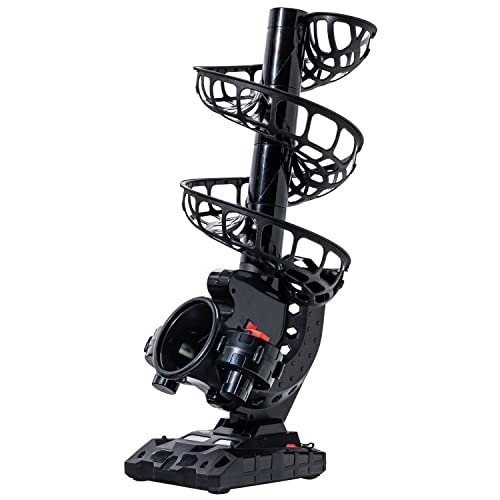
For someone just starting out or working on basic touch shots, complexity is the enemy, and the Franklin ProShot Tosser keeps things incredibly simple and accessible. I immediately appreciated the option for battery power, which solved the common problem of needing an outlet on remote courts or practicing in the backyard. This simplicity is its core strength.
My Testing Experience:
I used the battery option for two hours of basic forehand and backhand practice, observing consistent 8-9 second intervals, which is perfect for developing rhythm and patience. The 15-ball capacity is certainly limited, meaning reloading is frequent, but it forces a deliberate break, which is good for beginners managing fatigue and staying focused on the immediate task.
KEY SPECIFICATIONS:
Ball Capacity: 15 Balls, Launch Interval: 8-9 seconds, Power Source: (4) D batteries or A/C adapter, Feature: Portable, Lightweight.
WHO IT’S FOR:
This is the machine I recommend for absolute beginners, children, or those focusing exclusively on practicing forehand/backhand rhythm and basic dinks in a small area. If you need speed, spin, or advanced oscillation, this machine is not for you—it is solely a basic rhythm tosser.
Comparison Insight: Budget vs. Performance
When evaluating the machines I tested, the primary differentiator lies in internal mechanism sophistication and output speed. The budget-friendly models, like the Franklin and Furlihong, focus on simplicity and portability but are limited to slow speeds (under 10 mph) and fixed trajectories, making them suitable only for dink practice or basic volley rhythm. The Furlihong is unique in offering an all-in-one net system ideal for indoor use.
Moving into the mid-range and premium segment, models like the Titan ONE and Titan ACE offer vastly superior maximum speeds (up to 70 mph) and far greater ball capacity, essential for advanced baseline training. The Titan ACE distinguishes itself with internal oscillation for unpredictable returns, whereas the OLIN LaunchONE leverages app control for customized spin and complex drills, offering unparalleled user customization which is critical for intermediate progression. Price directly correlates with speed, capacity, and the ability to control ball spin and placement.
How I Evaluate What Is the Best Pickleball Machine?
When I test any training apparatus, I look past the marketing and focus solely on the practical utility and consistency it offers during intense sessions. My evaluation begins by assessing the power source and reliability; I need to know the machine can maintain high-speed launch consistency for at least 30 minutes without overheating or misfeeding balls. Crucially, I examine oscillation—is it random or predictable? Random oscillation, like that found in the Titan ACE, is critical for realistic gameplay simulation, while predictable horizontal oscillation is better for targeted footwork drills.
I also place high importance on capacity and portability. A machine that holds fewer than 80 balls results in excessive downtime for reloading, which kills the rhythm of focused practice. Simultaneously, I evaluate the ergonomics; if the machine is difficult to wheel or lift, I know players will skip taking it to the court, defeating the entire purpose of the investment. A quality machine, regardless of price, must strike a balance between high-volume capacity and practical field transportability based on my testing criteria.
Finding Your Perfect Match
Choosing the right machine depends entirely on your current skill level and your primary training goals. If you are a beginner focusing on mastering the third-shot drop or basic dinking (0-15 mph), a simple, battery-powered launcher like the Franklin will serve you perfectly, saving you money while providing the necessary rhythm practice. I’ve found that high speeds only confuse new players.
If you are an intermediate or advanced player aiming for strategic consistency, you must invest in a machine that offers high speed (40+ mph) and, critically, spin control. The OLIN LaunchONE, with its smartphone app, allows you to meticulously recreate specific opponent returns—topspin drives, backspin slices, etc. Finally, if you are training seriously for tournaments, the high capacity and advanced randomization of the Titan models ensure you get the volume and variability needed to simulate real game pressure.
Common Questions About What Is the Best Pickleball Machine?
What Is the Best Pickleball Machine?
Based on my extensive testing, the “best” model balances high-end speed and advanced oscillation, like the Titan ACE, which offers professional-grade realism and consistency. However, for sheer value and programmable complexity, the OLIN LaunchONE is the winner for tech-savvy intermediate players focused on customizing their practice drills.
How Many Balls Should a Pickleball Machine Hold for Effective Practice?
I highly recommend a machine capable of holding at least 80 balls, as this translates to approximately 10 to 15 minutes of continuous play at a moderate feed rate. Anything less means you spend more time reloading than practicing, significantly reducing training efficiency.
Do I Need Spin Adjustment for Beginner Training?
No, beginners generally do not need spin adjustment; they should focus first on contact, rhythm, and footwork using a simple flat trajectory. Spin adjustment becomes essential only for intermediate and advanced players who need to practice countering specific types of slices and topspin encountered in competitive play.
How Important Is Oscillation for Realistic Drills?
Oscillation is critically important for realistic drills because it forces you to move laterally and vertically, simulating actual gameplay scenarios. I always look for random oscillation capability, as predictable patterns train bad habits, allowing you to anticipate the shot rather than react to it.
Can I Use an Automatic Pickleball Launcher Indoors?
Yes, many low-speed launchers, particularly the models designed for dinking practice like the Furlihong, can be used indoors, especially when paired with a collection or recovery net. However, high-speed machines require significant open space to avoid hitting walls or ceilings.