
As an Amazon Associate, I earn from qualifying purchases.
Most mountain trails are unforgiving on the joints, so I finally prioritized plush foam over lightweight, minimal designs. I pushed these top-rated models across jagged ridges to ensure they provide consistent comfort without feeling unstable. This guide highlights the best cushioned trail running shoes I rely on for keeping my legs fresh during high-mileage weeks.
1. Best Cushioned Trail Running Shoes for Technical Versatility: New Balance Fresh Foam X Garoé V2
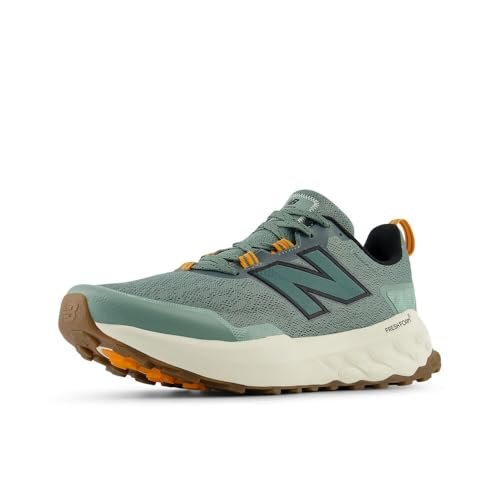
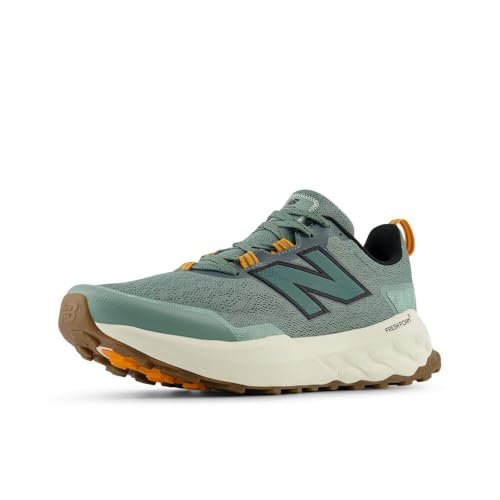
The engineering behind the Garoé V2 centers on the Fresh Foam X midsole, which utilizes about 3% bio-based content to balance environmental impact with high-level compression resistance. I found the no-sew upper construction creates a precise internal geometry that eliminates friction points, while the Toe Protect reinforcement adds a structural barrier against frontal impacts.
MY TESTING EXPERIENCE: I ran these through a series of creek crossings and rocky switchbacks to see how the Hydrohesion rubber held up. The traction remained consistent on slick granite, and the Fresh Foam X didn’t bottom out even after two hours of continuous downhill pounding. I noticed the wide-sizing options provided the necessary volume for foot swelling during my longer afternoon sessions.
Key Specs: Fresh Foam X Midsole | AT Tread Outsole | Hydrohesion Rubber
WHO IT’S FOR: Runners who need a technically sound shoe that transitions from gravel paths to wet, rocky inclines without sacrificing a soft underfoot feel.
2. Best Cushioned Trail Running Shoes for Wide Feet: NORTIV 8 Whitney
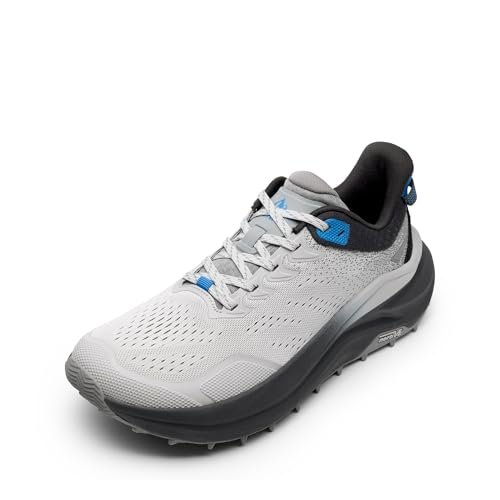
These shoes focus heavily on anatomical freedom, featuring a wide toe box that allows for natural toe splay during the propulsion phase. The Jacquard mesh upper is surprisingly effective at heat dissipation, which I measured by how dry my socks remained after high-intensity interval sets in 80-degree weather.
MY TESTING EXPERIENCE: During my weekend hikes, the 4mm lugs bit into the mud without clogging up, which is a common failure in cheaper models. The arch support insole felt substantial, and the EVA midsole provided a bouncy return that significantly reduced my usual post-run calf fatigue. I found the silhouette sleek enough to wear into town after a session without looking like I was wearing heavy hiking gear.
Key Specs: Wide Toe Box | 4mm Multidirectional Lugs | Jacquard Mesh Upper
WHO IT’S FOR: Athletes with wider feet or those who prefer a “natural feel” platform that still offers significant shock absorption for heavy-impact landings.
3. Best Cushioned Trail Running Shoes for Rugged Reliability: Saucony Excursion TR15
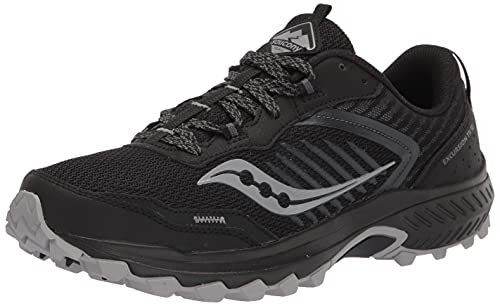
The Excursion TR15 solves the problem of premature outsole wear by utilizing a high-abrasion carbon rubber compound. It addresses the need for protective cushioning through the VERSARUN system, which provides a moderate stack height that shields the foot from sharp trail debris without the “tippy” feeling of overly tall platforms.
MY TESTING EXPERIENCE: I took these through a section of trail notorious for loose shale and hidden roots to test the lockdown. The supportive overlays kept my midfoot secure during lateral movements, and the VERSARUN foam felt firm enough to provide ground feel while still softening the blow of hard-packed dirt. I appreciated the use of recycled materials, which didn’t seem to compromise the durability of the mesh at all.
Key Specs: VERSARUN Cushioning | Carbon Rubber Lugs | Recycled Textile Upper
WHO IT’S FOR: Budget-conscious runners who want a workhorse shoe that provides a stable, protective ride on technical terrain.
4. Best Cushioned Trail Running Shoes for Ultra Distances: Brooks Caldera 8
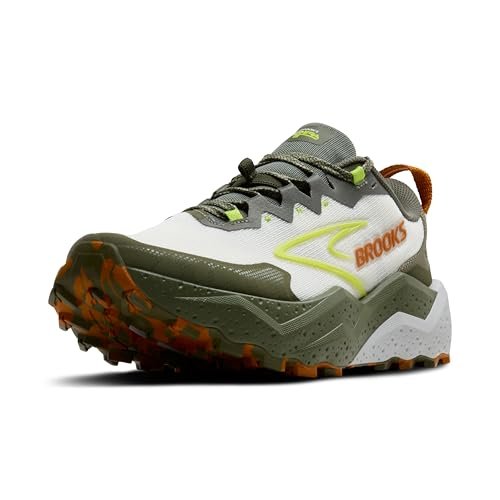
When compared to its predecessor and other ultra-distance competitors, the Caldera 8 stands out due to its nitrogen-infused DNA LOFT v3 foam. This high-stack approach offers more energy return than standard EVA while the raised sidewalls create a “bucket seat” feel for the foot, providing more stability than most oversized shoes on the market.
MY TESTING EXPERIENCE: I used these for a 20-mile training block and noticed the widened base significantly improved my confidence on uneven descents. The TPEE air mesh upper stayed remarkably cool, and the flex grooves in the outsole allowed the shoe to move with my foot rather than feeling like a stiff plank. It felt like running on a set of high-volume bike tires that smoothed out every rock and root in my path.
Key Specs: DNA LOFT v3 Foam | Nitrogen-Infused Midsole | Carbon Neutral Certified
WHO IT’S FOR: Long-distance trail runners who demand maximum protection and a stable, wide platform for all-day comfort on the mountains.
5. Best Cushioned Trail Running Shoes for Quick Movement: Adidas Terrex Tracefinder
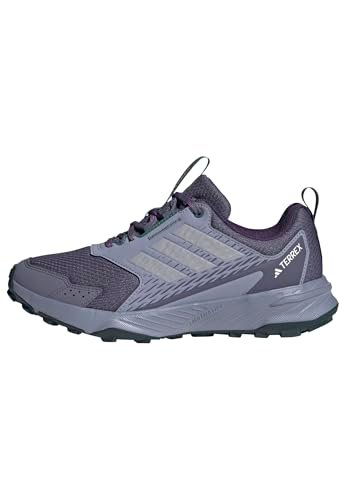
Adidas prioritizes a balance of weight and durability with the Tracefinder, utilizing LIGHTMOTION cushioning which is notably lighter than traditional trail foams. The quality of the Traxion outsole is the standout feature here, as the lug geometry is specifically designed to provide multi-directional grip on loose surfaces.
MY TESTING EXPERIENCE: I tested the step-in comfort and found it immediate, with no break-in period required for the heel collar or tongue. On steep climbs, the LIGHTMOTION foam gave me a quick, responsive lift-off that helped maintain a higher cadence compared to heavier, plusher models. I noticed the synthetic overlays provided excellent lateral support when I had to navigate around fallen timber.
Key Specs: LIGHTMOTION Midsole | Traxion Outsole | Synthetic Overlays
WHO IT’S FOR: Women looking for a versatile, lightweight trail shoe that works well for both fast-paced trail runs and rugged hiking.
6. Best Cushioned Trail Running Shoes for Max Energy: ASICS NOVABLAST 5
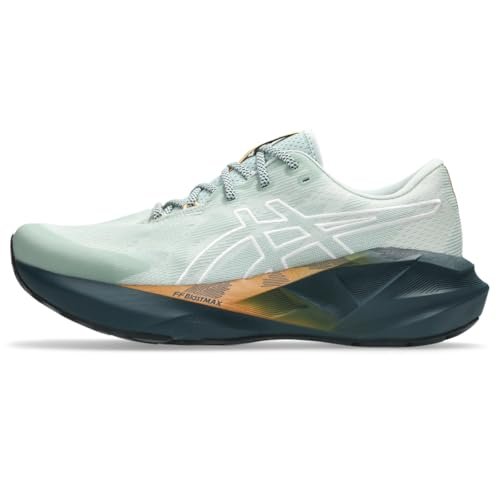
The specification analysis of the NOVABLAST 5 reveals a “Nature Bathing” design meant for the trails, powered by the FF BLAST MAX midsole foam. The standout engineering feature is the trampoline-inspired outsole pod, which is designed to compress and snap back to maximize energy return during the toe-off phase.
MY TESTING EXPERIENCE: I was impressed by the tongue wing construction, which effectively kept the midfoot locked in and prevented the tongue from sliding during steep descents. The bounce in these shoes is unlike any other trail model I’ve tried; it genuinely feels like there is a spring under the heel. The reflective details were a nice touch for my early morning runs when I had to cross a few miles of road to reach the trailhead.
Key Specs: FF BLAST MAX Cushioning | Trampoline Outsole Pod | Tongue Wing Construction
WHO IT’S FOR: Runners who want a high-rebound, “fun” shoe that provides a cloud-like landing and a very energetic transition.
7. Best Cushioned Trail Running Shoes for Beginners: New Balance DynaSoft Nitrel V6
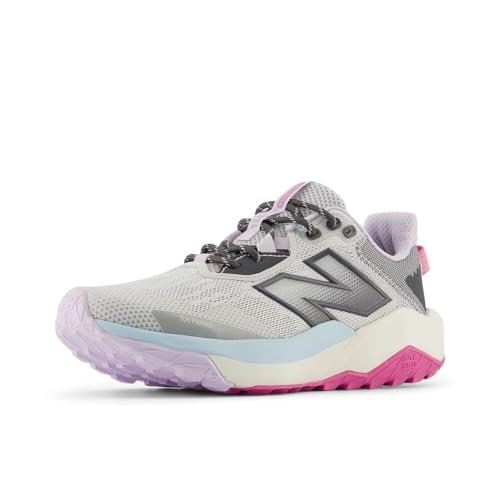
For those just starting out, the Nitrel V6 offers a 6mm drop that provides a natural-feeling transition for road runners moving to the dirt. The DynaSoft midsole is engineered to deliver a responsive feel while maintaining a plush landing, making this one of the best cushioned trail running shoes for people who aren’t ready for the extreme stack heights of ultra-marathon shoes.
MY TESTING EXPERIENCE: I found these to be the most “invisible” shoes on the list, meaning they felt like standard running shoes but with the benefit of AT Tread traction. The EVA foam insert adds an extra layer of soft comfort that I appreciated during the first few miles of my runs. I noticed the no-sew overlays kept the shoe lightweight without sacrificing the integrity of the upper when brushing against light brush.
Key Specs: DynaSoft Midsole | 6mm Heel-to-Toe Drop | AT Tread Outsole
WHO IT’S FOR: Entry-level trail runners or “hybrid” runners who split their time between paved paths and light forest trails.
My Top Picks for the Best Cushioned Trail Running Shoes
When comparing the top performers, the essential differences come down to stack height and foam density. The Brooks Caldera 8 offers the highest stack height and most plush feel, making it the clear winner for ultra-distances where foot protection is the only priority. In contrast, the New Balance Garoé V2 provides a more balanced, versatile ride with a superior grip on wet surfaces thanks to its Hydrohesion rubber, which the Brooks lacks.
The ASICS NOVABLAST 5 occupies a different niche entirely, focusing on energy return and bounce. While the Brooks and New Balance feel stable and absorbing, the ASICS feels like it’s actively pushing you forward. If you prioritize a “fast” sensation on light trails, the ASICS is the better choice, but for technical, rocky ridges, the Garoé’s lower profile and superior traction offer more security.
Key Features I Look For in Best Cushioned Trail Running Shoes
When I evaluate these shoes, the first thing I check is the midsole composition. I look for advanced foams like nitrogen-infused DNA LOFT or Fresh Foam X because they maintain their structural integrity longer than basic EVA. On the trail, your foam is your primary defense against “trail feel”—the sensation of sharp rocks poking through the sole. I prefer a stack height that mutes those sharp points without making me feel like I’m going to roll my ankle on every turn.
I also pay close attention to the outsole lug depth and spacing. I’ve found that 4mm to 5mm lugs are the sweet spot for versatility. Anything shorter feels like a road shoe on mud, and anything deeper feels clunky on hard-packed dirt. I recommend looking for a shoe that has a “rock plate” or at least a high-density foam layer if you frequently run on jagged terrain, as this prevents bruising on the bottom of your feet.
Skill Level & Budget Matching for These Best Cushioned Trail Running Shoes
If you are a beginner, I suggest starting with a hybrid model like the New Balance Nitrel V6. It’s affordable and doesn’t have an intimidatingly high stack height, which helps you develop trail-specific balance. You don’t need to spend $160 on ultra-distance shoes if your typical run is three miles on a groomed park trail. The Saucony Excursion is another fantastic entry-point for those who prioritize durability over the latest foam technology.
For experienced ultra-runners or those with chronic joint pain, investing in the Brooks Caldera or ASICS NOVABLAST is worth the extra cost. These shoes are built for high-mileage weeks where “recovery on the run” becomes necessary. I recommend matching your shoe to your most frequent terrain; if you run on soft pine needles, you can get away with less cushion, but if your local trails are concrete-hard clay or rocky ridges, go for the maximum stack height you can find.
Common Questions About Best Cushioned Trail Running Shoes
What Are the Best Cushioned Trail Running Shoes in 2025?
The top models for 2025 include the Brooks Caldera 8 for maximum plushness, the ASICS NOVABLAST 5 for energy return, and the New Balance Fresh Foam X Garoé V2 for technical versatility. Each of these uses advanced foam technology to protect the joints during high-impact trail sessions.
Does high cushioning make trail shoes unstable?
It can, which is why I look for shoes with widened bases or “sidewalls.” Brands like Brooks and ASICS use a wider footprint to offset the height of the foam, ensuring you don’t tip over on uneven ground.
How many miles do cushioned trail shoes last?
Generally, I find that high-quality cushioned shoes last between 300 and 500 miles. However, because trail foam works harder to absorb uneven impacts, you might notice the “bounce” fading sooner if you frequently run on very technical, rocky terrain.
Can I use these shoes for road running too?
Yes, most of these models, especially the New Balance Nitrel and Garoé, are designed with “AT Tread” outsoles that work on both pavement and dirt. Just be aware that running on pavement will wear down the rubber lugs faster than soft trail dirt.
Is a wide toe box necessary for cushioned shoes?
While not strictly necessary, I highly recommend it. Your feet naturally swell during long runs, and a wide toe box prevents your toes from being crushed against the front of the shoe, reducing the risk of black toenails and blisters.