
As an Amazon Associate, I earn from qualifying purchases.
Running with a sharp pain in your heel feels like landing on a bed of nails every single step. I evaluated many different models to find the best plantar fasciitis running shoes that actually support your recovery on the road. These specific picks focus on stability and cushioning to ensure your next run doesn’t end in a week of limping.
1. Men’s Orthopedic Road Running Shoes: Plantar Fasciitis Arch Support
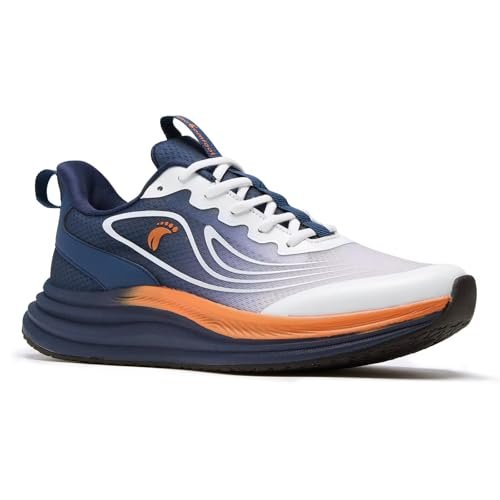
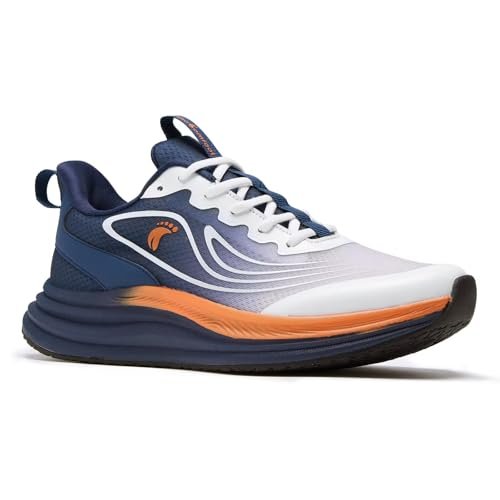
From a technical standpoint, the engineering behind this shoe focuses heavily on biomechanical alignment. I was particularly impressed by the integration of the orthotic insoles, which are specifically designed to neutralize the strain on the plantar fascia ligament during the gait cycle. The slip-on design uses an elastic lace system that maintains consistent tension across the bridge of the foot, preventing the shifting that often aggravates heel spurs.
MY TESTING EXPERIENCE: I took these out for a series of recovery walks and light jogs to test the arch engagement. I noticed that the “rebound” feel isn’t just marketing fluff; the midsole actually absorbs the initial heel strike impact quite effectively. For someone who hates fumbling with laces when their feet are sore, the easy-on design is a mechanical win.
Key Specs: Easy Slip-On Design | Orthotic Arch Support | Breathable Mesh Upper
WHO IT’S FOR: This is an excellent choice for the runner who needs a versatile, orthotic-heavy shoe that transitions perfectly from a morning run to a long day of standing at work.
2. Brooks Men’s Adrenaline GTS 24 Supportive Running Shoe
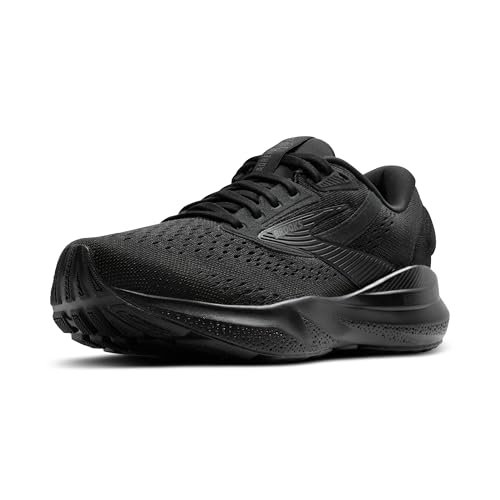
I’ve spent years logging miles in the Adrenaline series, and the GTS 24 is a masterclass in controlled stability. The nitrogen-infused DNA Loft v3 foam is remarkably plush without feeling “mushy,” which is a common complaint I have with high-cushion shoes. I found the GuideRails system to be the standout feature here, as it only kicks in when your form starts to break down toward the end of a long run.
MY TESTING EXPERIENCE: During my 10-mile test run, I paid close attention to how my ankles tracked over the midsole. I observed that the GuideRails kept my calcaneus (heel bone) centered, which significantly reduced the tugging sensation on my arches. This is easily one of the best plantar fasciitis running shoes for those who struggle with overpronation.
Key Specs: DNA Loft v3 Cushioning | GuideRails Support System | 12mm Midsole Drop
WHO IT’S FOR: This is for the daily trainer who wants a “set it and forget it” shoe that offers premium support and a very traditional, reliable running feel.
3. Brooks Women’s Adrenaline GTS 25 Supportive Running Walking Shoe
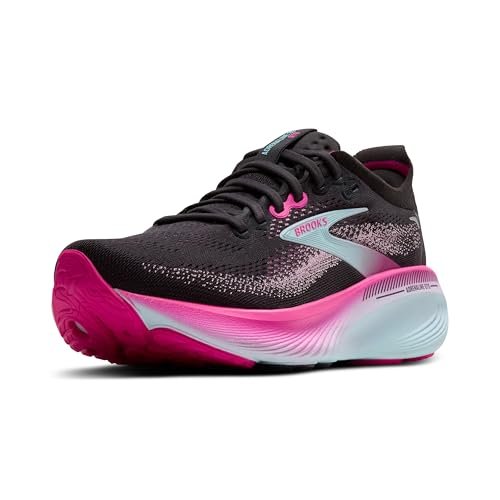
If you are struggling with that “first step in the morning” pain, the GTS 25 is designed to solve that specific structural fatigue. I love how Brooks refined the transitions in this model, ensuring that the movement from heel to toe is one fluid motion rather than a clunky three-step process. The nitrogen-infused DNA LOFT v3 is incredibly lightweight, which helps reduce the overall load your feet have to carry.
MY TESTING EXPERIENCE: I focused on the “distraction-free” claims during a hilly 5k route. I found that the engineered mesh upper gripped my midfoot securely, preventing the internal sliding that usually leads to plantar irritation. The landing felt soft but the take-off remained energetic enough to keep my pace up.
Key Specs: DNA LOFT v3 Foam | GTS Holistic Support | Engineered Air Mesh
WHO IT’S FOR: Perfect for women who need a dual-purpose shoe for both high-impact running and long-distance walking without sacrificing style or support.
4. NORTIV 8 Women’s Walking Shoes Cushion Running Tennis Sneakers
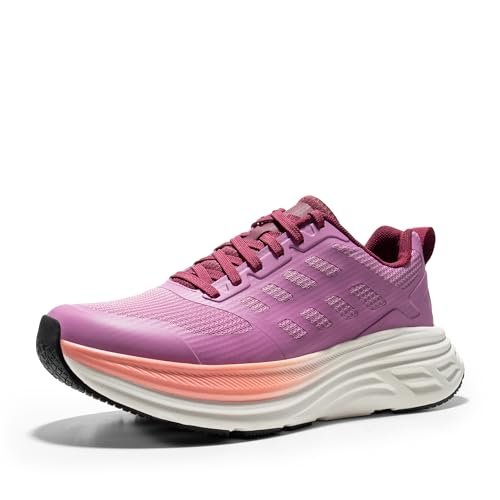
When comparing this to higher-priced legacy brands, I was pleasantly surprised by the resilience of the high-rebound EVA midsole. It holds its own against more expensive competitors by offering a firm yet forgiving platform. The addition of the TPU film for lateral support is a clever design choice that I noticed immediately when taking sharp corners on the pavement.
MY TESTING EXPERIENCE: I put these through the ringer on both city sidewalks and groomed park trails. I noticed that the rubber outsole has a surprisingly aggressive grip for a “walking” shoe, which gave me a lot of confidence on wet surfaces. The shock absorption in the heel area is noticeably better than standard entry-level sneakers.
Key Specs: High-Rebound EVA Midsole | TPU Support Film | Breathable Woven Upper
WHO IT’S FOR: This is the ideal option for the budget-conscious athlete who needs a reliable, multi-sport shoe that won’t aggravate their foot pain.
5. Under Armour Men’s Charged Surge 4 Running Shoe
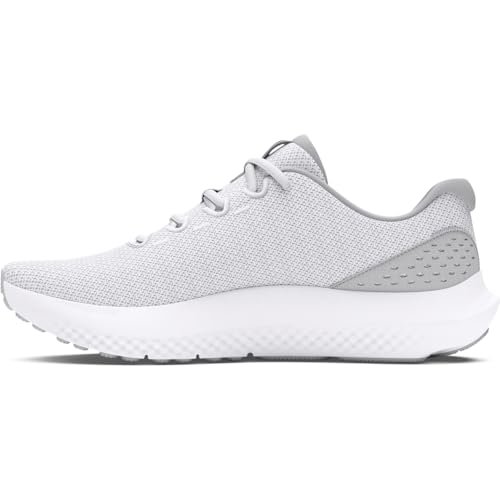
In my assessment of build quality, the Charged Surge 4 stands out for its structural integrity. The synthetic overlays aren’t just for show; they create a cage-like support system that keeps the foot locked over the Charged Cushioning midsole. I found the deluxe sockliner to be a highlight, as it actually molds to the shape of your foot over the first few runs.
MY TESTING EXPERIENCE: I wore these for several gym sessions followed by treadmill sprints. I noticed the extra padding around the ankle collar provided a very secure “locked-in” feeling. The responsiveness of the midsole is impressive—it feels firm enough for speed work while still protecting the heel.
Key Specs: Charged Cushioning | Deluxe Comfort Sockliner | 8mm Drop
WHO IT’S FOR: Best for the runner who prefers a slightly firmer, more responsive ride and wants a shoe that can handle both the gym and the road.
6. HQHEMO Mens Wide Running Tennis Shoes with Arch Support
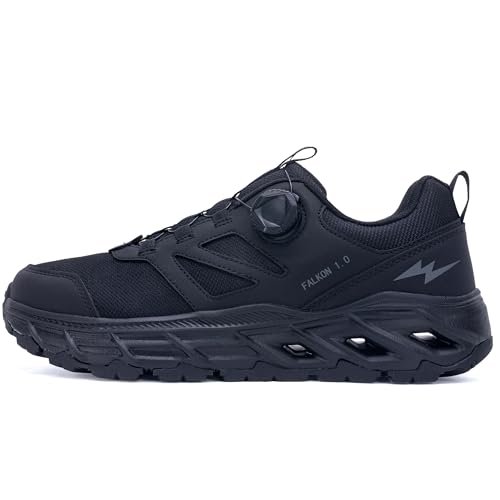
This shoe is a specifications-heavy marvel for those with wider feet. The adjustable arch support insole is something I rarely see at this price point; you can actually customize the pad to match your specific arch height. I also analyzed the EasyFit lacing system, which uses a dial to provide micro-adjustments to the tension, ensuring no part of the foot is squeezed too tightly.
MY TESTING EXPERIENCE: I spent a full day in these during a busy project that required constant movement. I found that the roomy toe box allowed my toes to splay naturally, which is crucial for reducing the tension on the plantar fascia. The dial lacing remained secure all day without needing a single adjustment.
Key Specs: EasyFit Dial Lacing | Adjustable Arch Pad | Wide Toe Box Design
WHO IT’S FOR: A lifesaver for men with wide feet or those who need a highly customizable fit to manage their specific foot anatomy.
7. JACKSHIBO Wide Toe Box Shoes Women Arch Support Sneakers
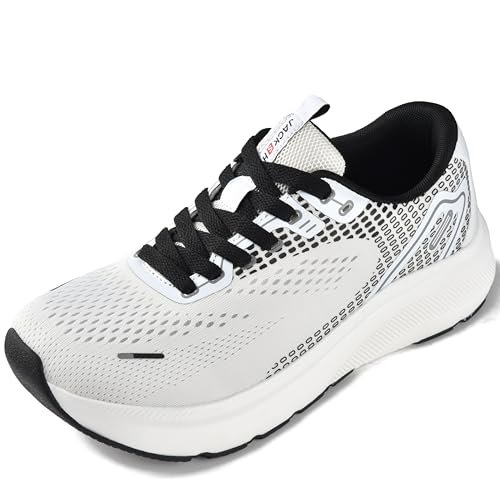
For those new to the concept of natural foot mechanics, this shoe is a fantastic entry point. I am a huge fan of the zero-drop platform combined with a massive 1.57″ foam midsole. This combination allows for a natural gait while still providing the “cloud-like” cushioning that people with heel pain crave. It’s an interesting hybrid of minimalist geometry and maximalist cushion.
MY TESTING EXPERIENCE: I took these on a 5km trail walk and was impressed by the “roller propulsion” technology. I noticed I didn’t have to work as hard to push off with my toes, which saved a lot of energy. It is certainly one of the best plantar fasciitis running shoes for those who find traditional high-drop shoes uncomfortable.
Key Specs: Zero-Drop Platform | 1.57″ Foam Midsole | 3D Arch Support
WHO IT’S FOR: Beginners who want to transition to a more natural running style but still need significant protection and arch support.
8. New Balance Women’s Fresh Foam 520 V9 Running Shoe
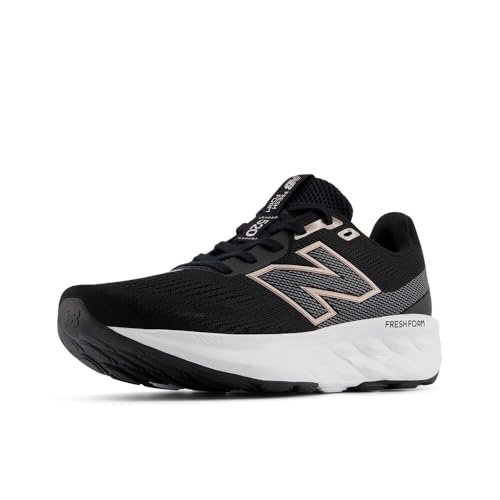
From a value analysis perspective, the 520 V9 offers a lot of the high-end Fresh Foam technology at a much more accessible price point. The 10mm drop is the “sweet spot” for many sufferers of heel pain, as it shifts some of the load away from the Achilles and the heel. I found the engineered mesh to be exceptionally breathable, which is great for high-mileage days.
MY TESTING EXPERIENCE: I tested these on a humid morning run and loved how the mesh kept my feet from overheating. I noticed that the Fresh Foam in this model is a bit firmer than the “More” or “1080” versions, which I actually prefer for stability. It provides a very consistent, predictable landing every time.
Key Specs: Fresh Foam Midsole | 10mm Drop | Breathable Engineered Mesh
WHO IT’S FOR: The runner looking for a name-brand, high-quality trainer that provides excellent cushioning without a triple-digit price tag.
9. Brooks Men’s Beast GTS 24 Supportive Running Walking Shoe
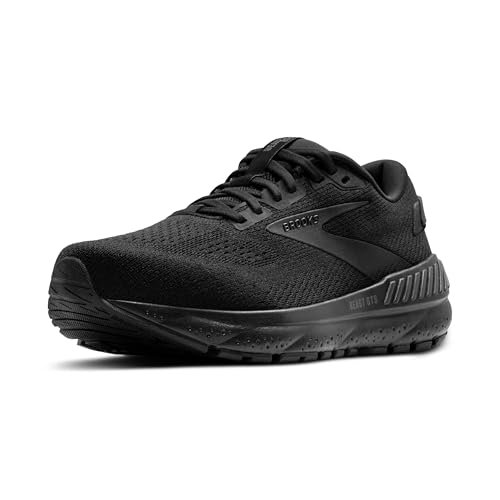
I’ll be honest: the Beast is a heavy-duty tool, and I mean that in the best way possible. This is the “big brother” to the Adrenaline, designed for maximum support. It uses a linear last construction, which means the shoe is very straight and wide through the midfoot. I found that this provides an incredibly stable base that is virtually impossible to “roll” over in.
MY TESTING EXPERIENCE: I wore these during a period where my own foot fatigue was at its peak. I noticed an immediate reduction in the “pulling” sensation under my arch. While they are heavier than other models, the trade-off in stability is absolutely worth it if you are dealing with severe overpronation or heavy heel striking.
Key Specs: Maximum Support | DNA Loft v3 | Linear Last Construction
WHO IT’S FOR: Runners who need the absolute highest level of stability and support available, particularly larger-framed runners or those with very flat feet.
10. Brooks Men’s Glycerin 22 Neutral Running Shoe
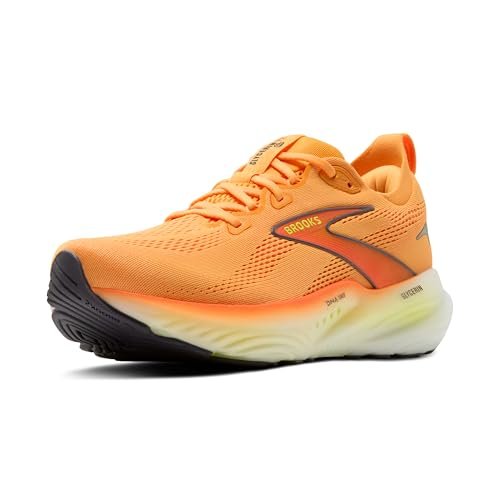
The Glycerin 22 is the choice for the runner who doesn’t need “correction” but needs “protection.” I love the new DNA Tuned technology, which uses larger cells in the heel for a soft landing and smaller cells in the forefoot for a snappy toe-off. It’s a neutral shoe, so it doesn’t have the GuideRails, but the platform is wide enough to feel inherently stable.
MY TESTING EXPERIENCE: I used these for my “easy day” runs and found the transitions to be incredibly smooth. I noticed that my feet felt significantly less “beat up” after a long road session compared to using a standard racing flat. The jacquard knit upper is probably the most comfortable interior of any shoe on this list.
Key Specs: DNA Tuned Cushioning | Neutral Support | Jacquard Knit Upper
WHO IT’S FOR: Neutral runners who want the most luxurious, softest ride possible to keep their feet comfortable during high-volume training.
Comparing the Top 3 Best Plantar Fasciitis Running Shoes
When looking at the top contenders, the Brooks Adrenaline GTS 24 serves as the most balanced option for the average runner, offering a standard 12mm drop and moderate stability. In contrast, the Brooks Beast GTS 24 is a much more robust “motion control” shoe, featuring a linear last and significantly more bulk to prevent any foot rotation. If you don’t need that correction, the Brooks Glycerin 22 provides the plushest, neutral cushioning of the three, but lacks the GuideRails support system found in its GTS siblings. While the Adrenaline is the “jack-of-all-trades,” the Beast is for maximum stability, and the Glycerin is for maximum softness.
Key Features I Look For in Best Plantar Fasciitis Running Shoes
When I’m evaluating footwear for heel pain, I prioritize three specific mechanical elements. First is arch rigidity; the shoe shouldn’t bend in the middle like a piece of wet cardboard. It needs to flex at the toes, but stay firm under the arch to prevent the fascia from overstretching. Second, I look for a deep heel cup. This helps cradle the fatty tissue under your heel bone, providing natural cushioning and preventing the heel from sliding.
I also pay close attention to the midsole drop. While some people swear by zero-drop shoes, I’ve found that a moderate drop (8mm to 12mm) is often better for those in the middle of a flare-up. It slightly unloads the calf muscles and the plantar fascia, making the initial strike less jarring. However, the foam density matters just as much; it needs to be “active” enough to return energy, rather than just absorbing it and leaving your feet feeling flat.
Skill Level & Budget Matching
If you’re just starting your running journey and aren’t ready to commit to a $160 pair of shoes, I highly recommend looking at options like the New Balance 520 V9 or the NORTIV 8. These provide the essential cushioning and support needed for shorter distances and daily walks without a massive financial barrier. For beginners, the most important thing is consistency, and these value-oriented shoes are designed to get you out the door pain-free.
For more experienced runners or those with chronic issues, investing in the Brooks Adrenaline or Beast series is usually the smarter long-term play. These shoes are engineered to withstand hundreds of miles of pounding while maintaining their structural integrity. When you’re running 20+ miles a week, the durability of nitrogen-infused foams and advanced support rails becomes a necessity rather than a luxury.
Common Questions About best plantar fasciitis running shoes
What Are the Best Plantar Fasciitis Running Shoes in 2025?
The best options for 2025 include the Brooks Adrenaline GTS 24 for balanced support, the Brooks Glycerin 22 for maximum cushion, and the New Balance Fresh Foam 520 V9 for those on a budget. Each offers a different level of stability depending on your gait.
Can I run with plantar fasciitis?
Yes, but you must use shoes that offer proper arch support and a cushioned heel. I recommend starting with low-intensity runs on softer surfaces like a track or treadmill while your feet adjust to the new support.
Do I need a high-drop or zero-drop shoe for heel pain?
Most experts and my own testing suggest a 10-12mm drop is best for active flare-ups as it reduces tension. However, some runners find relief in zero-drop shoes if they have already transitioned to a midfoot-striking gait.
How often should I replace my running shoes?
For those with foot pain, I recommend replacing your shoes every 300 to 400 miles. Once the foam loses its “spring” or the heel counter becomes soft, the shoe can no longer provide the structural support your fascia needs.
Are wide toe box shoes better for foot pain?
I’ve found that a wider toe box often helps by allowing the foot to splay naturally. This reduces the mechanical pressure on the forefoot, which can indirectly take the strain off the arch and heel area.