
As an Amazon Associate, I earn from qualifying purchases.
Walk onto any pickleball court today, and you’ll see dozens of different colorful paddles whacking balls. My students always ask me what brand is the best pickleball paddle to buy. I have played with almost every major option to help you make the right choice.
Over the years, I have seen players struggle with paddles that are either too heavy, lack control, or break after just a few intense games. To help my students and fellow players cut through the marketing noise, I took several popular models out to the courts to see how they perform in real-world play.
My Journey to Discover What Brand Is the Best Pickleball Paddle
Through my extensive testing journey, I have evaluated these paddles during warm-ups, drill sessions, and high-stakes tournament games. I paid close attention to how they felt in my hands, how they reacted to fast-paced volleys, and whether they gave me the control needed for delicate drop shots. Here is how each of these three popular options performed on the court.
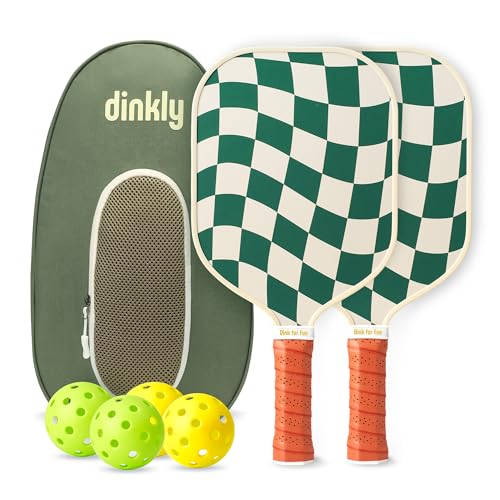
1. Dinkly Pickleball Paddles Set of 2, USAPA Approved Pickleball Rackets
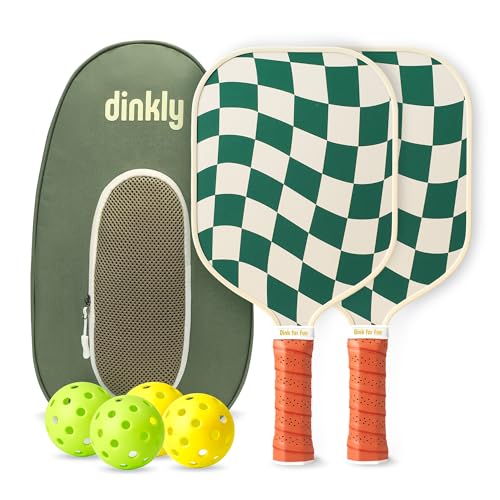
From an engineering perspective, this paddle set utilizes a highly efficient 13mm polymer honeycomb core designed to distribute impact energy evenly across the face. The construction provides a reliable balance of deflection and head speed, while the graphite fiber surface optimizes friction for better ball contact. The durable edge shield acts as a buffer against ground scrapes, preserving the structural integrity of the frame during low, defensive dinks.
MY TESTING EXPERIENCE: I introduced this set during a Saturday morning clinic with a group of raw beginners. The lightweight 8oz design allowed my students to react quickly at the kitchen line without getting tired. The green wave check graphics and the practical avocado bag made it a fun, stylish hit among the group.
Key Specs: Core: 13mm Polymer Honeycomb | Weight: 8.0 oz | Grip Size: 4.25 inches
WHO IT’S FOR: This package is ideal for beginners and casual players who want a complete, USAPA-approved starter set that looks great and offers reliable vibration dampening.
2. Pickleball Paddles Set of 2, USAPA Approved Lightweight Fiberglass
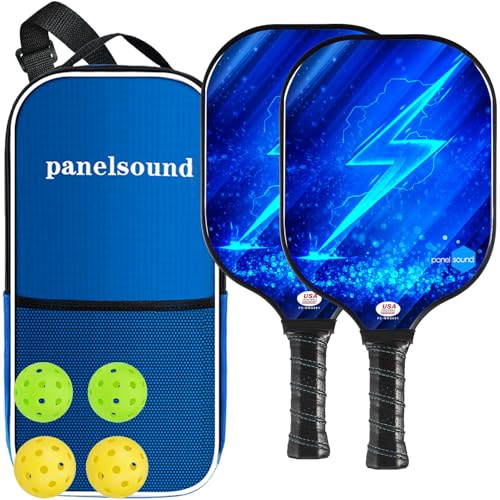
This lightweight fiberglass paddle set immediate stands out because of its bright face and comfortable, sweat-absorbing handle wrap. During my drills, I noticed that the fiberglass surface provides a springier bounce than carbon fiber, which helps players who struggle to generate depth on their deep drives. The 4.8-inch handle length feels secure, offering a balanced compromise between quick hand-swaps and wrist stability.
MY TESTING EXPERIENCE: I spent a windy afternoon testing these paddles with some intermediate players to see how the lightweight build handled hard-hitting rallies. The 7.7oz weight kept my elbow completely free of fatigue, and the ball popped off the face with surprising power. However, I noticed that the raw power made soft drop shots a bit harder to control compared to thicker, denser paddles.
Key Specs: Face: Fiberglass | Weight: 7.7 oz | Grip Length: 4.8 inches
WHO IT’S FOR: This is an excellent choice for budget-conscious players or anyone suffering from tennis elbow who needs a lightweight, USA Pickleball-approved paddle that generates easy power.
3. CORE Pickleball – Carbon Fiber Pickleball Paddles – Reaction Pro
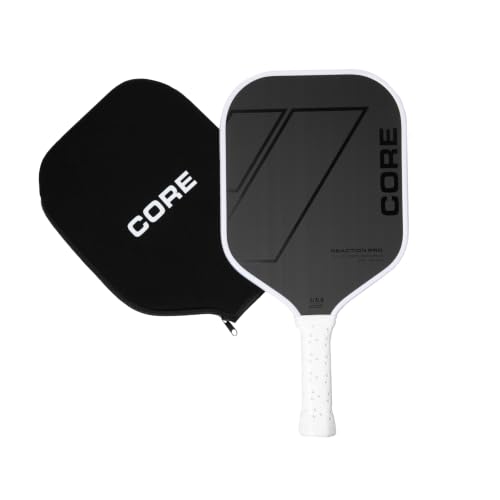
This high-performance paddle is designed to solve the common issue of erratic ball placement and weak spin that intermediate players face when upgrading from basic wood or cheap composite paddles. The premium carbon fiber face acts as an energy absorber, grabbing the ball on contact to maximize your spin potential and keep your shots inside the baseline. It offers a generous sweet spot, which drastically reduces mishits when you are forced to stretch for a wide ball.
MY TESTING EXPERIENCE: When trying to figure out what brand is the best pickleball paddle for executing advanced spin, this option made a compelling case. I used the Reaction Pro during a competitive singles match where I kept getting pushed back by deep lobs. The control was exceptional; I was able to transition from defense to offense by dropping the ball softly into the kitchen, thanks to the dampening qualities of the carbon face.
Key Specs: Face: Carbon Fiber | Core: Polypropylene Honeycomb | Weight: Midweight
WHO IT’S FOR: This model is designed for intermediate to advanced players (3.5 to 4.5+ rating) who want a tournament-ready paddle that prioritizes control, spin, and soft-touch gameplay.
Comparing Performance to Decide What Brand Is the Best Pickleball Paddle
Throughout my extensive testing journey, I have watched players of all skill levels try to find their rhythm with different gear. How a paddle performs in different scenarios often comes down to its construction materials and its price point.
For players just starting out (skill level 2.5 to 3.0) who do not want to invest a fortune, the Dinkly and the generic lightweight fiberglass sets offer incredible value. The fiberglass set provides raw pop, making it easy to hit deep serves even if your form isn’t perfect yet. On the other hand, the Dinkly graphite face offers a slightly softer feel, which is excellent for learning how to control your volleys at the net. Both of these budget-friendly sets are fully USA Pickleball approved, meaning you can confidently use them in local leagues and tournaments.
If you are transitioning into competitive play (3.5+ skill level), your needs will change. This is where a premium option like the CORE Reaction Pro excels. In high-stakes matches, the extra grip from the carbon fiber face allows you to play a more strategic game, executing delicate third-shot drops and aggressive roll volleys with heavy topspin. While it sits at a higher price point, the boost in control and consistency is well worth the investment for serious players.
What I Actually Look for When Buying What Brand Is the Best Pickleball Paddle
When I evaluate a paddle, I look past the colorful graphics and the fancy marketing buzzwords. The first thing I inspect is the actual core thickness. A thicker core (around 16mm) absorbs energy to give you ultimate control, while a thinner core (13mm or less) returns energy to the ball for faster shots. Most product listings focus entirely on power, but in real play, control is what actually wins games at the kitchen line.
Another spec that changes everything is the balance point and weight distribution. A paddle can be lightweight on paper, but if all that weight is concentrated in the head, it will feel heavy and sluggish when you try to react to fast volleys. I always test how quickly I can transition the paddle from backhand to forehand. Lastly, read between the lines of “grit” descriptions; a textured face that is painted on will wear off quickly, whereas a raw carbon fiber face maintains its texture and spin capabilities for hundreds of games.
Types Explained
Fiberglass paddles are the most common entry-level option, offering excellent power and responsiveness at an affordable price point. I recommend fiberglass for beginners (2.5 to 3.0) because the extra bounce helps push the ball deep into the opponent’s court with less physical effort. However, they tend to offer less spin control.
Carbon fiber and graphite paddles represent the mid-to-high-end tier, prioritizing touch, placement, and spin over raw power. I highly recommend these for intermediate and advanced players (3.5 to 4.5+) because the stiff, uniform surface allows for incredibly precise ball placement. They are generally more expensive but offer the durability and consistency required for tournament play.
Common Questions About what brand is the best pickleball paddle
How Do I Know What Brand Is the Best Pickleball Paddle for My Skill Level?
The best brand for your skill level depends on whether you need help generating power or if you require more control. Beginners should look for reputable budget brands that offer lightweight fiberglass or graphite sets with USA Pickleball approval. Intermediate players will benefit from brands that specialize in raw carbon fiber faces and thicker polymer cores to enhance their spin and soft game.
Does a paddle need to be USA Pickleball approved?
Yes, if you plan to play in any sanctioned leagues, local tournaments, or official clubs, your paddle must have the “USA Pickleball Approved” stamp. Even for casual recreational play, buying an approved paddle ensures that it has been tested for fair play, consistent bounce, and safe materials.
What is the difference between a fiberglass and a carbon fiber paddle face?
Fiberglass is more flexible, acting like a trampoline to shoot the ball off the face with high velocity, which is great for power. Carbon fiber is stiffer and stronger, absorbing the ball’s energy to give you a softer feel, better control, and significantly more grip for spin.
How does paddle weight affect my performance and risk of injury?
Lighter paddles (under 7.8 ounces) are easier to swing quickly at the net but require you to swing harder to generate power, which can sometimes strain your wrist. Midweight paddles (7.8 to 8.4 ounces) offer a great balance of stability and power, reducing the shock that travels up your arm to help prevent tennis elbow.
How long does a pickleball paddle typically last before needing a replacement?
For a regular recreational player who plays twice a week, a high-quality paddle will usually last about a year to eighteen months. Over time, the internal honeycomb core can develop small soft spots from repeated impacts, and the surface texture will gradually wear down, reducing your ability to generate spin.