
As an Amazon Associate, I earn from qualifying purchases.
I see players struggle on the courts every weekend simply because they are swinging the wrong gear. To save you the headache, I put the leading options through the ringer to find the best paddle for pickleball. Here is my straightforward, no-nonsense guide to choosing a weapon that actually fits your playstyle.
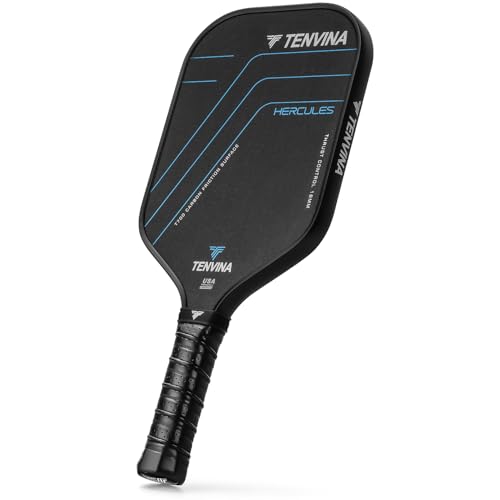
1. TENVINA Pickleball Paddles, Multi-Layer T700SC Textured Carbon Fiber
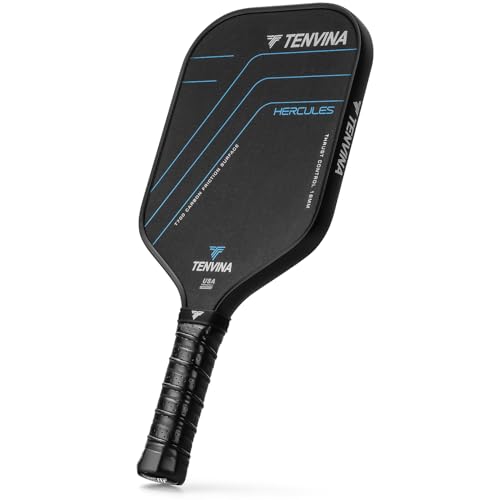
This paddle relies on highly advanced manufacturing techniques to produce its multi-layered T700SC carbon fiber face. Utilizing Dry Jet-Wet Spinning technology, it balances structural stiffness with a highly reactive polymer core. The result is a paddle built for players who appreciate technical precision and material integrity.
MY TESTING EXPERIENCE: I ran this paddle through repeated baseline drills to see how the dry-spun face held up under pressure. The ball deflection felt remarkably consistent across the entire face, and I noticed the matte-textured finish grasped the ball longer during spin shots. It didn’t exhibit any of the hollow dead zones common in cheaper composite models.
Key Specs: Multi-Layer T700SC Carbon Fiber | Polymer Honeycomb Core | 16mm or 13mm Thickness
WHO IT’S FOR: This option is geared toward intermediate players who need a technically sound paddle that can generate heavy spin without sacrificing core stability during hard drives.
2. JoncAye USAPA Approved Pickleball-Paddles-Set
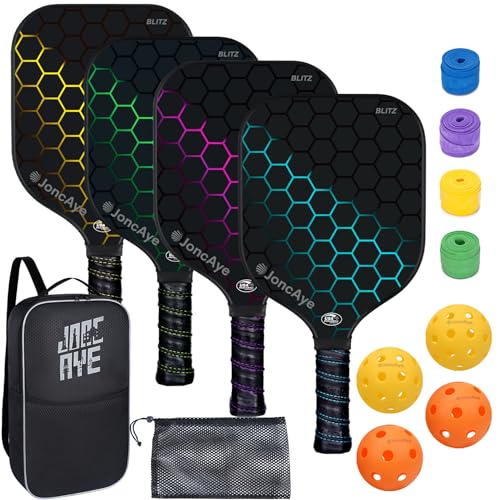
Tracking down a complete, budget-friendly package that actually performs well on a real court can be surprisingly difficult. This set delivers USA Pickleball approved fiberglass paddles that handle everyday wear and tear with ease. It is a complete startup package that avoids the cheap, toy-like feel of typical entry-level kits.
MY TESTING EXPERIENCE: I took this set to the local community courts for a mixed-doubles afternoon with some beginner-level friends. The 8-ounce weight felt nicely balanced in the hand, and the dinks felt solid rather than bouncy. The extra grip tapes included in the box came in handy after a sweat-inducing two-hour session on hot asphalt.
Key Specs: Premium Fiberglass Face | PP Honeycomb Core | 8.0 oz Weight | USAPA Approved
WHO IT’S FOR: This complete kit is ideal for families and recreational players who want a durable, USAPA-approved setup to start playing matches immediately.
3. MTEN Pickleball Paddles Set of 2
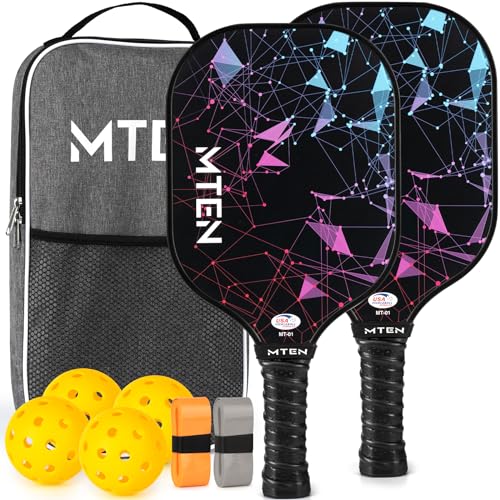
Many newcomers complain about wrist fatigue and poor ball control, which usually stems from using heavy, low-quality gear. This fiberglass set solves that issue by offering a lightweight, wide-body design that maximizes the active hitting area. It directly addresses the frustration of missing off-center hits.
MY TESTING EXPERIENCE: When testing this set, I focused on defensive resets and off-center block shots. I immediately found that the wide face compensated well for late reactions, absorbing impact without jarring my elbow. It serves as the best paddle for pickleball when you need a budget-friendly solution to high-vibration frustration.
Key Specs: Fiberglass Face | Polypropylene Honeycomb Core | 7.8 oz Weight | USAPA Approved
WHO IT’S FOR: This set is perfect for beginners and early intermediates who want to eliminate arm strain and expand their sweet spot without spending a fortune.
4. GARYE Pickleball Paddles Set
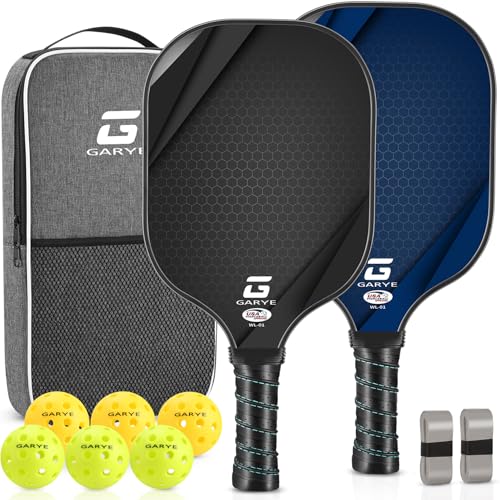
Finding a high-density, thicker paddle usually means looking at premium individual prices. This set changes that dynamic by offering a 0.69-inch thick carbon fiber paddle at a price point that undercuts major brands. It delivers tournament-approved performance without the standard premium markups.
MY TESTING EXPERIENCE: I played several highly competitive singles matches with this paddle to see how its 17.5mm thickness compared to my usual high-end gear. The control on third-shot drops was excellent, though I noticed a slight drop in pure power compared to thinner 13mm models. The edge guard took a few hard scrapes against the ground and held together perfectly.
Key Specs: Carbon Fiber Face | 0.69-inch (17.5mm) Polypropylene Core | 7.7-8.1 oz Weight | USAPA Approved
WHO IT’S FOR: This set is suited for intermediate players who prioritize a soft game, drop shots, and defensive control over raw power.
5. Selkirk Sport SLK Neo Paddle Set of 2
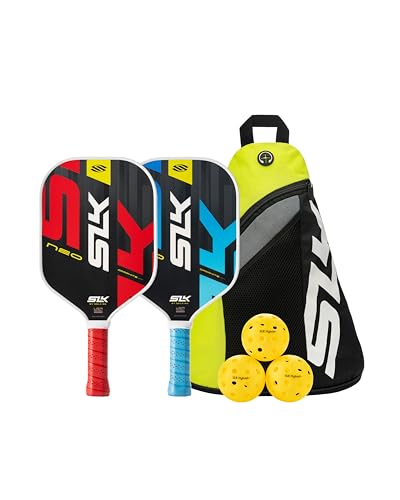
Selkirk is a massive name in the professional pickleball world, and this entry-level bundle aims to bring their build standards to recreational players. The graphite face combined with a proprietary polymer core promises consistent performance. It stands as an accessible entry point to a brand trusted by tournament pros.
MY TESTING EXPERIENCE: I spent a morning testing the SLK Neo on indoor courts to evaluate its dinking capabilities. The thin 13mm core gave me snappy, fast-paced responses at the kitchen line, but I had to work a bit harder to control deep baseline drives. The grip comfort was exceptional, matching the high standards of their premium lines.
Key Specs: G4 Control Graphite Face | Polymer SX4 13mm Core | 7.5 oz Weight | SpinFlex Texture
WHO IT’S FOR: Players looking for a reliable, lightweight brand-name starter set that emphasizes fast hands and quick kitchen play.
6. JOJOLEMON Pickleball Paddles
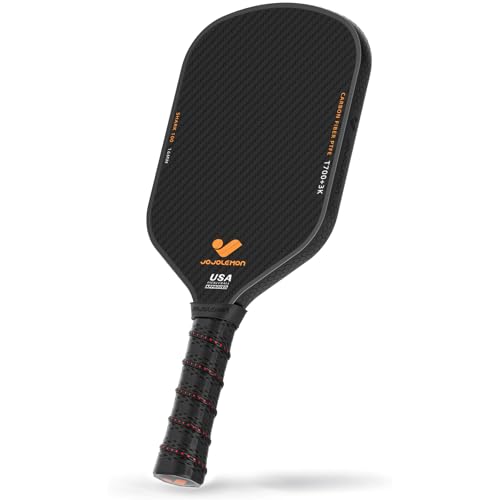
This model utilizes premium Toray T700SC 3K raw carbon fiber with a textured 4-directional weave to maximize surface friction. An extended handle is also integrated, specifically catering to modern players who utilize a two-handed backhand. It is a highly specialized option built around modern performance metrics.
MY TESTING EXPERIENCE: I tested this model extensively to see if the raw carbon fiber lived up to its spin-rate claims. I found that I could shape my drives with significant topspin, dipping the ball sharply at the opponent’s feet. The long handle provided excellent leverage, though the sweet spot felt slightly narrower than wide-body shapes.
Key Specs: Raw Toray T700SC Carbon Fiber | 3K Textured Weave | Extended Handle | Control Oriented
WHO IT’S FOR: Serious intermediate to advanced players (3.5 to 4.5+ rating) who use a two-handed backhand and want professional-tier spin and control.
7. AOPOUL Pickleball Paddles Set of 4
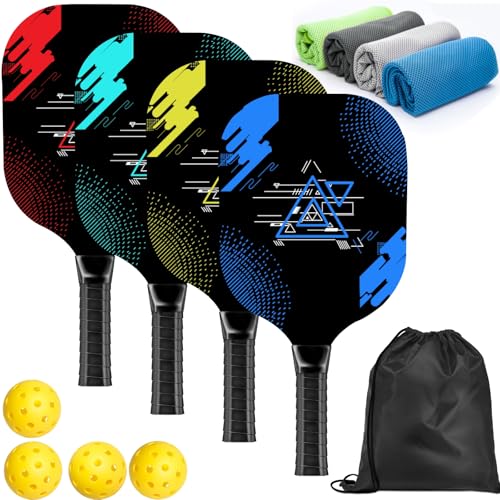
If you are hosting backyard games or introducing children to the sport, delicate composite paddles can be an expensive liability. This set of 9-ply poplar wood paddles is built to survive rough handling and outdoor concrete surfaces. It provides a highly durable and affordable entry point for group play.
MY TESTING EXPERIENCE: I let my extended family run wild with these wooden paddles on a rough driveway court. They dropped them on the ground and scraped them continuously, yet the paddles suffered nothing more than minor cosmetics. The weight is heavier than carbon options, but for casual dinks, they got the job done.
Key Specs: 9-Ply Poplar Hardwood | Ergonomic Wood Grip | Complete 4-Paddle Set | Includes Accessories
WHO IT’S FOR: Pure beginners, casual backyard players, or schools looking for highly durable, indestructible paddles for group recreational play.
Comparing the Best Paddle for Pickleball Options by Price and Experience
To make the right choice, you need to understand how these paddles compare across price and skill level without getting lost in marketing jargon. Wood sets like AOPOUL represent the absolute entry-level budget tier. They are indestructible and cost-effective, making them perfect for casual 2.0 to 2.5 players who simply want to try the sport. However, their heavy weight and lack of a polymer core mean they fail to offer the vibration dampening needed for frequent play.
As you transition to the $40 to $80 mid-range tier, options like JoncAye, MTEN, and Selkirk introduce lightweight fiberglass and graphite faces. These are the sweet spot for 3.0 players. They offer USAPA approval for local tournament play and drastically reduce the risk of tennis elbow by utilizing shock-absorbing polymer honeycomb cores.
At the upper end of our tested options, running from $80 to $120, you enter the performance tier with GARYE and JOJOLEMON. Here, fiberglass is replaced with premium raw T700SC carbon fiber. These paddles are built for 3.5 to 4.5+ players who need specialized features like 16mm thick cores for soft kitchen resets or extended handles for two-handed backhands. Spending in this bracket gets you maximum spin capability and a highly consistent sweet spot, which are essential for competitive tournament play.
What Actually Changes as You Spend More on The Best Paddle for Pickleball
When you transition from basic wood paddles to high-end carbon fiber, you are primarily paying for energy absorption and surface texture. Through my testing, I found that the biggest jump in quality happens right around the $50 to $80 mark. At this price point, you move away from heavy, vibration-prone wood or cheap composite faces and gain access to polymer honeycomb cores and raw carbon fiber or fiberglass surfaces. This shift is critical because polymer cores absorb impact, giving you a consistent sweet spot and saving your joints from harsh vibrations.
As you move past $120 into premium territory, the returns start to diminish. You are no longer buying massive leaps in durability; instead, you are paying for specialized engineering like thermoformed edges, aero-dynamic throat designs, or brand markup. While a 4.5+ tournament player needs that extra 5% of spin and stability, a 3.0 recreational player will rarely notice the difference. Buying the cheapest wooden option is a smart, zero-risk trade-off if you only play twice a year at family barbecues, but if you intend to play weekly, cheap gear actually holds your skill development back.
Which Tier Fits Your Game
To simplify your search, I divide the pickleball market into three distinct tiers. The budget tier consists of wood or basic fiberglass sets priced under $40. These are excellent for casual 2.5 players or families who need durable gear that can survive being dropped on concrete. Expect decent durability, but do not expect much spin or delicate control at the kitchen line.
The mid-range tier, spanning $40 to $80, is the sweet spot for the vast majority of players. Here, you get lightweight, USA Pickleball-approved paddles featuring polymer cores, comfortable 4.25-inch grips, and either textured fiberglass or entry-level carbon fiber faces. If you are a 3.0 to 3.5 player looking to develop a reliable drop shot and block hard drives, you should stop at this tier. The premium tier, running $100 and up, is reserved for players with a 4.0+ rating. These paddles feature high-tech Toray T700SC raw carbon fiber, 16mm thick cores for ultimate control, and elongated handles for two-handed backhands. If your game relies on heavy topspin and high-speed resets, spending up for this tier is a genuine investment in your performance.
Common Questions About the Best Paddle for Pickleball
How Do I Know if a Paddle is USA Pickleball Approved?
I always tell players to look for the “USAPA Approved” or “USA Pickleball Approved” seal printed directly on the face of the paddle or near the handle. If you want to be absolutely sure before buying, you can search the official USA Pickleball manufacturer database online. Having an approved paddle is mandatory if you plan to play in any sanctioned local tournaments.
What Features Define the Best Paddle for Pickleball in 2026?
I look for a high-grade Toray T700 carbon fiber face, a 16mm polypropylene honeycomb core for shock absorption, and a thermoformed edge design. These features provide the perfect balance of massive spin, soft control at the kitchen line, and long-term durability.
Is a Thicker Core Better for Control or Power?
A thicker core, typically around 16mm, is designed for control. I find that thicker cores absorb more energy from the ball, which softens your dinks and makes third-shot drops much easier to execute. Thinner cores, like 13mm, absorb less energy, giving you a stiffer feel and more pop for power-based driving games.
What is the Difference Between Carbon Fiber and Fiberglass Paddle Faces?
Fiberglass is heavier and more flexible, acting like a trampoline to give you easy depth and power on your shots. Carbon fiber is stiffer and lighter, which distributes the impact energy more evenly. I recommend carbon fiber for players who want maximum control, touch, and ball spin, while fiberglass is great for players who need help generating baseline power.
Does Paddle Weight Actually Affect Tennis Elbow?
Yes, paddle weight plays a massive role in joint strain. I advise players struggling with arm pain to avoid heavy wood paddles and extremely light paddles under 7.3 ounces. A mid-weight paddle between 7.7 and 8.1 ounces is ideal because it has enough mass to absorb the ball’s kinetic energy without requiring excess wrist strain to swing.