
As an Amazon Associate, I earn from qualifying purchases.
I know how a cheap grip or stiff face can absolutely destroy your backhand. Over the years, I’ve swung almost everything on the market to locate the best paddleball racquet for different playstyles. These top-tier picks will instantly elevate your court game.
I bypass the marketing buzzwords and focus strictly on core density, face friction, and weight distribution. Whether you need a high-spin pickleball face, a classic wooden wall-ball paddle, or a fast-swinging indoor racquetball frame, the five options below deliver real performance where it matters.
1. TENVINA Pickleball Paddles, Multi-Layer T700SC Textured Carbon Fiber
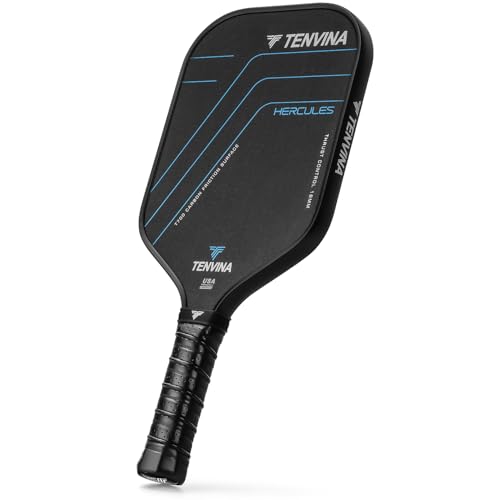
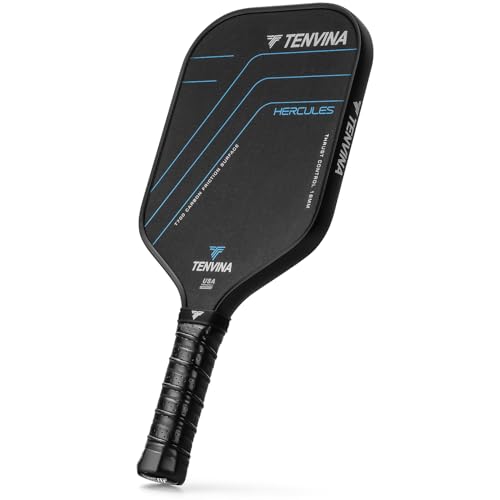
TENVINA engineered this paddle around a multi-layer T700SC carbon fiber face using Dry Jet-Wet Spinning technology. This advanced manufacturing method aligns the carbon fibers to optimize energy transfer and increase structural tensile strength. The resulting surface provides a highly consistent deflection rate across the entire face.
MY TESTING EXPERIENCE: I took the 16mm POISE model to the courts to measure its vibration absorption during heavy drills. The polymer honeycomb core worked exceptionally well with the matte-textured carbon face, allowing me to drop soft shots in the kitchen with predictable accuracy. I found that even off-center hits retained enough stability to keep my defensive rallies alive.
Key Specs: T700SC Textured Carbon Fiber | 16mm Core Thickness | Perforated Sweat-Wicking Grip
WHO IT’S FOR: This high-spec option is built for competitive tournament-level players who want elite spin control, a stable sweet spot, and excellent vibration dampening to protect their elbow.
2. Champion Sports Paddleball Racket
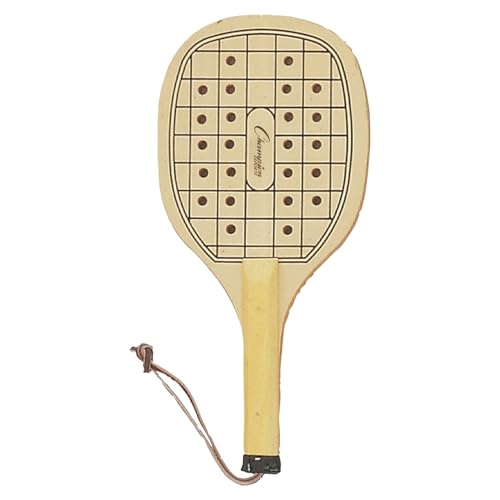
Classic wooden paddleball demands a raw, high-impact tool that won’t splinter under aggressive outdoor play. The Champion Sports racket utilizes a durable 9-ply ash wood construction that provides solid weight behind every swing. The face features 24 pre-drilled holes designed to reduce aerodynamic drag during fast defensive responses.
MY TESTING EXPERIENCE: I took this wooden paddle to a concrete wall court to evaluate its physical durability and response. The direct feedback is immediate and loud, letting me know exactly where I struck the ball. I noticed that the integrated leather wrist strap was crucial for maintaining a secure hold as my hands grew sweaty during rapid-fire drills.
Key Specs: 9-Ply Ash Wood | 24 Drilled Airflow Holes | Leather Wrist Strap
WHO IT’S FOR: This is the practical choice for traditionalists and recreational players who want an authentic, highly durable wooden paddle for classic wall-ball or backyard games.
3. BAGAIL Pickleball Paddles, USAPA Approved Fiberglass Surface Set
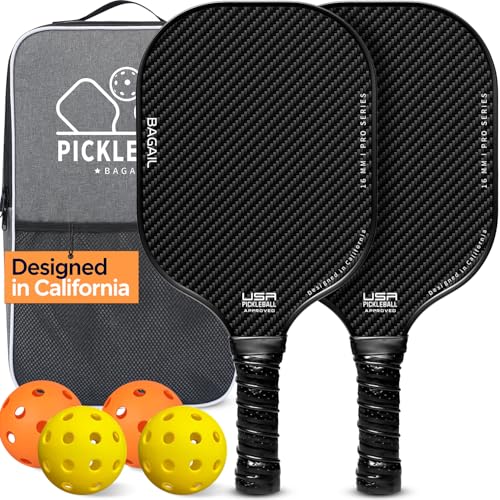
Many entry-level players struggle with hand fatigue and erratic ball control caused by low-grade composite faces. This set solves those issues by combining a flexible, responsive fiberglass surface with a vibration-damping polypropylene honeycomb core. The protective edge guard reinforces the perimeter, preventing premature wear from low-to-the-ground digs.
MY TESTING EXPERIENCE: During my baseline testing, I immediately appreciated the balance of the 7.8-ounce frame. The perforated, cushioned grip kept the handle secure in my palm and effectively minimized twisting on high-speed volleys. I recommend this set because it cures the typical cheap-equipment vibrations right out of the box.
Key Specs: USAPA Approved Fiberglass Face | Polypropylene Honeycomb Core | 4.25-Inch Cushioned Grip
WHO IT’S FOR: This complete package serves beginners and intermediate recreational players who want a durable, tournament-approved setup that prioritizes shock absorption.
4. MTEN Pickleball Paddles Set of 2, USAPA Approved Fiberglass Set
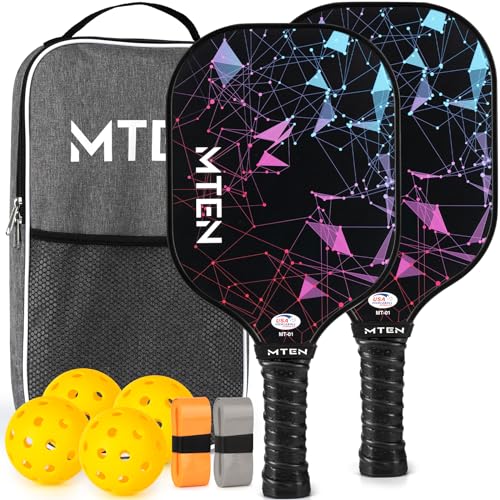
While many budget starter bundles cut corners on grip quality or core thickness, this package matches the performance of premium club alternatives. It features a robust fiberglass construction and a wide-body profile that expands the active hitting area. I found it to be the best paddleball racquet package for families who want long-term durability without a premium price tag.
MY TESTING EXPERIENCE: When comparing this set to other beginner bundles, the slightly larger 4.57-inch grip circumference stood out. It gave me excellent leverage for snapping my wrist on power overheads without causing hand cramps. The raw power on deep drives was highly impressive for a composite setup in this tier.
Key Specs: USAPA Approved Fiberglass | 4.57-Inch Grip Circumference | 7.8 oz Medium Weight
WHO IT’S FOR: This bundle is ideal for recreational players with medium-to-large hands who want a complete, USAPA-approved set with reliable power and extra grip tape.
5. HEAD CPS Heat Racquetball Racquet
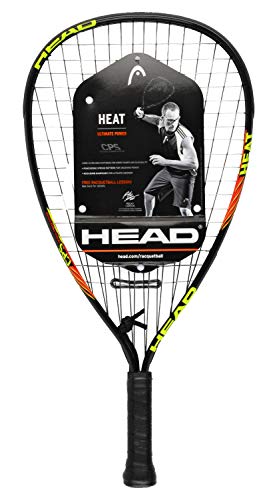
Transitioning to indoor courts requires high-velocity gear that does not compromise frame integrity under pressure. The HEAD CPS Heat uses a strong I-Beam construction and Damp Plus technology to absorb high-impact vibrations before they reach your shoulder. The oversized head creates a forgiving hitting zone for players learning the speed of indoor court play.
MY TESTING EXPERIENCE: I put this 6.7-ounce frame through a high-intensity indoor session to test its structural flex. The 16×16 string pattern delivered deep, driving power against the back wall, and the racquet felt incredibly agile in my hand. I noticed some frame flex during maximum-effort power shots, but the overall control is excellent for this price tier.
Key Specs: 106 Sq In Head Size | 6.7 oz Unstrung Weight | Damp Plus Vibration Insert
WHO IT’S FOR: Entry-level indoor players and fitness enthusiasts who need an easy-to-swing, durable racquet with built-in arm protection.
Direct Comparison of the Top Three Contenders for Best Paddleball Racquet
Let’s break down the essential differences between the top three options to see how they perform under pressure.
The TENVINA Carbon Fiber model stands apart due to its advanced technical engineering. Unlike the other options, it features a multi-layer T700SC textured carbon surface that maximizes ball rotation and spin. It is designed specifically for players who prioritize strategic placement over raw speed. In contrast, the BAGAIL Fiberglass set is built with a more flexible fiberglass face, providing a higher spring effect that boosts power for beginners without requiring aggressive swing speed.
Meanwhile, the Champion Sports Paddle represents a completely different branch of the sport, using a heavy-ply ash wood build rather than modern composite cores. While the carbon and fiberglass options use polypropylene honeycomb cores to dampen vibrations, the solid wood Champion Sports paddle transfers every ounce of physical feedback directly to your arm, relying on a drilled 24-hole pattern to minimize wind resistance during fast swings.
How to Match Best Paddleball Racquet to Your Game
When you are choosing gear, your actual playing frequency and skill level must dictate your choice. If you are stepping onto the court once a month for a casual weekend game, a basic, durable fiberglass paddle or a heavy wood model will serve you fine without draining your wallet. However, if you are playing multiple times a week or climbing from a 2.5 beginner rating to a 4.0+ competitive player, you will quickly outgrow basic gear. Regular play requires advanced materials like carbon fiber to prevent arm fatigue and provide consistent shot placement.
For frequent or competitive tournament play, pay close attention to core thickness and face texture. A 16mm core offers unmatched control and dampening, while a textured surface is crucial for generating spin. Casual weekend games, on the other hand, are more forgiving; you can prioritize wide sweet spots and lightweight builds that make the game fun and easy.
To figure out what tier you actually need, ask yourself this gut-check question: Are you looking to master spin and control on a tournament court, or do you just want a reliable, durable option to rally with friends? If it is the former, invest in advanced carbon composites; if the latter, a value-packed fiberglass set is your best path forward.
Quick Decision Checklist
To narrow down your choice immediately, ask yourself these quick questions before buying:
Are you planning to play in official USAPA-sanctioned tournaments? If yes, you need an approved setup like the BAGAIL or MTEN fiberglass models to ensure your gear is tournament-legal.
Do you suffer from tennis elbow or joint soreness after playing? If so, prioritize the TENVINA with its 16mm vibration-dampening core, or the HEAD CPS Heat with its Damp Plus shock absorption, rather than heavy wooden options.
Are you playing traditional backyard/beach wall-ball or modern pickleball? For classic wall-ball, grab the ultra-durable Champion Sports wooden paddle; for pickleball, go with the TENVINA or BAGAIL sets.
Do you have larger hands and need a secure, non-slip grip? The MTEN set, with its larger 4.57-inch grip circumference and extra grip tape, will fit your hand much better than standard smaller grips.
Common Questions About Best Paddleball Racquet
What makes the Best Paddleball Racquet suitable for tournament play?
A tournament-ready paddle must carry official certification from governing bodies like USA Pickleball (USAPA). This ensures the materials, surface roughness, deflection, and dimensions meet strict performance standards, preventing players from using gear that provides an unfair physical advantage.
What is the difference between carbon fiber and fiberglass faces?
Carbon fiber is stiffer, lighter, and absorbs more energy, making it the choice for players who want maximum ball control and precision placement. Fiberglass is more flexible, which creates a trampoline effect that returns more energy to the ball, giving players more natural power behind their shots.
Why do some paddles have holes in them?
Traditional wooden paddleball paddles and racquetball racquets use holes or strings to reduce air resistance. This design allows you to swing the frame faster through the air without the wind resistance slowing down your reaction time.
How does core thickness affect court performance?
A thicker core, such as 16mm, absorbs more impact energy, giving you a softer feel and better control for delicate touch shots. A thinner core, around 13mm, is stiffer and returns more energy to the ball, resulting in faster ball speeds but less vibration dampening.
How do I know if my grip size is correct?
A quick way to check is to hold the paddle in your normal grip. There should be enough space between your fingertips and the heel of your hand to fit the index finger of your opposite hand. If your fingers wrap all the way around and touch your palm, the grip is too small.