
As an Amazon Associate, I earn from qualifying purchases.
Pickleball is a fun sport that many people enjoy. It is easy to learn and great for all ages. Many want to build a pickleball court at home or in a community. But how much does it cost to install one? This guide will help you understand the costs involved. We will explain the prices simply and clearly.
What Is a Pickleball Court?
A pickleball court looks like a small tennis court. It is smaller and has special lines and a net. The court size is usually 20 feet wide and 44 feet long. This size is for playing doubles or singles games.
Besides the playing area, space around the court is important. You need room to move and play safely. So, the total space needed is about 30 feet by 60 feet or more.
Main Factors That Affect Cost
The price to build a pickleball court can change. Here are the main reasons:
- Type of court surface: Concrete, asphalt, or special sports tiles
- Indoor or outdoor court: Indoor courts cost more
- Fencing and nets: To keep the ball inside
- Lighting: For playing at night
- Site preparation: Clearing land or fixing the ground
- Extra features: Benches, windscreens, or shade
Outdoor Pickleball Court Costs
Building an outdoor court is usually less costly than indoor. Outdoor courts need a flat surface and strong materials. Here is a breakdown of costs:
| Item | Cost Range (USD) | Description |
|---|---|---|
| Site preparation | $3,000 – $8,000 | Leveling ground, clearing debris, and fixing soil |
| Concrete or asphalt surface | $8,000 – $20,000 | Strong, flat surface for playing |
| Painting court lines | $500 – $1,000 | Marking the court with lines and colors |
| Net and posts | $400 – $1,000 | Pickleball net and support posts |
| Fencing and windscreens | $5,000 – $10,000 | Fence to keep balls in and windscreens for wind |
| Lighting | $8,000 – $20,000 | Lights for playing after dark |
Indoor Pickleball Court Costs
Indoor courts cost more because you need a building and more features.
| Item | Cost Range (USD) | Description |
|---|---|---|
| Building or space rent | Varies widely | Cost depends on size and location |
| Flooring | $15,000 – $40,000 | Special sports flooring for pickleball |
| Painting court lines | $500 – $1,000 | Marking the court properly |
| Net and posts | $400 – $1,000 | Pickleball net and posts |
| Lighting | $15,000 – $35,000 | Good lights for indoor play |
| Climate control (AC/Heater) | $10,000 – $50,000 | Keep court comfortable year-round |
Choosing the Court Surface
The surface is very important. It affects cost and how you play.
- Concrete is strong and lasts long. It costs about $8,000 to $20,000.
- Asphalt is cheaper but may need more care. Costs $5,000 to $15,000.
- Sports tiles are easy on feet. Price is higher, $15,000 to $40,000.
Concrete and asphalt need to be smooth and flat. Painting lines on them is easy and cheap.
Extra Costs to Know
Besides the main items, some extras add to costs:
- Fencing: Keeps balls in court. Cost is $5,000 to $10,000.
- Windscreens: Blocks wind. Good for outdoor courts.
- Lighting: Needed if you play at night. Costs $8,000 to $35,000.
- Benches or seating: For players to rest.
- Shade structures: Protects from sun.
These extras make playing better but increase price.

Credit: homeguide.com
How Much Land Do You Need?
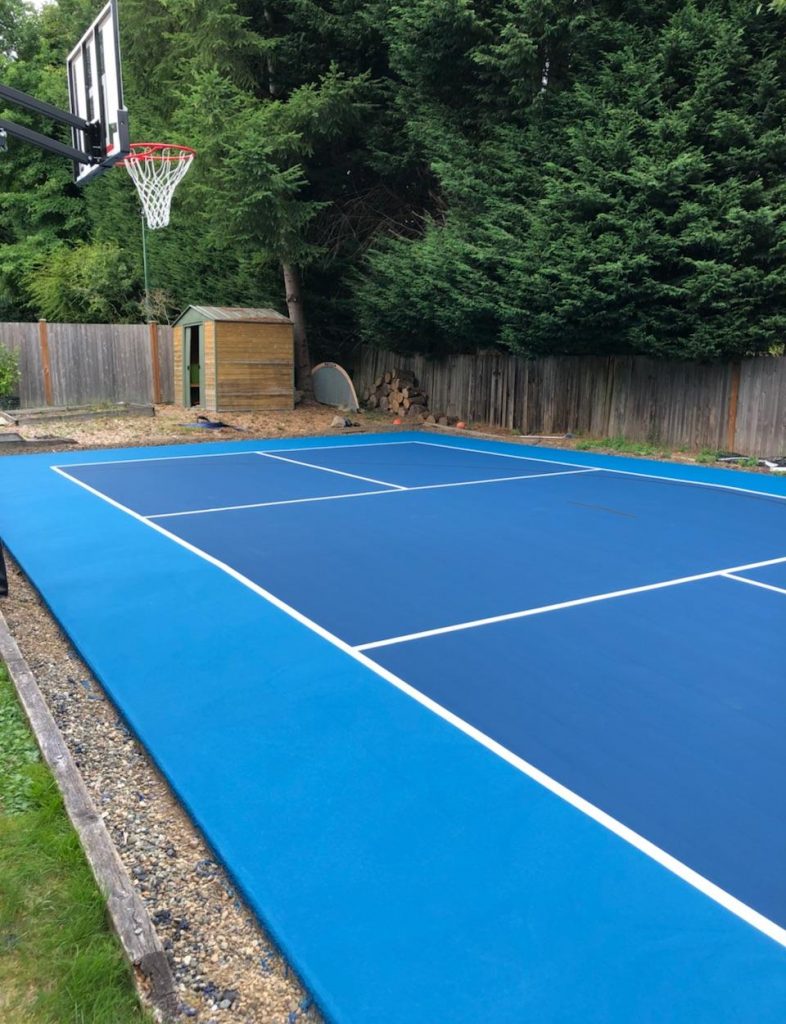
A pickleball court is 20 by 44 feet for play. But space around is important.
Experts say you need at least 30 by 60 feet. This allows room to move and stay safe.
If you add fences and walkways, more space is needed.
Credit: www.sportmaster.net
Does a Pickleball Court Add Value to Your Home?
Many people ask if a court adds home value. The answer is yes, but with limits.
- It can attract buyers who like sports.
- It shows your home has a fun feature.
- But not all buyers want a court.
In neighborhoods where pickleball is popular, courts add more value.
How Long Does It Take to Build a Court?
Building time depends on many things:
- Site preparation can take days to weeks.
- Pouring concrete needs several days to dry.
- Painting lines usually takes a day or two.
- Installing nets, fencing, and lights may add more days.
In total, expect 2 to 6 weeks for a full court.
Tips to Save Money
You can save money if you:
- Build outdoors instead of indoors.
- Choose asphalt rather than sports tiles.
- Skip extra features at first, add later.
- Ask for quotes from several builders.
- Do some work yourself if you can.
Summary of Costs
Here is a simple table of costs you can expect:
| Type of Court | Estimated Cost Range (USD) |
|---|---|
| Outdoor Pickleball Court | $20,000 – $75,000 |
| Indoor Pickleball Court | $50,000 – $150,000+ |
Remember, costs vary by location and materials.
Final Thoughts
Installing a pickleball court is a great way to enjoy the sport. It can be a fun project for families and communities. The cost depends on many things. Outdoor courts are more affordable. Indoor courts cost more but allow year-round play.
Plan your budget carefully. Think about how often you will play. Decide what features you want. This helps you get the best court for your money.
Pickleball courts bring fun and health benefits. They can also add value to your property. With proper planning, you can build a court that lasts many years.
Frequently Asked Questions
Does A Pickleball Court Add Value To A House?
A pickleball court can increase a home’s appeal and market value, especially in active communities. Buyers often value recreational amenities.
How Much Does It Cost To Own A Pickleball Court?
Owning a pickleball court costs between $20,000 and $150,000. Outdoor courts range from $20,000 to $75,000. Indoor courts cost $50,000 to $150,000 due to lighting and climate control expenses. Fencing and lighting add $5,000 to $35,000 depending on court type.
How Much Land Is Needed To Build A Pickleball Court?
A standard pickleball court requires 30 by 60 feet of playing area. Add extra space for safety, totaling about 40 by 70 feet. This equals roughly 2,800 square feet of land needed to build one pickleball court.
Are Pickleball Courts Profitable?
Pickleball courts can be profitable with proper location, maintenance, and marketing. They attract players and generate revenue through fees and events. Initial costs vary from $20,000 to $150,000, but strong demand supports long-term profitability in many communities.