
As an Amazon Associate, I earn from qualifying purchases.
Pickleball is a fun sport for all ages. To play well, you need to hold your paddle right. This guide will teach you how to grip a pickleball paddle with ease.
Why Is the Paddle Grip Important?
The way you hold your paddle changes how you hit the ball. A good grip helps you control the ball better. It also helps reduce hand and wrist pain. If your grip is too tight, you will get tired fast. If it is too loose, the paddle might slip. Finding the right grip is key to playing well.
Types of Pickleball Paddle Grips
There are different ways to hold a pickleball paddle. But the most common grips are:
- Continental Grip
- Eastern Forehand Grip
- Hammer Grip
We will explain each grip. This will help you choose the best one for you.
The Continental Grip
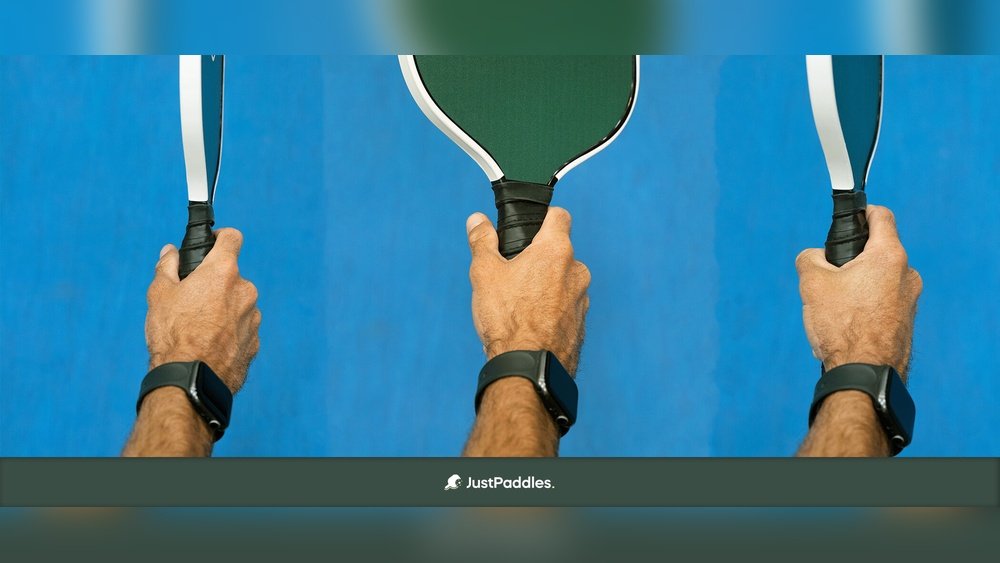
This grip looks like you are shaking hands with the paddle. It is the most popular grip for beginners and pros. Here is how to do it:
- Hold the paddle handle with your opposite hand.
- Turn the paddle so the face points up.
- Place your dominant hand on the handle as if to shake hands.
- Your thumb and index finger form a “V” shape along the paddle handle.
This grip lets you hit many types of shots easily. It works well for volleys, serves, and dinks.
The Eastern Forehand Grip
This grip is good for strong forehand shots. It is similar to holding a baseball bat. Follow these steps:
- Place the base knuckle of your index finger on the top flat part of the paddle handle.
- Wrap your fingers around the handle comfortably.
- Keep your thumb resting on the opposite side of the handle.
This grip gives you power and control for hitting the ball forward.
The Hammer Grip
The hammer grip is like holding a hammer or tool. It is simple and strong. Do this:
- Hold the paddle handle like you hold a hammer.
- Your palm wraps around the handle fully.
- Your thumb points up along the side of the handle.
This grip is easy to use for beginners. It helps with power shots and blocks.

Credit: www.justpaddles.com
Steps to Hold Your Paddle Correctly
Here is a simple way to get the right grip. Follow these steps:
- Relax Your Hand: Do not squeeze too hard. A loose grip is best.
- Find the Right Grip: Try the continental grip first.
- Hold Like a Handshake: Wrap your fingers around the handle as if shaking hands.
- Thumb Placement: Place your thumb along the paddle handle for support.
- Check Your Grip Pressure: It should feel firm but not tight.

Credit: www.shopthecourts.com
Tips to Improve Your Paddle Grip
- Always keep your wrist relaxed.
- Use your fingers, not just your palm, to hold the paddle.
- Switch grips for different shots if needed.
- Practice gripping and swinging to feel comfortable.
- Change your grip size or use a grip tape if your paddle feels too big or small.
Grip Size and Comfort
Paddle handles come in different sizes. Using the right size helps your grip stay firm. Here is how to check your grip size:
| How to Measure | Step |
|---|---|
| Measure from the tip of your ring finger | To the middle crease of your palm |
| Check if your fingers wrap around the handle easily | They should touch your palm comfortably |
| If your hand feels cramped or too loose | Try a different grip size or add grip tape |
A good grip size helps you play longer without pain.
Common Mistakes When Holding a Paddle
Many players make these mistakes. Watch out for them:
- Gripping the paddle too tight. This causes fatigue.
- Holding the paddle too low or too high on the handle.
- Using only the palm without fingers wrapping around.
- Not changing grip for different shots.
- Ignoring hand or wrist pain during play.
Fix these mistakes to enjoy pickleball more.
How to Adjust Your Grip During Play
Sometimes you need to change your grip. Here is when:
- For Dinks: Use a softer grip for control.
- For Serves: Use a firmer grip for power.
- For Volleys: Hold the paddle with a quick, ready grip.
- For Backhand Shots: Shift your grip slightly to the other side of the handle.
Practice switching grips to feel natural.
How to Practice Your Paddle Grip
Practice is the key to feeling good with your paddle. Try these exercises:
- Hold the paddle in front of a mirror. Check your grip shape.
- Practice swinging slowly with your grip.
- Hit soft balls using different grips.
- Ask a friend to watch and give feedback.
- Play short games focusing only on grip and control.
Summary: The Best Way to Grip Your Pickleball Paddle
Here is a quick summary to remember:
- Use a relaxed but firm grip.
- Try the continental grip as your starting point.
- Hold the paddle like you shake hands.
- Keep your thumb and fingers in a “V” shape.
- Use the right grip size for your hand.
- Adjust your grip for different shots.
With time, your grip will feel natural. This helps you play better and enjoy the game.
Remember The Five P’s of Pickleball
While gripping your paddle is important, remember these key ideas:
| The Five P’s | What It Means |
|---|---|
| Preparation | Be ready before every serve or shot. |
| Position | Stand in the right place on the court. |
| Patience | Wait for the right moment to hit. |
| Placement | Hit the ball to smart spots on the court. |
| Power | Use the right strength to finish points. |
Good grip helps with all the Five P’s. Practice both to improve your play.
Final Words
Learning how to grip your pickleball paddle takes time. Start with the continental grip. Keep your hand relaxed. Use the right grip size. Practice often. Change your grip for different shots. Avoid gripping too tight. This will help you feel more comfortable. You will play better and enjoy the game more.
Pickleball is about fun and skill. Your paddle grip is the first step. Now, pick up your paddle and try these tips today!
Frequently Asked Questions
How Do Pro Pickleball Players Hold Their Paddles?
Pro pickleball players hold their paddles using a relaxed Continental grip. They grip it like a handshake, ensuring control and quick maneuverability. This grip places the index finger near the paddle’s second bevel, allowing versatile shots and better power. It balances comfort and precision during play.
What Are The 5 P’s Of Pickleball?
The 5 P’s of pickleball are Preparation, Position, Patience, Placement, and Power. They improve your game strategy. Preparation means being ready for every shot. Position involves staying in the right court spot. Patience helps you wait for the perfect moment.
Placement targets strategic court areas. Power finishes points effectively.
Why Do 90% Of Pickleball Players Have Slow Reflexes?
Most pickleball players have slow reflexes due to limited practice and poor paddle grip techniques. Proper preparation and positioning improve reaction time.
What Is The Golden Rule Pickleball?
The golden rule of pickleball is to maintain a relaxed, loose grip on the paddle. Use the Continental grip, similar to a handshake, for better control and versatility during play. This grip helps improve shot accuracy and reduces arm tension, enhancing overall game performance.