
As an Amazon Associate, I earn from qualifying purchases.
Pickleball is a fun sport. Many people like to play it. It is easy to learn. But you must know the rules to play well. This guide will help you understand the basic pickleball rules.
What is Pickleball?
Pickleball is a sport like tennis and badminton. You use a paddle and a plastic ball with holes. You can play singles or doubles. The game is played on a small court with a net in the middle. The goal is to hit the ball over the net and score points.
The Pickleball Court
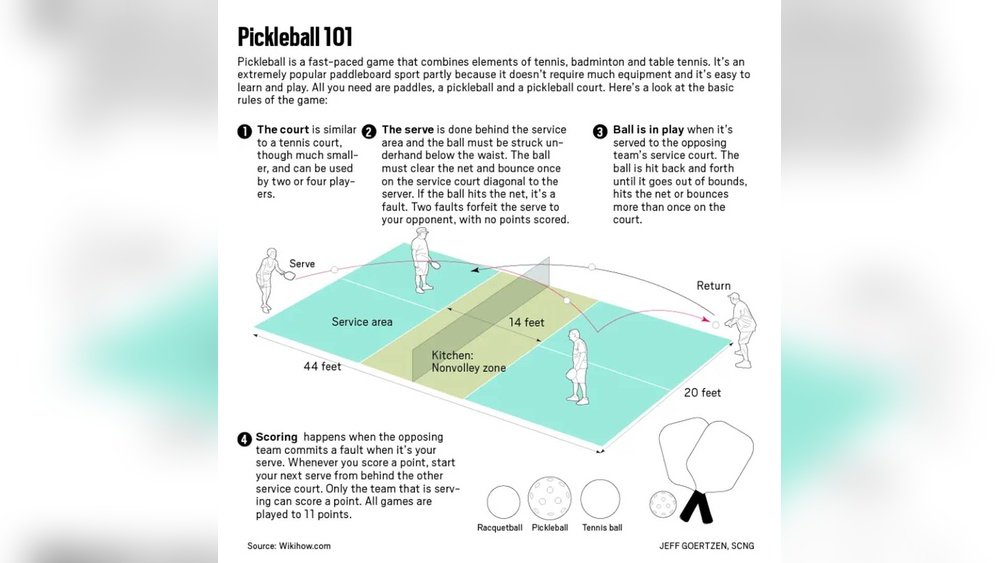
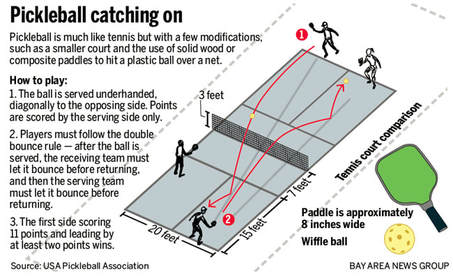
The court is 20 feet wide and 44 feet long. It has a net in the center. The net is 36 inches high at the sides and 34 inches in the middle.
Important areas on the court:
- Baseline: The back line where you serve from.
- Sidelines: The side boundaries of the court.
- Non-volley Zone (Kitchen): The area 7 feet from the net on both sides.
- Service Courts: The two boxes on each side where the serve must land.
The Serve
The game starts with a serve. Here are the rules for serving:
- You must serve underhand. The paddle should move from low to high.
- The serve must be hit below the waist.
- You stand behind the baseline to serve.
- The serve must go diagonally to the opponent’s service court.
- The ball must land past the non-volley zone line in the opposite court.
If the serve hits the net and lands in the correct service box, it is called a “let” and the serve is done again. If it lands in the wrong place or hits the kitchen, it is a fault.
Scoring in Pickleball
Only the serving team can score points. Here is how scoring works:
- You get a point if the other team makes a mistake.
- If the serving team loses the rally, no point is given. The serve goes to the other team.
- Games are usually played to 11 points.
- You must win by 2 points.
Before each serve, the server must say the score loud. This helps players know the score clearly.
The Two-Bounce Rule
This rule helps make the game fair and fun. It goes like this:
- The ball must bounce once on the receiver’s side after the serve.
- The ball must bounce once on the server’s side after the return.
- After these two bounces, players can hit the ball without letting it bounce. This is called volleying.
This rule stops players from smashing the ball right away. It gives time to react and makes the game more friendly.
Credit: www.tennisatbradentoncc.com
The No-Volley Zone or Kitchen
The kitchen is a special area close to the net. Here are the rules about it:
- You cannot hit the ball in the air (volley) while standing inside the kitchen.
- You can enter the kitchen to hit a ball that bounces there.
- If you step in the kitchen and volley the ball, it is a fault.
This rule helps avoid quick smashes near the net. It makes the game safer and fairer.
Faults in Pickleball
A fault means a mistake that ends the rally. Here are some common faults:
- Serving the ball into the kitchen or outside the service court.
- Hitting the ball out of bounds.
- Volleying the ball while standing in the kitchen.
- Not following the two-bounce rule.
- Double hitting the ball (hitting the ball twice before it goes over the net).
If a fault happens, the other team gets the serve or a point, depending on the situation.
Serving Order in Doubles
In doubles, the serving rules are a bit different. Here is how it works:
- Both players on a team get to serve before the serve moves to the other team.
- The first server starts serving from the right side of the court.
- If the serving team loses the rally, the second player serves.
- If the second player loses the rally, the serve goes to the other team.
This rule helps give both players a chance to serve.
General Rules to Remember
- The ball must stay inside the court lines to be good.
- You can only hit the ball once before it goes over the net.
- Players cannot touch the net or cross into the opponent’s court.
- The paddle must hit the ball, not the body.
- Players should call faults honestly to keep the game fair.

Credit: hubsportsboston.com
Summary Table of Basic Pickleball Rules
| Rule | Description |
|---|---|
| Serve | Underhand, diagonally, behind baseline, ball must clear kitchen |
| Scoring | Only serving team can score points, game to 11, win by 2 |
| Two-Bounce Rule | Serve and return must bounce once before volleying |
| No-Volley Zone | Cannot volley ball while inside the kitchen area |
| Faults | Serve faults, volley faults, out of bounds, double hits |
| Serving Order (Doubles) | Both players serve before switching teams |
Final Thoughts
Pickleball is a simple and fun sport. The rules are easy to follow. Remember to serve underhand, keep the ball inside the lines, and respect the kitchen area. Use the two-bounce rule and watch for faults.
Playing by the rules makes the game more enjoyable for everyone. Now you are ready to play pickleball with friends or family. Have fun on the court!
Frequently Asked Questions
What Are The Rules Of Pickleball For Beginners?
Beginners must serve underhand diagonally from behind the baseline. Both serve and return bounce once before volleying. Avoid volleying in the “kitchen” or no-volley zone. Only the serving team scores points. Keep the ball in bounds and follow the two-bounce and fault rules.
What Are The 5 Rules In Pickleball?
The 5 pickleball rules are: serve underhand diagonally, obey the two-bounce rule, avoid volleying in the kitchen, serve only from behind the baseline, and only the serving team scores points.
What Are The 10 Rules Of Pickleball?
The 10 pickleball rules: 1) Serve underhand diagonally. 2) Only serve scores. 3) Serve behind baseline. 4) Two-bounce rule applies. 5) No volley in kitchen. 6) Call score before serve. 7) Serve rotates in doubles. 8) Keep ball in bounds.
9) Fault if serve hits net or kitchen. 10) Volley only after bounces.
What Are The 5 P’s Of Pickleball?
The 5 P’s of pickleball are: Paddle, Position, Placement, Power, and Patience. These elements improve gameplay and strategy.