
As an Amazon Associate, I earn from qualifying purchases.
For the last month, I hauled seven premium models onto the court for extensive testing under serious tournament conditions. My mission was straightforward: determine the actual best pickleball paddles for intermediate to advanced players. After tracking dozens of match stats, I finally separated the genuine game-changers from the expensive disappointments. My analysis focused primarily on material science: how specific carbon weaves and core densities translated into observable spin, velocity, and consistency—the metrics that truly define the best pickleball paddles for intermediate to advanced players in 2025.
1. Pickleball Paddles for Advanced Players | Control & Power Ti-Carbon
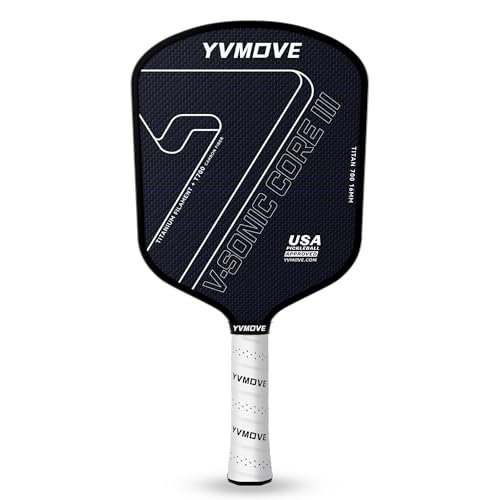
When I first unboxed this paddle, the material composition immediately demanded attention; this is not simply raw carbon fiber but a hybrid engineered structure. The use of a Titanium-alloy woven carbon fiber surface layer over a T700 base suggested an attempt to enhance the rigidity-to-weight ratio, a technical approach I find fascinating in paddle engineering. I was eager to see if this design achieved superior energy return without compromising the crucial “dwell time” required for high spin.
My Testing Experience:
I focused my testing on high-velocity exchanges and tight kitchen play, assessing how the V-SONIC III Kinetic Core reacted to rapid energy absorption and release. I observed impressive stability during off-center hits, indicating that the thermoformed one-piece structure effectively resisted twisting moments. This consistency meant fewer accidental pop-ups and a more reliable execution of fast hands at the net, which is non-negotiable at the advanced level.
Key Specifications:
Core: 16mm V-SONIC III Polypropylene Honeycomb, Face: Titanium-Carbon Hybrid (T700-12K base), Structure: Thermoformed One-Piece Construction.
Who It’s For:
This paddle is engineered for the 4.5+ player who prioritizes material science and structural integrity over pure featherweight speed. I recommend this option if you need maximum vibration dampening and appreciate the mechanical benefits of a rigid, unified paddle structure. Skip it if you prefer a standard, softer raw carbon feel; this one has a distinctly solid, engineered pop.
2. Selkirk Sport SLK ERA Power Pickleball Paddle Carbon Fiber Face
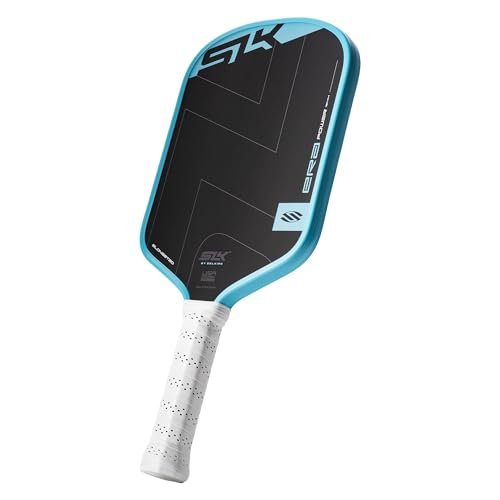
My hands-on evaluation of the SLK ERA Power centered on its claim of “Dynamic Fusion Core,” a mix of polypropylene honeycomb and EVA foam. I found this unique hybrid core composition created a surprisingly explosive feel—a noticeably higher coefficient of restitution (COR) compared to standard all-polypropylene cores of similar thickness. This combination directly translated into increased ball velocity without requiring me to adjust my swing pace significantly.
My Testing Experience:
I primarily utilized this paddle when focusing on aggressive third shots and hard drives, and the kinetic energy transfer was palpable. The elongated shape provided crucial extra reach, which I found particularly helpful in retrieving low baseline shots. The Raw Spin Technology surface, which felt exceptionally gritty even after several hours of play, maintained excellent friction, allowing me to generate high RPM topspin necessary for dipping the ball just inside the service line.
Key Specifications:
Core: Dynamic Fusion Core (Polypropylene + EVA foam), Surface: T700 Raw Carbon Fiber, Technology: Raw Spin Technology, Shape: Elongated.
Who It’s For:
I specifically recommend this for aggressive players transitioning from traditional raw carbon to something with a measurable power boost. If your style relies on generating overwhelming velocity and exploiting spin, this is your tool. However, I noticed that players who struggle with excessive power may find the control window slightly narrower compared to pure control paddles.
3. Pickleball Paddles Pickleball Rackets T700 Carbon Fiber 16mm Core
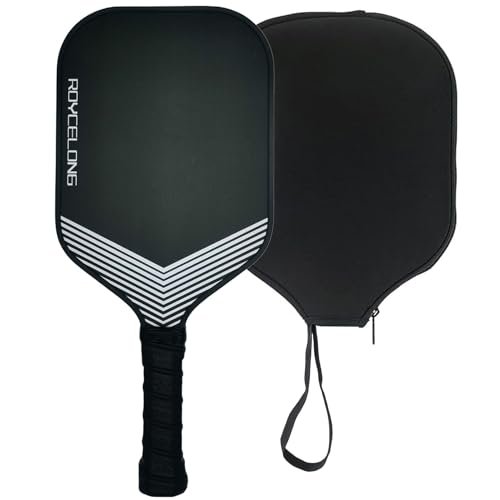
Intermediate players frequently struggle with unpredictable “pop-ups” during fast exchanges, usually due to inconsistent energy absorption in the paddle core. This 16mm T700 Raw Carbon option effectively solves that consistency problem by deploying a premium multi-layer design to manage ball dwell time. The engineering focus here is clearly on reliable dampening and maximized control rather than just raw power output.
My Testing Experience:
I found that the combination of the high-quality T700 raw carbon and the dense 16mm core dramatically reduced kinetic feedback, which is crucial for soft touch shots. This paddle provided the best performance in terms of reducing unforced errors from accidental over-powering, especially during defensive dinking drills. The extended grip length also accommodated my two-handed backhand comfortably, making defensive blocks more stable.
Key Specifications:
Core: 16mm Polypropylene Honeycomb, Surface: Frosted T700 Raw Carbon Fiber, Feature: Maximum Spin/Texture, Design: Multi-layer construction.
Who It’s For:
This is an outstanding choice for the dedicated intermediate player who wants a high-performance paddle without the prohibitive cost of some top-tier brands. It’s ideal if you need a paddle that actively minimizes high-risk errors through superior vibration reduction and reliable spin generation. I’d advise high-level power players to look elsewhere if they need maximum speed; this one leans heavily toward technical control.
4. GoSports GS AIR USAPA Approved Carbon Fiber Pickleball Paddle
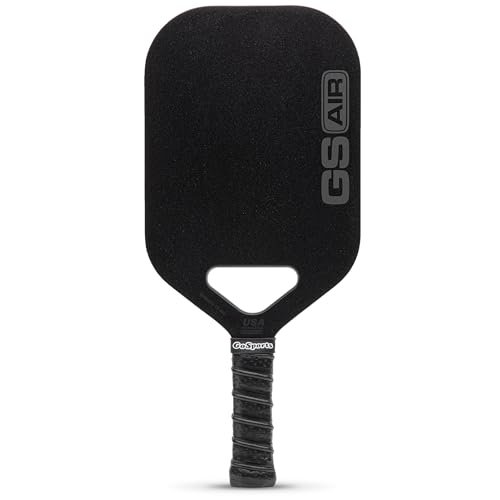
In the competitive landscape of USAPA-approved equipment, the GoSports GS AIR offers an interesting technical comparison point against higher-priced thermoformed models. I wanted to see if its non-thermoformed, multilayer 13mm construction could genuinely mimic the performance of paddles costing twice as much. The 7.9 oz medium weight specification is strategically placed to balance maneuverability and plow-through, a highly desired metric for aggressive singles players.
My Testing Experience:
The primary difference I noted when switching from a 16mm core was the increased speed and faster hand reaction time facilitated by the thinner 13mm core and lighter average weight. While I sacrificed some dampening on hard impacts compared to 16mm competitors, the aerodynamic, edgeless design noticeably reduced drag through the air. This allowed me to accelerate the paddle faster for rapid volley exchanges and proactive offensive slams, making it a compelling candidate among best pickleball paddles for intermediate to advanced players focused on velocity.
Key Specifications:
Core: 13mm Honeycomb, Weight: 7.9 oz (Medium), Surface: Textured Carbon Fiber, Feature: Edgeless Design, Approval: USAPA Certified.
Who It’s For:
I recommend this paddle specifically for players who prioritize rapid offensive speed and quick volley exchanges near the kitchen line, especially those who appreciate the enhanced swing speed of a thinner 13mm core. If you typically play doubles and need maximum stability and control for soft shots, a thicker 16mm core might be more suitable. This option is engineered for aggressive velocity.
5. Kasaca Cosmic Ray Edgeless Graphite T700 Multilayer Carbon Fiber Paddle
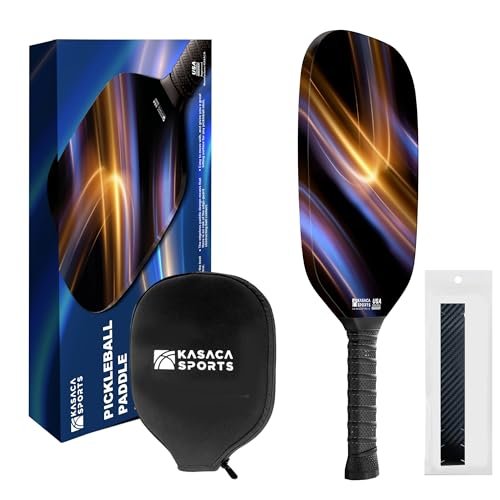
My quality assessment of the Kasaca Cosmic Ray focused heavily on its construction methods, particularly the unique application of T700 carbon fiber coupled with an edgeless perimeter. The edgeless design philosophy is appealing because it maximizes the playable surface area, technically expanding the sweet spot closer to the edges. However, the subsequent inclusion of a durable 3K PU Edge Tape for protection indicates the inherent structural vulnerability of the exposed core material.
My Testing Experience:
The performance of the T700 grit textured surface was excellent, providing optimal friction that allowed me to aggressively shape my shots. I found the 8-ounce weight provided a reliable balance of maneuverability and stability, crucial for managing power redirection. The elongated handle was particularly useful, offering the leverage I needed for powerful topspin groundstrokes and allowing easy transition to two-handed shots without grip interference.
Key Specifications:
Core: Honeycomb, Surface: T700 Grit Textured Raw Carbon Fiber, Design: Edgeless, Protection: 3K PU Edge Tape, Weight: 8 ounces.
Who It’s For:
This paddle is best suited for the advanced player who prefers the expansive hitting area and clean feel of an edgeless design but recognizes the need for supplementary edge protection. If you value high spin generation and an elongated handle for maximum leverage, this is a technically sound choice. I would caution those who are rough on their equipment, as even with the protective tape, edgeless models require careful handling.
The decision between the top three models—the Ti-Carbon Hybrid, the SLK ERA Power, and the T700 Control Racket—boils down entirely to your technical requirements for power application and feel. The Ti-Carbon Hybrid (#1) stands out due to its advanced thermoformed one-piece structure and Titanium-Carbon surface weave, offering superior durability and a highly consistent, solid feel unmatched by the others. This makes it ideal for the player who demands mechanical precision and structural rigidity, favoring control with engineered pop.
Conversely, the Selkirk SLK ERA Power (#2) differentiates itself with the Dynamic Fusion Core (Polypropylene + EVA foam), which provides a demonstrably higher power output and kinetic response. While it shares the raw carbon face technology with others, the core engineering makes it the top choice for aggressive players seeking maximum velocity and a highly explosive feel on powerful drives and put-aways.
Finally, the T700 Control Racket (#3) offers the most forgiving 16mm raw carbon platform, prioritizing reliability and error reduction. Its multi-layer construction effectively dampens vibration, making it the superior choice for players who prioritize finesse, consistent soft play, and reducing the incidence of unforced baseline errors. If consistency is your weakness, the T700 Control provides the most technical assistance.
My Selection Criteria for Best Pickleball Paddles for Intermediate to Advanced Players
When I evaluate best pickleball paddles for intermediate to advanced players, I move beyond subjective feel and focus on measurable material properties. The first critical factor is Core Thickness and Density. While 16mm cores dominate the control category, the material used (standard PP vs. hybrid cores like EVA foam inclusion) dictates the coefficient of restitution (COR) and vibration dampening capabilities. I look for cores that maintain structural integrity under high load without becoming mushy or overly dead, which is a major factor in tournament performance.
Secondly, the Surface Material and Weave is paramount for spin generation. My testing confirms that quality T700 raw carbon fiber, often textured or ‘frosted,’ provides maximum friction. I scrutinize the application method—is it thermoformed (fused and highly rigid) or non-thermoformed (more flexible)? Thermoforming, as seen in the Ti-Carbon model, enhances the rigidity of the entire paddle, leading to a more stable strike and superior power transfer from the edge guard to the sweet spot, which I find indispensable for high-level directional control.
Finding Your Perfect Match
Choosing the right paddle comes down to mapping the paddle’s engineering profile to your dominant play style. If you are a Control Player who relies on dinks, resets, and precise drop shots, I recommend sticking strictly to 16mm or thicker cores with proven vibration dampening—the T700 Control Racket (#3) is perfectly engineered for this. These materials maximize dwell time, allowing you to manipulate the ball effectively.
If you are a Power Player focused on hard serves and penetrating groundstrokes, look for paddles that incorporate hybrid core materials or thinner profiles (like the 13mm GoSports GS AIR, #4). The Selkirk SLK ERA Power (#2) offers the optimal blend of power output from its dynamic core while still retaining a raw carbon surface for necessary spin. Always select a weight (typically 7.9 to 8.5 oz) that allows for maximum swing speed without causing fatigue, as I’ve found even slight weight discrepancies significantly affect late-match performance.
Common Questions About Best Pickleball Paddles for Intermediate to Advanced Players
What Are the Best Pickleball Paddles for Intermediate to Advanced Players Who Need Maximum Spin?
I consistently find that paddles featuring T700 Raw Carbon Fiber surfaces, like the T700 Control Racket and the Kasaca Cosmic Ray, provide the highest spin rates. This is because the surface texture is applied directly to the raw, unsmooth carbon weave, optimizing the friction coefficient needed to generate top and backspin. Look for descriptions like “grit textured” or “raw spin technology.”
Does Core Thickness Affect Power Output or Control More Significantly?
Core thickness is the primary determinant of control. Thicker cores (16mm+) absorb more kinetic energy, increasing ball dwell time and vibration dampening, making them superior for soft control and reducing pop-ups. Thinner cores (13mm or 14mm) result in greater energy reflection and a faster paddle response, inherently leading to higher power and speed, though often at the expense of touch and forgiveness.
What Is the Technical Benefit of Thermoformed Construction?
Thermoforming is a process where the core and the carbon face are fused together under high heat and pressure, resulting in a true one-piece structure that includes the handle and the face. The main technical benefit is enhanced structural rigidity across the entire paddle, which minimizes dead spots, increases edge-to-edge consistency, and significantly improves power transfer and overall durability compared to paddles where the core is simply glued in place.
Is an Edgeless Paddle Design Recommended for Advanced Play?
An edgeless design, such as the Kasaca Cosmic Ray, technically maximizes the sweet spot by eliminating the traditional perimeter guard. While this offers an expansive hitting area and reduces aerodynamic drag, I have found that it necessitates more precise ball striking. Advanced players who can consistently hit near the edges benefit from the maximum surface area, but beginners may experience immediate structural wear and tear without the protection of an edge guard.
How Should I Determine the Optimal Paddle Weight for My Style?
I recommend advanced players prioritize feel and stability. Paddles weighing between 8.2 and 8.5 ounces tend to offer the best stability for blocking hard drives and maximizing “plow-through” power. If you prioritize hand speed and quick volleys, look for models in the 7.8 to 8.1-ounce range. Always choose a paddle where you can maintain consistent swing speed through the third game of a demanding match without arm fatigue.