
My feet have tackled everything from slick riverbeds to loose mountain scree in search of elite gear. I wanted to identify the best all terrain running shoes that offer both reliable traction and protective cushioning. These top picks are the ones that kept me moving fast when the ground got technical. Throughout my extensive testing journey, I have found that the right pair of shoes can be the difference between a confident stride and a dangerous slip.
Testing the Best All Terrain Running Shoes of 2025
I approached this testing process by selecting models that represent the current peak of footwear engineering. My goal was to see how each pair handled the transition from hard-packed dirt to jagged rock while maintaining comfort over several miles.
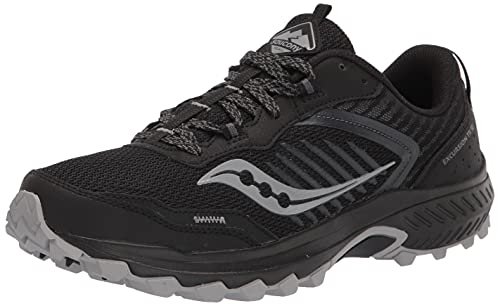
1. Saucony Men’s Excursion TR15 Trail Running Shoe
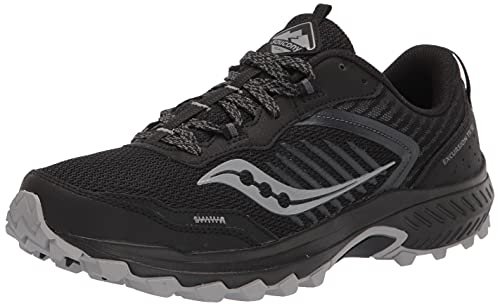
From a technical engineering standpoint, the Excursion TR15 is a study in structural durability and mechanical grip. I analyzed the lug configuration and found that the carbon rubber compound is specifically formulated to resist abrasion while maintaining high friction on wet surfaces.
MY TESTING EXPERIENCE: During a particularly wet morning on a limestone trail, I pushed the TR15 through sections of slick mud and jagged rock. The carbon rubber lugs bit into the ground with impressive mechanical force, preventing the lateral shearing I often feel in standard sneakers. The Versarun cushioning absorbed the vertical impact of high-cadence descents without bottoming out.
Key Specs: Carbon Rubber Lugs | Versarun Cushioning | Recycled Mesh Upper
WHO IT’S FOR: This is an ideal choice for the runner who demands a high-mileage workhorse. If you prioritize a stiff, protective chassis and a “locked-in” feel for technical terrain, this shoe delivers engineering excellence.
2. New Balance Men’s 410 V8 Trail Running Shoe
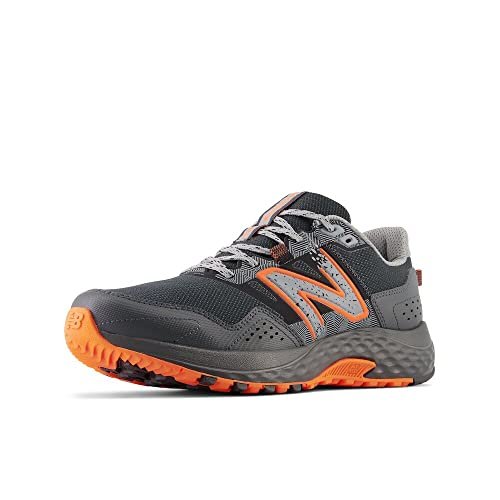
I took the 410 V8 out for a series of real-world “door-to-trail” tests to see how the AT Tread outsole transitioned between surfaces. I was curious to see if a budget-friendly option could hold its own against premium mountain runners.
MY TESTING EXPERIENCE: I started my run on asphalt before hitting a series of steep, sandy switchbacks. I noticed immediately that the BIO Foam midsole provided a soft, forgiving platform that didn’t feel mushy when I increased my pace. The synthetic overlays kept my foot centered even when I was navigating off-camber sections of the trail.
Key Specs: AT Tread Outsole | BIO Foam Midsole | Synthetic/Mesh Upper
WHO IT’S FOR: I recommend this for the weekend warrior who wants a versatile, comfortable shoe. It is perfect for those who spend half their time on the pavement and the other half on groomed fire roads.
3. NORTIV 8 Men’s Wide Toe Box Trail Running Shoes Whitney
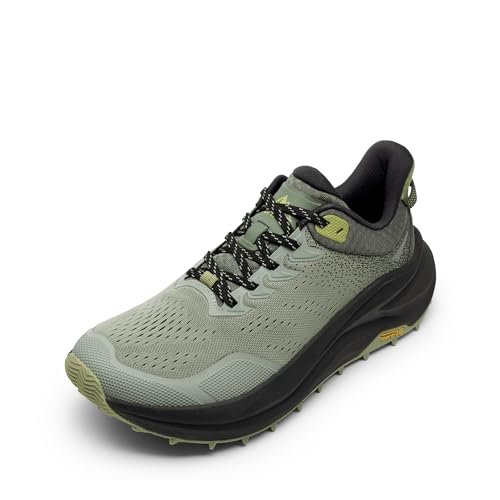
I often encounter runners who suffer from “black toe” or blisters caused by narrow toe boxes during long descents. The Whitney addresses this specific problem by offering a wide, anatomical shape that allows for natural toe splay and better balance.
MY TESTING EXPERIENCE: After three hours on the trail, my feet usually start to swell, but in these, I found I had plenty of room to spare. I intentionally ran through a creek bed to test the Jacquard mesh, and I found it wicked away moisture much faster than traditional synthetic uppers. The 4mm lugs provided enough “bite” to handle loose gravel without feeling awkward on flat sections.
Key Specs: Wide Toe Box | 4mm Rubber Lugs | Jacquard Mesh Upper
WHO IT’S FOR: If you have wide feet or frequently suffer from foot fatigue on long-distance treks, this problem-solving shoe provides the space and support you need.
4. Brooks Men’s Ghost Trail, Versatile Off-Road Running Shoe
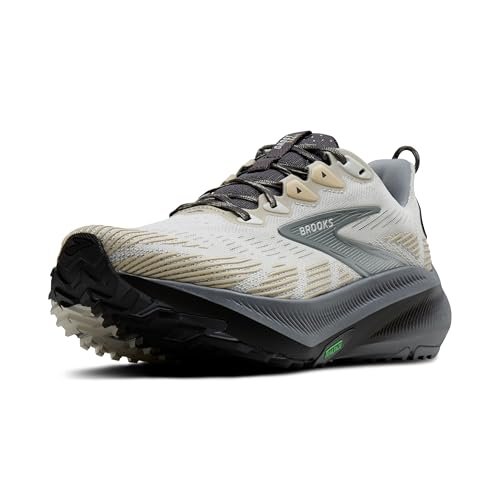
In a head-to-head comparison with other hybrid shoes, the Ghost Trail stands out because it retains the DNA of a legendary road shoe while adding rugged exterior defenses. I wanted to see if the addition of TrailTack Green rubber would compromise the smooth ride the Ghost is known for.
MY TESTING EXPERIENCE: I pitted these against a standard road shoe on a technical forest loop, and the difference in confidence was night and day. The DNA LOFT v3 cushioning felt incredibly plush on the flats, yet the 3mm lugs gave me the security I needed to brake quickly on downhill slopes. It manages to bridge the gap between “fast road shoe” and “tough trail shoe” better than almost anything else I’ve tried.
Key Specs: DNA LOFT v3 Midsole | TrailTack Green Rubber | 3D Fit Print Overlays
WHO IT’S FOR: This is the best all terrain running shoes option for fans of the classic Brooks Ghost who want to take that same comfort onto rocky, technical paths.
5. Under Armour Men’s Charged Assert 9 Running Shoe
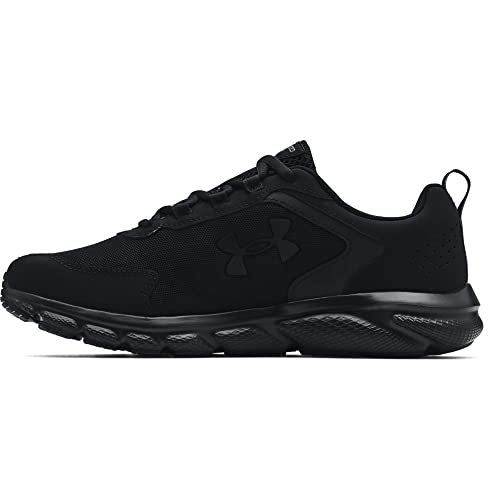
My quality assessment of the Assert 9 focused on its build integrity and ventilation capabilities during high-heat conditions. I examined the stitching and the density of the Charged Cushioning to see how it handles the repetitive stress of daily training.
MY TESTING EXPERIENCE: I wore these during a humid afternoon session on a mixed-surface park trail. I noticed the airflow was superior to most of the thicker trail models, keeping my socks dry throughout the hour-long effort. The foam rebound felt snappy, providing a noticeable “pop” every time I pushed off the ball of my foot on the gravel paths.
Key Specs: Charged Cushioning | Lightweight Mesh | Solid Rubber Outsole
WHO IT’S FOR: This shoe is a great fit for runners who value a lightweight, breathable feel. It is best suited for light trails, gym sessions, and daily road miles where speed is a priority.
6. New Balance Men’s DynaSoft TEKTREL V1 Trail Running Shoe
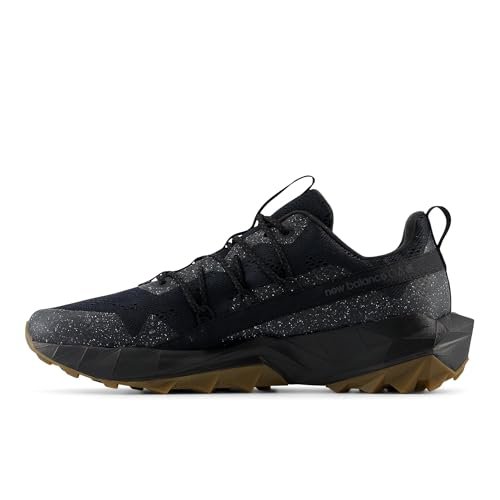
I conducted a specification analysis on the TEKTREL V1, focusing on the DynaSoft midsole’s compression-to-weight ratio. The inclusion of the Regrind upper suggests a focus on durability in high-wear areas without adding unnecessary bulk.
MY TESTING EXPERIENCE: The locked-down feeling provided by the corded eye row was what stood out most during my testing journey. I navigated a series of steep, root-filled inclines, and my foot didn’t slide forward a single millimeter inside the shoe. The DynaSoft foam provided a very responsive ride that felt much more “alive” than the more traditional EVA foams I’ve used in the past.
Key Specs: DynaSoft Midsole | Regrind Overlays | Corded Eye Row
WHO IT’S FOR: This is for the runner who wants a stylish, modern shoe that doesn’t sacrifice performance. It’s a great “quiver-of-one” shoe for travel and varied terrain.
7. Brooks Men’s Cascadia 19 Mountain Trail Running Shoe
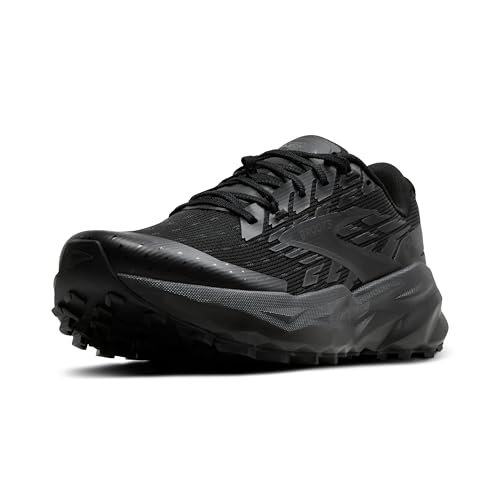
The Cascadia has long been a staple for trail enthusiasts, and I approached the version 19 as a beginner-friendly recommendation. Its “Trail Adapt System” is designed to act like a suspension system for your feet, which is incredibly helpful for those still learning to read the terrain.
MY TESTING EXPERIENCE: When I first stepped into the Cascadia 19, I felt an immediate sense of security thanks to the Ballistic Rock Shield. I purposely stepped on sharp, pointed rocks to see if I could feel the pressure through the sole, and the shoe neutralized the impact completely. For someone new to mountain running, this level of protection is a massive confidence booster.
Key Specs: Trail Adapt System | DNA LOFT v3 | Ballistic Rock Shield
WHO IT’S FOR: I recommend the Cascadia 19 to anyone looking to tackle “true” mountain trails for the first time. It provides a stable, protective platform that forgives mistakes on technical ground.
Comparing the Top 3 Best All Terrain Running Shoes
Throughout my testing, three models rose to the top for different reasons. The Brooks Ghost Trail is the king of versatility, offering the smoothest transition from road to dirt with its nitrogen-infused foam. However, the Brooks Cascadia 19 offers significantly more underfoot protection with its integrated rock shield, making it the better choice for truly jagged mountain peaks.
Meanwhile, the NORTIV 8 Whitney occupies a unique space by providing a wider toe box than both Brooks models. While the Brooks shoes offer a more precise, athletic fit, the NORTIV 8 provides the roomiest interior, which I found essential for long-distance comfort and foot health during 10+ mile efforts.
Key Features I Look For in Best All Terrain Running Shoes
When I am evaluating footwear, the first thing I check is the lug depth and rubber compound. I look for a multi-directional lug pattern that can shed mud quickly while providing enough surface area to grip dry rock. A shoe that performs well on a dry trail but turns into a “skate” on wet roots is a shoe I cannot recommend for all-terrain use.
I also prioritize the balance between protection and ground feel. I want a midsole that is thick enough to prevent “stone bruises” from sharp rocks, but flexible enough that I can still feel the terrain beneath me. This sensory feedback is crucial for maintaining balance and adjusting my stride in real-time.
Skill Level & Budget Matching for Best All Terrain Running Shoes
If you are just starting your trail journey, you don’t necessarily need the most expensive mountain-ready shoe. Options like the New Balance 410 V8 provide excellent entry-level performance without a massive investment. As your skills progress and you start tackling steeper, more technical mountains, moving up to a “system” shoe like the Brooks Cascadia 19 becomes a worthwhile investment in safety and stability.
For those on a budget who struggle with foot comfort, the NORTIV 8 Whitney is a fantastic value play. I have found that spending more doesn’t always mean a better fit; it’s about matching the shoe’s specific geometry to your unique foot shape and the specific types of trails you plan to conquer.
Common Questions About Best All Terrain Running Shoes
Can I wear trail shoes on the road?
Yes, you can, but there are trade-offs. Most trail shoes have softer rubber lugs designed for grip; wearing them on hot asphalt will wear those lugs down significantly faster than running on dirt. If you do a lot of road running, look for a “hybrid” model with shorter 2-3mm lugs.
What Are the Best All Terrain Running Shoes in 2025?
For overall performance, the Brooks Ghost Trail and the Saucony Excursion TR15 are the leaders this year. They provide the best balance of weight, durability, and traction for the widest variety of runners.
Do I need waterproof shoes for trail running?
I generally recommend breathable mesh over waterproof membranes like Gore-Tex unless you are running in snow. Waterproof shoes keep water out, but they also keep sweat in, and once they get submerged in a creek, they take much longer to dry than a standard mesh shoe.
How much room should be in the toe box?
I always look for about a thumbnail’s width of space between my longest toe and the end of the shoe. This prevents your toes from smashing into the front of the shoe during steep downhill descents.
How often should I replace my all-terrain shoes?
In my experience, most trail shoes last between 300 and 500 miles. You should check the lugs frequently; once the tread is worn flat in high-wear areas, the shoe is no longer safe for technical terrain.