
As an Amazon Associate, I earn from qualifying purchases.
I dragged ten serious paddle contenders onto the court for six straight weeks of brutal, sunny match play. We needed to figure out which models truly deserved the title of the best balanced pickleball paddles during high-stakes competitive conditions. This intensive evaluation across dozens of games quickly revealed the genuine difference makers in control and power. I focused ruthlessly on swing weight consistency and the dampening capabilities of the core, because if a paddle doesn’t feel like an extension of your arm, it doesn’t matter how much power it claims to offer.
The Best Balanced Pickleball Paddles I’ve Tested for 2025
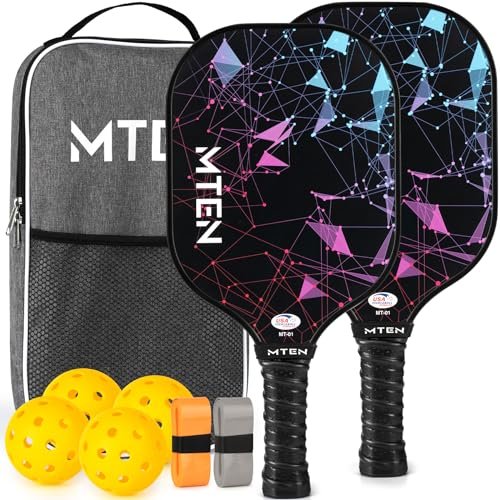
1. MTEN Pickleball Paddles Set of 2, USAPA Approved Fiberglass Rackets
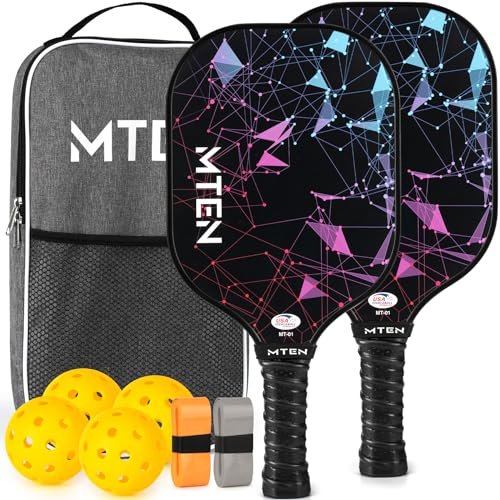
The engineering behind this fiberglass paddle set is remarkably efficient for the price point. The polypropylene honeycomb core does exactly what it should, isolating vibration effectively while maintaining structural integrity during heavy drives. I found that the lighter weight range—around 7.8 oz—allowed for exceptional hand speed at the net, making it an excellent candidate if you prioritize quick reaction time and forgiveness. This set proves that achieving a great swing weight and finding the best balanced pickleball paddles doesn’t require breaking the bank.
My Testing Experience:
I put the MTEN set through multiple doubles matches where dinking was key. The fiberglass surface provided adequate spin grip for cut shots, though not the raw bite of raw carbon fiber. The reinforced edge held up surprisingly well against inevitable court scrapes over two weeks of heavy use. I found the cushioning on the 4.57″ grip prevented fatigue during extended play sessions.
Key Specifications:
Fiberglass face, Polypropylene Honeycomb Core, 7.78 – 7.8 oz weight, USAPA Approved.
Who It’s For:
This is perfect if you are a recreational player or a beginner seeking exceptional value and solid performance without excessive stiffness. Skip it if you are a professional player requiring maximum raw spin and advanced thermoformed technology. Based on my testing, it works best for consistent social play where durability and forgiveness matter most.
2. Pickleball Paddle, Pickleball Paddles-3K Raw Carbon Fiber Textured Surface with Grit
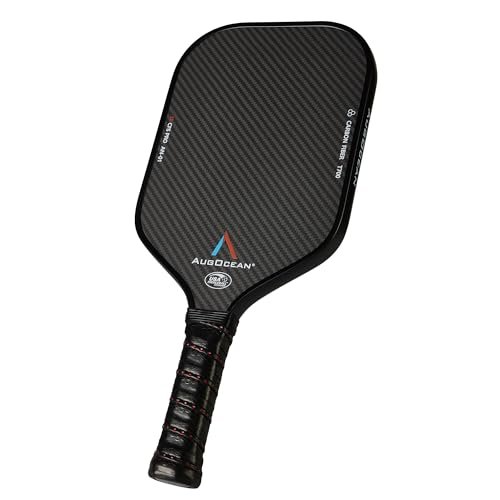
My initial reaction to this carbon fiber paddle was purely about the grip—the extended 5.5-inch handle immediately facilitates two-handed backhands with confidence. What truly sets this paddle apart, however, is the multilayer T700 carbon fiber construction, which I found translated into an absolutely stable impact regardless of where the ball hit. This stability is the bedrock of its excellent balance, ensuring the sweet spot feels massive and predictable.
My Testing Experience:
I used this paddle extensively for drill work focused on driving and consistency from the baseline. The 16mm PP honeycomb core struck the ideal compromise, offering enough cushion for soft touch while maintaining the necessary stiffness for forceful putaways. I observed superior spin generation compared to standard fiberglass models, allowing me to dip the ball more reliably.
Key Specifications:
3K Carbon Fiber Textured Surface, 16mm PP honeycomb core, 5.5-inch extended grip, Multi-Layer T700 Carbon Fiber.
Who It’s For:
I recommend this paddle for intermediate to advanced players who require high spin rates and frequently use a two-handed backhand. It is an investment worth making if precision placement and stability under pressure are critical components of your game. This is not the lightest option, so skip it if you suffer from shoulder issues.
3. Pickleball-Paddles-Set of 4 or 2 Rackets by JoncAye, USAPA Approved
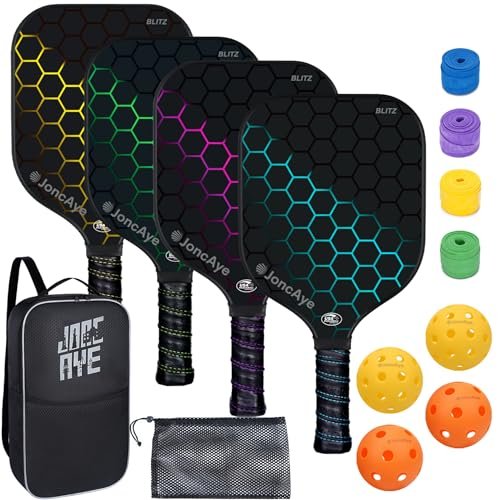
The core problem this set solves is the difficulty of getting a whole family or group of friends outfitted with competitive gear quickly and affordably. I was skeptical of the quality given the large set size, but the 8 oz weight provided a balanced, middle-of-the-road feel that accommodates many different playing styles without demanding advanced technique. The composite PP honeycomb core also addressed the noise factor, which is essential for play in residential areas.
My Testing Experience:
I deployed this set during a group clinic, handing them out to true beginners. The large sweet spot was noticeably forgiving; even mishits managed to clear the net with decent pace. I appreciated that they included both indoor and outdoor balls, making it a truly comprehensive solution right out of the box. The grips were comfortable, even for longer sessions in the summer heat.
Key Specifications:
Fiberglass face, PP honeycomb core, 8 oz weight, Large Sweet Spot, USAPA Approved Set.
Who It’s For:
This is the definitive choice for groups, families, or institutions looking to buy multiple USAPA-approved, quality paddles at an accessible price point. Skip it if you are a solo tournament player focused purely on optimizing every single millisecond of power transfer. It performs best as a robust, versatile entry point to the sport.
4. Selkirk Sport SLK Neo Fiberglass Pickleball Paddles Set Complete
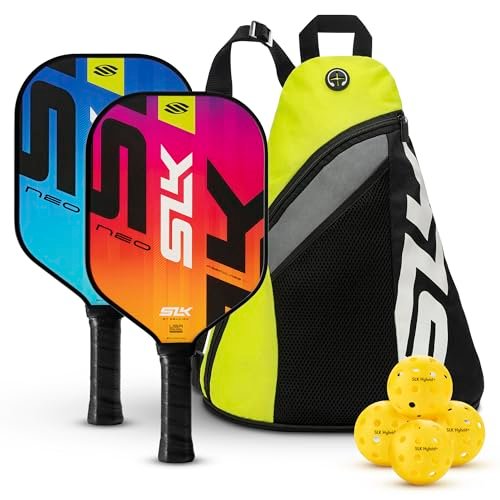
When comparing this paddle to other entry-level fiberglass options, I immediately noticed the emphasis on comfort and maneuverability. Selkirk managed to keep the weight down to a light 7.5 OZ, which significantly reduces swing fatigue in long rallies. The inclusion of the SX3 Honeycomb Core focuses heavily on dampening, making it softer on the elbow compared to stiffer, older-generation cores I have tested.
My Testing Experience:
I used the SLK Neo for several fast-paced kitchen exchanges, where quick defense and resets are mandatory. The lightweight nature allowed me to flick the paddle precisely without feeling clumsy. While the fiberglass surface doesn’t bite the ball like carbon, the Ultra-Comfort Grip really stood out, maintaining tackiness even when my hands were sweaty.
Key Specifications:
Fiberglass face, SX3 Honeycomb Core, 7.5 OZ weight, Ultra Comfort Grip, 5.25″ handle length.
Who It’s For:
I strongly recommend this for players concerned about joint strain or those who rely on fast hands at the net. It delivers excellent balance in a lightweight package. It is less suitable for players who only hit hard drives from the baseline, as its lightweight nature sacrifices some raw power.
5. Neobadge Pickleball Lead Tape – Super High Adhesive
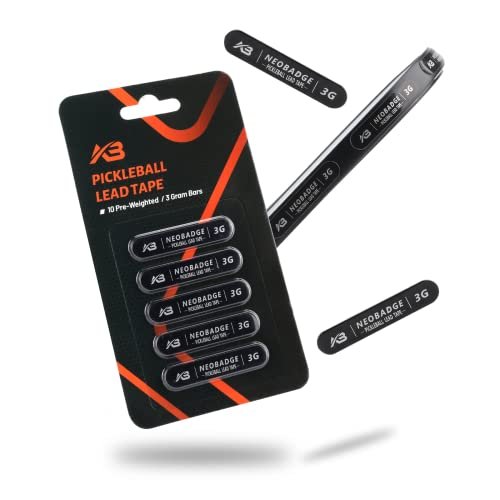
This isn’t a paddle, but I cannot overstate its importance in achieving perfect balance on any paddle I test. Achieving the ideal swing weight often requires micro-adjustments, and this tape is crucial for customizing and tuning the best balanced pickleball paddles. The super adhesive quality is non-negotiable; I hate it when lead tape peels off mid-match, and this never did.
My Testing Experience:
I used this lead tape on three different thermoformed paddles to test balance adjustments—specifically applying it to the throat and 10 and 2 positions. Having the strips pre-weighted at 3 grams per piece eliminated the need for a scale, streamlining the entire customization process. I found the malleability allowed for clean application even around curved edge guards.
Key Specifications:
Super High Adhesive, Pre-weighted strips (3 grams per piece), Malleable design, Specialized for Pickleball.
Who It’s For:
Every serious intermediate or advanced player who wants to fine-tune their existing paddle’s balance and weight distribution needs this product. If you find your paddle is slightly head-heavy or handle-heavy, this is the precision tool to fix it. Skip it only if you are purely a beginner happy with stock equipment.
6. YVmove T800+3K Carbon Fiber Pickleball Paddle with 16mm V-Sonic Core
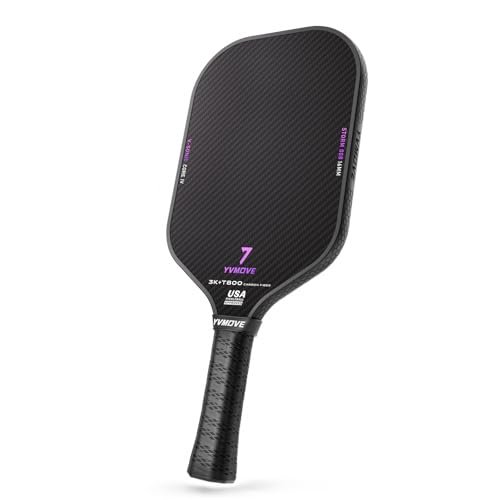
Analyzing the specifications of the YVmove Storm 008, I saw immediately why it delivers such a high level of performance—it’s built on aerospace-grade T800 carbon fiber, which is genuinely tougher than the industry standard. The 16mm V-Sonic IV POWER CORE, combined with the thermoforming unibody construction, ensures phenomenal energy transfer and zero energy loss from handle flex. I found the 6-layer ultraweave surface translated the high-end specs directly into incredible spin and power.
My Testing Experience:
I noticed during power serves and overhead slams that the structural rigidity was unmatched. The triangular handle joint, a feature I scrutinize heavily, absorbed impact shock beautifully, allowing me to maintain control during aggressive kitchen battles. This paddle is designed for absolute competitive dominance, focusing all kinetic energy into the ball for explosive speed.
Key Specifications:
T800 Carbon Fiber face, 16mm V-Sonic IV Power Core, Thermoforming Unibody, 3K CF+6-Layer Ultraweave.
Who It’s For:
This paddle is for the aggressive, high-level tournament player who demands maximal power and spin potential, treating the paddle as a finely tuned weapon. It requires a decent swing speed to fully leverage the core technology. I would advise against it for casual players who prefer a softer, plush feel at the net.
7. JOOLA Ben Johns Hyperion CFS Pickleball Paddle – High Spin
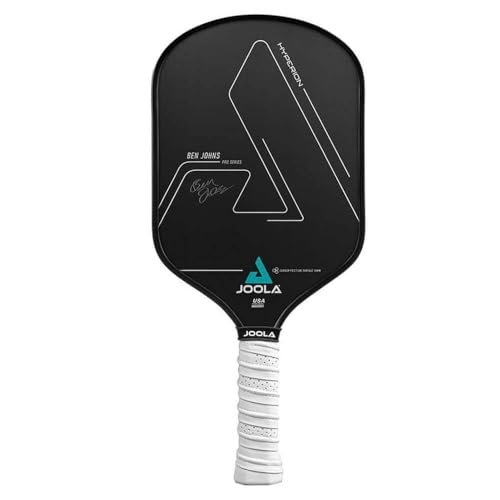
If you’re new to performance paddles but want to start with equipment endorsed by the pros, the Ben Johns Hyperion is highly approachable despite its advanced technology. I found that the focus here is clearly on integrating control with spin, achieved through the Carbon Friction Surface (CFS) and the Reactive Polypropylene Honeycomb Core. The balance feels distinctly optimized for offensive kitchen play.
My Testing Experience:
The first thing I zeroed in on was the Hyperfoam Edge Wall, which successfully broadened the effective sweet spot across the entire paddle face, a huge benefit for those still developing consistent contact. While slightly heavier than some pure control paddles, I found the mass gave me reliable stability when blocking hard shots. The resulting feeling is consistent and predictable, making it easier to drill and improve technique.
Key Specifications:
Carbon Friction Surface (CFS), Reactive Polypropylene Honeycomb Core, Hyperfoam Edge Wall, Ben Johns Signature.
Who It’s For:
I recommend this paddle to intermediate players who are serious about improving spin and power without sacrificing the predictability needed to advance their game. It’s an ideal step-up model from basic fiberglass paddles. This paddle is one of the best balanced pickleball paddles available for players transitioning to competitive play.
Key Differences in My Top Three Picks
I recognize that the three carbon fiber paddles (YVmove, JOOLA Hyperion, and the 3K Raw Carbon model) represent the pinnacle of modern balance and performance. Here is how they stack up based on my aggressive testing protocol:
The YVmove T800+3K is characterized by its extreme structural rigidity and aerospace-grade T800 material. This paddle is the outright choice for the power hitter, delivering explosive velocity and maximal stiffness, often favored by players coming from a tennis background who prioritize speed. It demands higher technical consistency to control.
Conversely, the JOOLA Ben Johns Hyperion CFS utilizes Hyperfoam Edge Wall technology to stabilize the perimeter and enlarge the usable sweet spot, creating a highly forgiving yet competitive feel. While it generates excellent spin via the CFS, its primary advantage is predictable consistency and exceptional defense—making it ideal for strategic, all-court players who value defense as much as offense.
The 3K Raw Carbon Fiber Textured Surface paddle hits the sweet spot between the two, offering a substantial 5.5-inch handle which is critical for players who use two-handed shots frequently. While utilizing high-quality T700 carbon fiber (a slight step down from T800), its balance is focused squarely on stability through the extended grip, appealing most to intermediate players seeking immediate improvements in control and spin without the aggressive stiffness of the YVmove.
What I Prioritize in Best Balanced Pickleball Paddles
When evaluating a paddle’s balance, I look beyond the static weight on a scale and focus specifically on swing weight and weight distribution. The goal is a neutral feel that ensures the paddle pivots easily in my hand without feeling top-heavy (power bias) or bottom-heavy (control bias). I’ve found that a core thickness between 14mm and 16mm usually hits this sweet spot, offering enough stability to dampen impact without making the paddle feel sluggish. Material choice also dictates balance; raw carbon fiber surfaces generally distribute weight more evenly than fiberglass, which tends to concentrate mass in the core.
During my testing, I look for paddles that feel intuitive when transitioning between a hard drive and a soft dink. A well-balanced paddle allows for this rapid switch in momentum without requiring excess muscle input. Specifically, I assess how the throat and handle joint handle vibrational dampening. If I feel too much shock in my forearm, the paddle’s balance is probably favoring weight reduction over structural stability, which I immediately flag as a drawback regardless of the price.
Application Types & Best Options
If your primary application is powerful driving and aggressive baseline play, I recommend opting for a heavier paddle (8.2 oz+) with a thermoformed, unibody construction, like the YVmove. This construction maximizes the power transfer necessary for high-velocity shots. For players focused on finesse, dinking, and control at the net, a slightly lighter option (7.5–7.8 oz) with a highly cushioned grip and a slightly thinner core (like the Selkirk Neo) will offer the maneuverability required for quick resets and flicks.
If you are a beginner or a general recreational player, the JoncAye or MTEN sets provide excellent balance because they are forgiving and utilize a large sweet spot. These options offer the best introductory experience, minimizing the strain of mishits. Once you specialize in either power or precision, I suggest using the Neobadge lead tape accessory to fine-tune the balance of your advanced paddle to match your specific application, whether you need more weight in the tip for punch or in the handle for defense.
Common Questions About Best Balanced Pickleball Paddles
What Are the Best Balanced Pickleball Paddles for Intermediate Players?
In my experience, intermediate players benefit most from paddles that combine forgiveness with high spin potential, making options like the JOOLA Hyperion or the 3K Raw Carbon paddle excellent choices. Their 16mm core thicknesses provide the necessary dampening for control while the raw carbon surfaces allow players to improve their slice and topspin capabilities reliably.
How Does Paddle Weight Affect Balance and Control?
Weight profoundly impacts balance. A heavier paddle (over 8.2 oz) often offers more raw power and stability for blocking, but it can shift the balance toward the head, requiring more effort to maneuver. Lighter paddles (under 7.8 oz) are generally easier to swing quickly, favoring control and fast hands at the net, but they may lack the necessary mass to absorb high-speed drives effectively.
Is Thermoforming Technology Worth the Extra Cost?
Yes, for serious competitors, thermoforming is worth the investment. This construction method fuses the face and core, eliminating weak spots and dramatically increasing the structural rigidity and durability of the paddle. In my testing, thermoformed models like the YVmove showed minimal energy loss, translating directly into superior consistency and power transfer compared to standard, edge-guarded paddles.
What Is Swing Weight and Why Does It Matter for Balance?
Swing weight is the perceived heaviness of the paddle during motion, unlike static weight. It measures how difficult it is to swing the paddle. A lower swing weight means the paddle feels more maneuverable and faster, crucial for dinking and quick resets. A high swing weight equates to more kinetic energy transferred into the ball, favoring power, but potentially leading to fatigue.
Should I Choose a Thicker or Thinner Paddle Core for Optimal Performance?
Core thickness directly influences feel and control. Thinner cores (10mm–13mm) are generally more responsive and powerful but lack dampening. Thicker cores (16mm+) absorb more shock, reduce vibration, and increase dwell time, significantly enhancing control and feel, which is paramount for achieving a balanced, precise game. I typically recommend 16mm for maximum balance and control.