
I often see runners hesitate to hit the dirt simply because premium outdoor gear costs an absolute fortune these days. You can actually find incredible grip and serious durability without dropping several hundred dollars on a single pair of trail shoes. Here are the best inexpensive trail running shoes that offer elite performance for those of us who value a deal.
The Best Inexpensive Trail Running Shoes for Real Performance
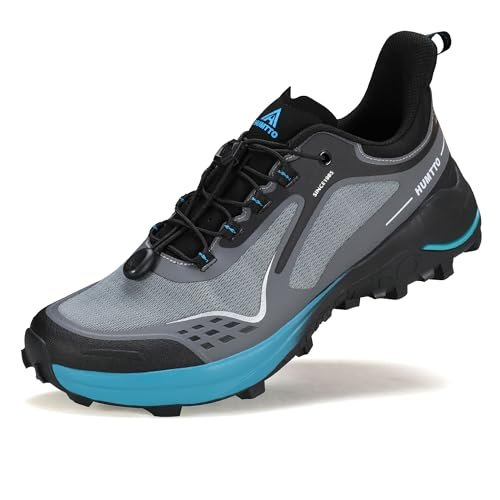
1. HUMTTO Men’s Hiking Sneakers Quick Lace Lightweight Trail Running Shoes
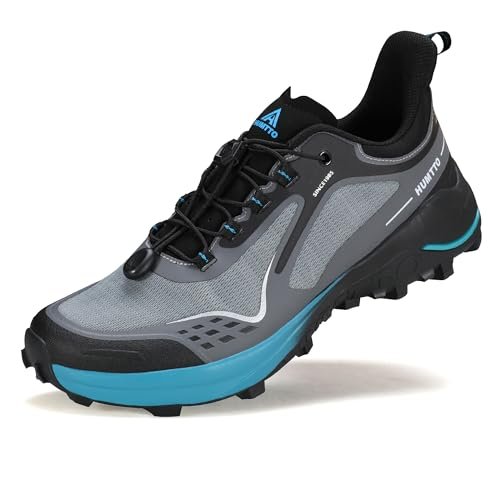
From a purely technical standpoint, these shoes are a fascinating piece of engineering that bridges the gap between a tactical boot and a fast-paced runner. I am particularly impressed by the mechanical advantage of the DUAL-TERRAIN system, which utilizes a high-rebound EVA midsole to manage kinetic energy return on hard-packed dirt.
MY TESTING EXPERIENCE: I took these out on a technical descent where the sharp granite usually shreds softer foams. The anti-collision rubber toe cap saved my feet from three distinct root strikes that would have ended my day in lighter shoes. I found the bungee lacing held tight even during high-lateral-load turns.
Key Specs: DUAL-TERRAIN Rubber Outsole | Quick-Lock Bungee Lacing | EVA Shock-Absorbing Midsole
WHO IT’S FOR: This is the ideal choice for the runner who needs a “do-it-all” hybrid that can handle a morning mountain run and an afternoon of heavy trekking without swapping gear.
2. New Balance Men’s 410 V8 Trail Running Shoe
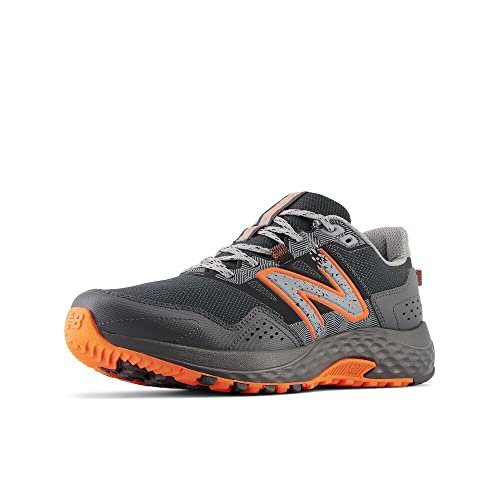
I’ve spent countless hours on “door-to-trail” routes, and this shoe is a master of that specific environment. It doesn’t feel like a clunky tank when you’re on the pavement, but the moment you hit the mud, the AT Tread outsole bites in with surprising tenacity.
MY TESTING EXPERIENCE: I noticed the BIO Foam midsole provides a much softer landing than most budget-friendly options I’ve tried. On a six-mile loop that was half gravel and half asphalt, my knees felt significantly less “rattled” than they usually do in stiffer trail models.
Key Specs: AT Tread Dual-Use Outsole | BIO Foam Midsole | Synthetic/Mesh Upper
WHO IT’S FOR: Best for the fitness enthusiast who wants a comfortable, reliable shoe that can transition from the neighborhood sidewalk to the local state park trails seamlessly.
3. NORTIV 8 Men’s Wide Toe Box Trail Running Shoes Whitney
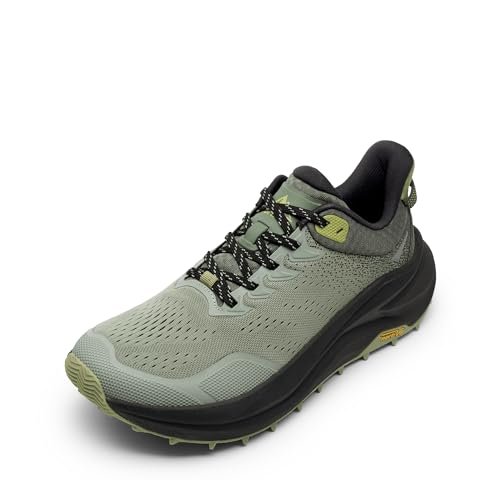
If you struggle with “toe bang” or cramped feet during long summer runs, this shoe is the solution you’ve been looking for. It addresses the common problem of narrow performance lasts by providing a massive, anatomically correct toe box that lets your foot splay naturally.
MY TESTING EXPERIENCE: I purposely wore these during a high-humidity afternoon to see if the Jacquard mesh actually breathed. Not only did my feet stay dry, but the 4mm lugs gave me incredible confidence while navigating a slippery creek crossing.
Key Specs: 4mm Multi-Directional Lugs | Wide Toe Box Design | Jacquard Mesh Upper
WHO IT’S FOR: I highly recommend these for runners with wider feet or those prone to swelling during high-mileage efforts in the heat.
4. ASICS Men’s Gel-Venture 10 Trail Running Shoe
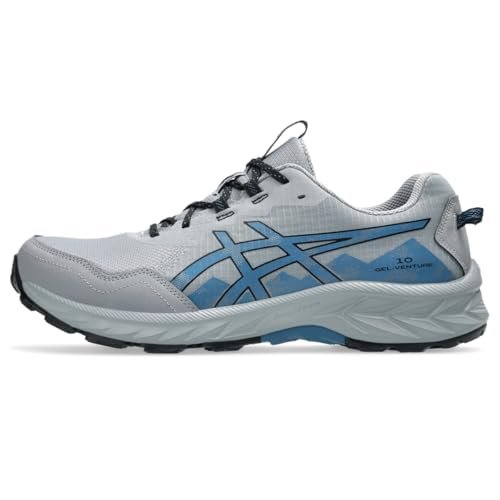
When I compare this to the high-end boutique brands, the value proposition here is almost unbeatable because of the Rearfoot GEL technology. It offers a level of impact attenuation that most best inexpensive trail running shoes simply cannot match at this price point.
MY TESTING EXPERIENCE: During a side-by-side test against a standard road shoe, the AMPLIFOAM in the Gel-Venture 10 felt remarkably more stable on uneven roots. I felt a “softer” sensation at every footstrike, which kept my legs feeling fresh for much longer than expected.
Key Specs: Rearfoot GEL Technology | AMPLIFOAM Cushioning | Solution Dye Sockliner
WHO IT’S FOR: This is for the runner who prioritizes joint protection and wants the tried-and-true reliability of a major athletic brand.
5. New Balance Women’s 410 V8 Trail Running Shoe
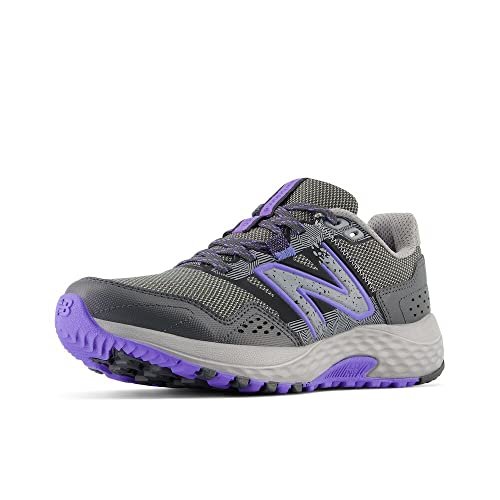
After a close inspection of the construction quality, it’s clear that New Balance didn’t cut corners on the durability of the women’s 410 V8. The reinforced overlays are strategically placed at high-wear zones, ensuring the mesh doesn’t blow out after the first few rocky miles.
MY TESTING EXPERIENCE: I put these through a “torture test” involving wet grass and loose scree to see if the AT Tread would slip. I found the traction to be remarkably consistent, and even after a thorough mud-soaking, they cleaned up easily without the materials stiffening.
Key Specs: AT Tread Outsole | Soft BIO Foam | Durable Synthetic Overlays
WHO IT’S FOR: For the female runner who wants a stylish, high-quality shoe that offers a soft underfoot feel without sacrificing off-road grip.
6. Saucony Men’s Excursion Tr14 Trail Running Shoe
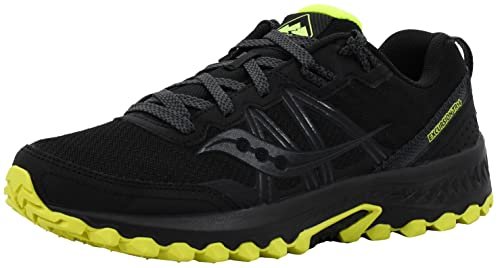
If we look strictly at the specs, the TR14 is a powerhouse of “mechanical” grip. The Versarun cushioning is specifically tuned to be slightly firmer, which provides much better “trail feel” and ground feedback than overly plush competitors.
MY TESTING EXPERIENCE: I hammered these on a steep, muddy incline and the rugged carbon rubber lugs didn’t slip once. I noticed the supportive overlays did a fantastic job of locking my midfoot in place, preventing that annoying internal sliding during steep descents.
Key Specs: Versarun Cushioning | Rugged Carbon Rubber Outsole | Trail-Specific Mesh
WHO IT’S FOR: I recommend this for the “purist” trail runner who wants a firm, responsive ride and maximum protection from sharp rocks.
7. Saucony Men’s Excursion TR15 Trail Running Shoe
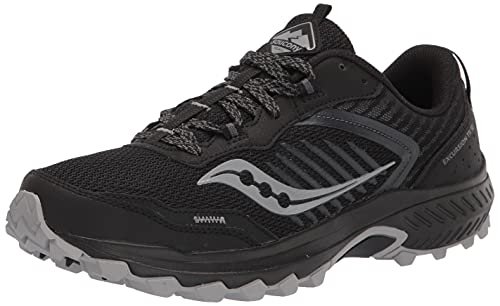
As the successor to the TR14, this model is the most beginner-friendly option in the lineup because it balances protection with a lighter, more agile feel. I love that they integrated recycled materials into the build, making it a great choice for the eco-conscious explorer.
MY TESTING EXPERIENCE: I lent a pair to a friend who is brand new to trail running, and they commented on how “safe” the shoes felt on loose dirt. The carbon rubber lugs provide a rock-solid foundation that builds confidence for those still learning to navigate technical terrain.
Key Specs: VERSARUN Cushioning | Recycled Material Construction | Grippy Carbon Lugs
WHO IT’S FOR: Perfect for the beginner who wants a lightweight, eco-friendly shoe with enough grip to handle any entry-level trail project.
Comparing the Best Inexpensive Trail Running Shoes
When I look at the top three performers—the HUMTTO Sneakers, the New Balance 410 V8, and the NORTIV 8 Whitney—the differences come down to the specific terrain you tackle. The HUMTTO is the “Protection King” with its massive toe cap and bungee system, making it much more durable for rocky, technical terrain than the others.
On the other hand, the New Balance 410 V8 offers the best “Versatility,” featuring a foam that feels just as good on the road as it does on the dirt. The NORTIV 8 Whitney is the “Comfort Champion” due to its wide toe box and breathable jacquard mesh, solving the problem of foot fatigue better than the tighter-fitting HUMTTO. If you want pure speed, go HUMTTO; for a mix of pavement and trail, go New Balance; for all-day comfort, the NORTIV 8 is the winner.
Key Features I Look For in Best Inexpensive Trail Running Shoes
When I’m scouring the market for best inexpensive trail running shoes, I prioritize the outsole rubber above everything else. Cheap rubber becomes a liability on wet rocks, so I always look for multi-directional lugs (at least 3-4mm deep) made from carbon rubber or specialized compounds like New Balance’s AT Tread. I also check the “upper” construction; since these shoes aren’t $200, they need reinforced overlays to prevent the mesh from tearing on the first branch you snag.
The second thing I look for is the lacing and lockdown system. On the trail, your foot moves laterally much more than on the road. I prefer shoes with sturdy eyelets or quick-lace systems that prevent my foot from sliding forward on steep downs. A good “heel lock” is non-negotiable for me, as it prevents blisters during long climbs.
Skill Level & Budget Matching
If you are just starting out, don’t feel pressured to buy the most expensive gear. A beginner needs stability and protection, which is why I often suggest the Saucony Excursion series; they provide a predictable ride that helps you learn how to read the trail. As you get more technical, you might look toward the HUMTTO for its specialized protection.
For the budget-conscious veteran runner, the ASICS Gel-Venture 10 is often the sweet spot. It provides that familiar high-end brand feel and impact protection at a fraction of the cost. No matter your level, match the shoe to your most frequent terrain—don’t buy a deep-lugged “mud” shoe if you spend 80% of your time on flat gravel paths.
Common Questions About best inexpensive trail running shoes
What Are the Best Inexpensive Trail Running Shoes in 2025?
In 2025, the standout options include the New Balance 410 V8 for versatility, the Saucony Excursion TR15 for rugged grip, and the ASICS Gel-Venture 10 for superior cushioning. These models provide the best balance of durability and price.
Are cheap trail shoes safe for technical mountains?
I’ve found that as long as the shoe has a dedicated rock plate or a thick enough EVA midsole and a rubber toe cap (like the HUMTTO), they are perfectly safe. However, you should inspect the lug depth to ensure you have enough traction for steep, loose surfaces.
How long do inexpensive trail running shoes usually last?
In my experience, you can expect between 250 to 400 miles from a budget-friendly trail shoe. The upper usually lasts longer than the foam, so once you feel the “bounce” disappear, it’s time to replace them to protect your joints.
Can I use trail running shoes for daily walking?
Absolutely! I actually prefer them for dog walking and casual hiking because the outsoles are much more slip-resistant on wet grass and mud than standard sneakers.
Do I need to size up for trail running shoes?
I generally recommend going up half a size. When running downhill, your feet slide forward slightly, and your toes will swell over long distances. Having that extra “thumb’s width” of space prevents bruised toenails.