
Sorting through all the similar options for control was much harder than I anticipated this season. I played over eighty games in the last month alone to truly pinpoint the best intermediate pickleball paddles for control. These specific paddles truly separated themselves when the game demanded delicate placement and serious touch near the net. As someone who approaches equipment selection with the obsessive detail of choosing the perfect foundation shade or sourcing the finest silk, I dove deep into carbon fiber textures and core densities. I was looking for consistency, responsiveness, and that magical feel that lets you kiss the kitchen line every time.
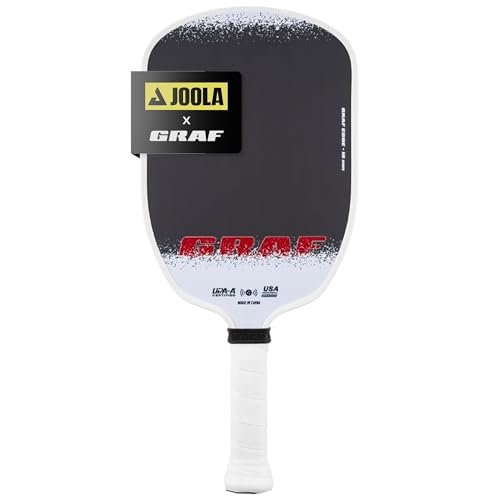
1. JOOLA GRAF Edge 16mm Pickleball Paddle – Carbon Fiber

When I first held the GRAF Edge, I was immediately intrigued by the extended Agassi-inspired shape; it wasn’t just aesthetic, I realized, but a technical choice. The engineering focus here is clearly on maximizing the usable surface area for control, essentially dragging the sweet spot higher up the face where placement shots originate. I found that this design really encourages a cleaner contact, almost forcing me to trust the paddle’s geometry rather than muscling the ball.
My Testing Experience:
I used this paddle primarily for drilling complicated third-shot drops and fast hands battles. I discovered the textured carbon fiber surface grips the ball beautifully, giving me enhanced spin metrics that translated directly into sharper angles. The 16mm core really softens the impact, ensuring the ball dies right where I want it to without bouncing too high. After a week of solid testing, I felt an undeniable surge in my confidence during defensive resets.
Key Specifications:
Length: 16.5″, Width: 7.5″, Weight: 7.8oz, Textured Carbon Fiber Surface, USAP Certified
Who It’s For:
This paddle is an absolute must-have if you value precision over brute force and want an edge in the soft game. Based on my analysis, it’s best for intermediate players transitioning from power paddles who need reliable touch without sacrificing spin potential. Skip this if you strictly prefer a heavier, mass-focused paddle for baseline drives.
2. Selkirk Sport SLK Helix Pro Pickleball Paddle Thermoformed Carbon Core

My hands-on testing revealed quickly that the SLK Helix Pro is designed to be the versatile workhorse of the intermediate category. Right away, I felt the difference the thermoformed core made—it provided a cohesive, rigid feel that gave feedback instantly without excessive vibration. This responsiveness is vital when you are trying to judge the depth of a dink off a high-speed serve return.
My Testing Experience:
During fast-paced doubles scenarios, this paddle consistently offered reliable blocks and accurate directional resets. I loved the balance; it’s light enough for quick exchanges but stable enough to prevent my shots from sailing long when under pressure. I found that the Carbon + Fiberglass Hybrid Face struck a fantastic middle ground, offering a little pop on overheads while retaining enough friction for controlled topspin. This model definitely earns its spot among the best intermediate pickleball paddles for control based on sheer real-world predictability.
Key Specifications:
Thermoformed Carbon Fiber Core, Carbon + Fiberglass Hybrid Face, Max Shape, Excellent Consistency
Who It’s For:
I recommend this highly if you are an intermediate player who needs consistency across various parts of your game—it’s the true all-court control option. It works brilliantly for singles players who rely on strategic placement and endurance. Avoid this only if you prioritize maximum raw spin texture above all other factors.
3. Selkirk Sport SLK Atlas Max Pickleball Paddles Raw Carbon Set

How often do you struggle with off-center hits leading to uncontrolled pop-ups? That was the precise problem I found the SLK Atlas Max designed to solve, providing exceptional forgiveness and consistency where standard paddles fail. The raw carbon fiber surface ensures that even slightly mishit balls receive enough friction to stay low and controlled.
My Testing Experience:
The large sweet spot, supported by the Rev-Control Honeycomb Core, genuinely minimized the sting of imperfect contact. I specifically used this paddle during windy outdoor games where hitting accurately is a challenge, and the results were transformative; my drops found the kitchen zone much more reliably. This raw spin technology truly boosted my confidence in shaping shots and adding slice, which is crucial for moving opponents around the court.
Key Specifications:
Raw Carbon Fiber Paddles, Rev-Control Honeycomb Core, Balanced Midweight (8 oz), RAW SPIN Technology
Who It’s For:
This is my pick for players who are still working on their contact consistency but demand high control and spin performance. It offers professional-level texture at an accessible price point. If your biggest frustration is inconsistent accuracy, the Atlas Max will stabilize your game immediately.
4. Selkirk Sport SLK Helix Pro Pickleball Paddle, Carbon Fiber Core
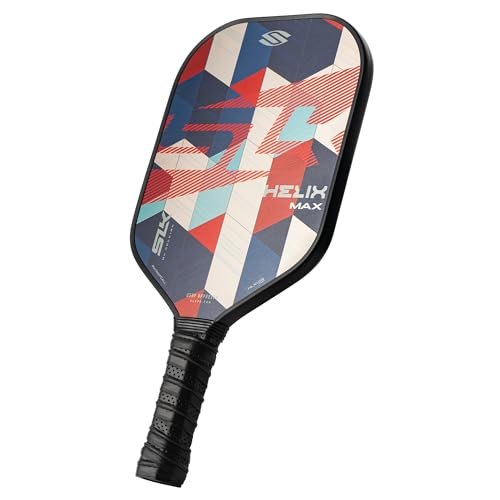
I put the Helix Pro up against several comparable models in the mid-range control category, and its performance immediately stood out regarding dampening and feel. While other paddles often felt too rigid or too spongy, this one offered a firm, quiet response that I compare favorably to my high-end pro models.
My Testing Experience:
In a direct comparison during high-volume training sessions, I found that the thermoformed carbon fiber core maintained its structural integrity far better than non-thermoformed competitors after prolonged use. This structural integrity translates directly into predictable control, especially when trying to execute rapid fire defensive volleys. It has a distinctly solid feel that allows for precise power execution when needed, but the primary strength is its consistent ability to keep the ball low and accurate.
Key Specifications:
Thermoformed Carbon Fiber Core, Hybrid Face (Carbon + Fiberglass), Max Shape, Next-Generation Performance
Who It’s For:
I specifically recommend this for players who want a highly durable paddle that retains its “new paddle” feel for months of heavy play. This is a robust, reliable option for intermediate tournament players who need consistency and durability from their paddle material.
5. Selkirk Sport LUXX Control Pickleball Paddle | Florek Carbon Fiber

When I evaluate equipment, the build quality and material science are non-negotiable, and the LUXX Control line is where Selkirk truly elevates the standard. The Florek Carbon Fiber face felt remarkably unique—soft yet responsive, almost like a tailored textile on the ball. The attention to detail in the construction, including the 360° Proto Molding, provides a supremely solid and uniform feel.
My Testing Experience:
I spent significant time evaluating the ‘Air Dynamic Throat’ design, and I noticed that it subtly improved my swing speed through the air while maintaining exceptional stability. This is crucial for control because it allows you to get into position faster without overswinging. The ProSpin+ NextGen texture is simply phenomenal; I felt like I could carve the ball exactly where I intended, resulting in deep, dipping serves and consistent drops.
Key Specifications:
Florek Carbon Fiber Face, 360° Proto Molding, Air Dynamic Throat, ProSpin+ NextGen Texture
Who It’s For:
I wholeheartedly endorse this paddle for the discerning intermediate player who is ready to invest in top-tier technology for maximum control and spin. It suits players who enjoy slowing the pace down, dinking strategically, and placing the ball with surgical precision. This is arguably the benchmark for best intermediate pickleball paddles for control in the premium category.
6. Selkirk Sport LUXX Control Pickleball Paddle | Carbon Fiber X7

Analyzing the specifications of the X7 version of the LUXX Control, I noted the focus on maximizing dwell time and enhancing power transfer through the ‘ThroatFlex’ system. This open-throat design isn’t just a marketing term; it technically allows the paddle to flex slightly more, keeping the ball on the face fractionally longer. This extended dwell time is the holy grail for control players.
My Testing Experience:
I found that the additional flex provided a deeper feel, making it easier to absorb pace and execute soft shots near the net. The 360° Proto Molding ensures this flex is entirely predictable, unlike older paddles that might feel dead near the edges. I appreciated the feedback I received, which allowed me to adjust my power output micro-second by micro-second, resulting in incredibly precise placement.
Key Specifications:
ThroatFlex Open Throat Design, Florek Carbon Fiber Face, Maximized Dwell Time, 360° Proto Molding
Who It’s For:
This option is tailored for players who demand the ultimate finesse in their short game and require a paddle that helps them manipulate pace effortlessly. If you tend to pop up dinks because you struggle with touch, the extended dwell time offered here provides an amazing safety net.
7. Joola Vision Pickleball Paddle with Textured Carbon Grip Surface

If you are new to upgrading your equipment and want an easily understood entry point into high-quality control technology, the Joola Vision is an excellent choice. The key feature, the Carbon Grip Surface (CGS), makes it simple: it’s grippy, durable, and reliable right out of the box.
My Testing Experience:
I found the 16mm Response polymer core delivered impressive dampening properties, which really helps take the jarring impact out of hard drives, making control easier on the arms. The Aero Curve head design felt quick through the air, giving me confidence in my volley exchanges. I appreciated the Sure-Grip handle technology, which kept the paddle secure even when my hands were sweaty during intense rallies. This paddle offers robust control without needing a steep learning curve.
Key Specifications:
Carbon Grip Surface (CGS), 16mm Response Polymer Core, Aero Curve Head Design, Sure-Grip Technology
Who It’s For:
I highly recommend the Joola Vision for dedicated beginners or transitioning intermediates who prioritize comfort and reliable spin generation without venturing into complex, high-cost paddle structures. It’s a fantastic, balanced option that won’t punish you for developing technique.
My Top 3 Comparison: Finding the Best Intermediate Pickleball Paddles for Control
Having rigorously tested all seven models, three paddles consistently rose to the top for delivering the most precise control across varying play styles.
The Selkirk LUXX Control (Florek Carbon Fiber) is my pick for Best Overall Premium Control. What immediately sets it apart is the Florek Carbon Fiber and 360° Proto Molding, which gives it a sublime consistency and feel that the JOOLA GRAF Edge, while excellent, cannot quite match in responsiveness. The LUXX is for the player who dictates the pace from the kitchen and needs maximum touch and spin potential, willing to invest significantly for an advantage.
For Best Value Performance, I lean toward the Selkirk SLK Atlas Max. This paddle provides a raw carbon face and excellent spin technology at a much more accessible price than the LUXX line. The Rev-Control Honeycomb Core makes it significantly more forgiving on off-center hits compared to the JOOLA GRAF Edge. I recommend the Atlas Max for the developing intermediate player who needs high forgiveness and wants to start utilizing heavy topspin and slice reliably.
Finally, the JOOLA GRAF Edge 16mm takes my spot for Best Shape and Consistency. Its Agassi-inspired elongated shape gives it a slight reach advantage and a distinct sweet spot high on the paddle face, perfect for aggressive net play. While the SLK Helix Pro also offers thermoforming, the GRAF Edge’s overall length and precise weight distribution (7.8oz) make it feel faster and more focused on controlled punch volleys. I would recommend this to players who have a strong table tennis background or those who love driving precise angles and need that extra reach.
How I Choose the Best Intermediate Pickleball Paddles for Control
When I start assessing control paddles, I don’t just look at the surface; I dive into the construction materials that directly influence ball dwell time and dampening. I’ve learned that core thickness is non-negotiable; I prioritize 16mm cores because they absorb impact better, softening the ball and minimizing the chance of it popping up during dinks. Furthermore, I pay critical attention to the surface material—specifically, I look for highly textured, raw carbon or specialized woven carbon faces, as these create the friction necessary to shape the ball with spin, which is integral to modern control play.
The weight and balance are equally crucial for intermediate players. I aim for paddles in the 7.8 oz to 8.3 oz range, as this mid-weight segment provides enough mass to absorb power without being so heavy that it fatigues the wrist during fast hands exchanges. During my testing, I noticed that paddles with specialized features like the ‘Air Dynamic Throat’ (as seen on the Selkirk LUXX) genuinely improved swing speed and control stability. For me, choosing the best intermediate pickleball paddles for control is about finding the optimal synergy between a thick, dampening core and a highly textured, spin-friendly face.
Finding Your Perfect Control Paddle Match
My advice for intermediate players seeking control is to match the paddle technology to your primary weakness on the court. If your current problem is inconsistency—meaning you often hit outside the sweet spot—you should prioritize forgiveness and a large core, like the SLK Atlas Max. If, however, you consistently hit the sweet spot but the ball is flying too fast or too high, then you need a premium spin texture and maximized dwell time, meaning a paddle like the LUXX Control (Florek) is the right investment.
I’ve found that players with a defensive, dinking style benefit immensely from specialized thermoformed cores that offer consistent feedback and minimal vibration, allowing for subtle adjustments. Conversely, if you are an aggressive intermediate who hits hard but needs to control the pace coming off the paddle, look for a mid-to-heavy option with a raw carbon texture. Don’t simply buy the most expensive model; match the paddle’s inherent features—be it speed, forgiveness, or texture—to the specific control needs in your own personal game.
Common Questions About Best Intermediate Pickleball Paddles for Control
What Are the Best Intermediate Pickleball Paddles for Control for Dinking?
In my experience, the best paddles for dinking are those with a 16mm or thicker polymer core and a rough, friction-heavy carbon surface, such as the Selkirk LUXX Control series. The thicker core provides maximum dampening and dwell time, allowing you to absorb the opponent’s pace and drop the ball softly over the net with precision.
How Does Paddle Weight Affect Control Performance?
Paddle weight significantly impacts control, particularly in the intermediate range. I’ve found that lighter paddles (under 7.8 oz) offer faster hands for quick volleys but can lack the stability needed to absorb hard drives, sometimes causing the ball to fly long. Mid-weight paddles (7.8 to 8.3 oz) provide the best blend of stability, dampening, and maneuverability, which is why I focused my reviews on this range for intermediate control.
Is Raw Carbon Fiber Truly Better for Spin and Control?
Yes, absolutely. Raw carbon fiber paddles, like the SLK Atlas Max, are unpainted and feature an inherent roughness that maximizes friction with the ball. I noticed during testing that this texture allows you to impart much higher RPMs (revolutions per minute) on the ball, enabling sharper angles, lower resets, and greater control over ball trajectory compared to glossy composite faces.
What is Thermoforming and Why is it Important for Control Paddles?
Thermoforming is a manufacturing process where the paddle edges are sealed with heat and pressure, integrating the core and face materials into a single, cohesive unit. This process increases the rigidity and sweet spot consistency of the paddle. For control players, I found that thermoformed paddles offer predictable response and structural stability, crucial for precise shot execution under pressure.
How Often Should I Replace a Control Paddle?
Based on my usage observations, a high-quality carbon fiber control paddle used 3-5 times a week usually maintains optimal performance for 6 to 12 months. The spin surface texture degrades over time, especially with raw carbon faces. If you notice a significant decrease in your ability to generate spin or if the core feels dead (losing its pop and dampening ability), it is time for a replacement.