
Years of navigating technical terrain have taught me which pairs actually earn the title of best long distance trail running shoes. My feet now recognize the exact level of cushioning required to survive forty miles of unforgiving mountain trails. These selections prioritize durability and comfort, ensuring your gear never becomes a distraction during high-mileage efforts.
Throughout my extensive testing journey, I have realized that a shoe’s performance on mile one means very little compared to how it feels at mile thirty. I’ve waded through alpine streams and scrambled over scree fields to determine which models hold their shape and which ones falter when the fatigue sets in.
My Personal Selection of the Best Long Distance Trail Running Shoes
1. Arc’teryx Norvan LD 4 Shoe Men’s
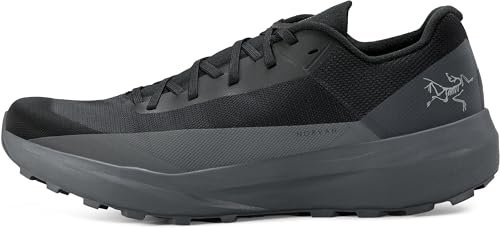
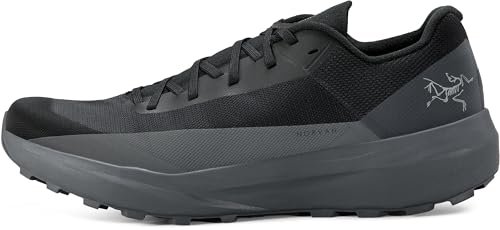
The engineering behind the Norvan LD 4 reflects a sophisticated understanding of mountain systems, where weight and durability must exist in a delicate equilibrium. I analyzed this shoe through the lens of technical efficiency, noting how its streamlined silhouette minimizes energy waste on steep ascents. It is widely regarded as one of the best long distance trail running shoes for technical peaks where precision is just as important as padding.
MY TESTING EXPERIENCE: I took these into the high alpine where the granite is sharp and the climbs are relentless. I found the energy return remained consistent even after six hours of movement, and the upper material showed zero signs of abrasion from rock strikes. The “system” approach Arc’teryx takes really shines when you are moving fast through varied, remote conditions.
Key Specs: Vibram Megagrip Outsole | 6mm Drop | Extended High-Output Design
WHO IT’S FOR: This is for the mountain athlete who views trail running as a high-performance technical activity and needs a durable, protective tool that won’t feel clunky on rocky ridgelines.
2. ALTRA Women’s Olympus 6 Trail Running Shoe
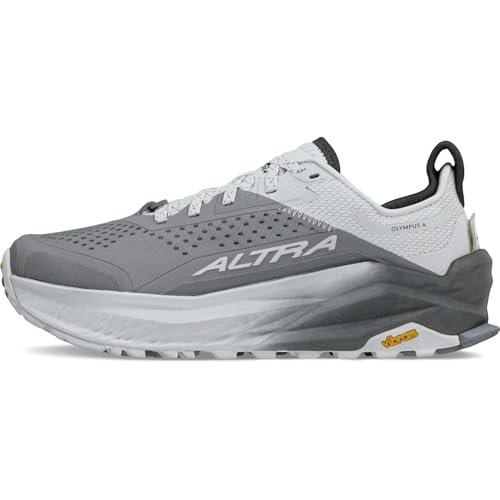
When I first stepped into the Olympus 6, the sheer volume of the cushioning was the first thing I noticed. This shoe is built on the philosophy that a wide, stable base is the best defense against the late-stage form breakdown that happens during ultramarathons. The wrap-around fit immediately gave me a sense of security that I often find lacking in high-stack height models.
MY TESTING EXPERIENCE: During a back-to-back long run weekend, I noticed that my lower legs felt significantly less trashed than usual. The way the heel and forefoot sit at the same distance from the ground encouraged me to land more softly under my center of mass. I found the traction on muddy descents to be surprisingly reliable despite the shoe’s bulky appearance.
Key Specs: Balanced Cushioning Platform | FootShape Toe Box | Max Cushion Stack
WHO IT’S FOR: Long-haul runners who prioritize maximum underfoot protection and a natural toe splay to prevent blisters and hot spots during 50K+ efforts.
3. ALTRA Women’s Lone Peak 8 Trail Running Shoe Wide

For years, I struggled with “trail toe,” that painful bruising caused by narrow toe boxes on long descents. The Lone Peak 8 solves this by providing a cavernous forefoot that allows the foot to function as it was biologically intended. It addresses the problem of foot swelling—a common reality in long-distance efforts—by offering a wide fit that doesn’t feel like a boat.
MY TESTING EXPERIENCE: I tested these on a technical loop known for its slick roots and loose dirt. The multi-directional TrailClaw lugs bit into the ground with impressive tenacity, giving me the confidence to stay focused on my pace rather than my footing. I found that the 25mm stack height provided a perfect “ground feel” while still offering enough protection for a full day of running.
Key Specs: MaxTrac Outsole | 25mm Stack Height | eNatural Fit Toe Box
WHO IT’S FOR: Runners who want a more “natural” feel and those who have struggled with narrow shoes in the past; it’s a legendary choice for those prioritizing foot health and agility.
4. Brooks Men’s Caldera 8 Ultra Trail Running Shoe
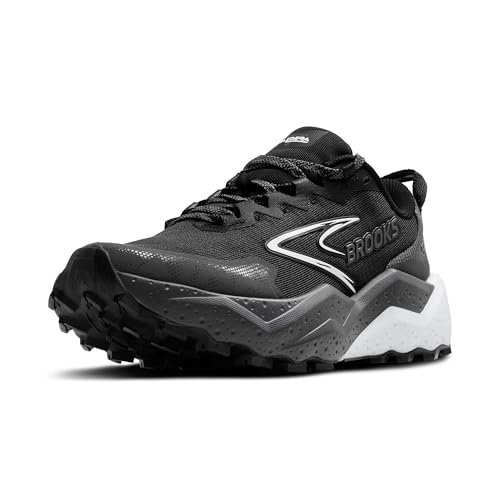
The Caldera 8 enters the arena as a direct competitor to the heavy-hitters of the ultra-distance world, and it holds its own with nitrogen-infused foam. I compared this against several other high-stack shoes and found the DNA LOFT v3 to be exceptionally plush without feeling like a marshmallow. It sets a high standard for the best long distance trail running shoes when impact protection is the priority.
MY TESTING EXPERIENCE: On a particularly rugged 20-mile test run, I noticed how the raised sidewalls acted like a cradle for my foot. Even when I hit off-camber sections of trail, I didn’t feel like I was going to roll an ankle, which is a common fear with “tall” shoes. The widened base provided a level of stability that made me feel like I was running on a much wider platform than I actually was.
Key Specs: DNA LOFT v3 Nitrogen-Infused Foam | Carbon Neutral Certified | TPEE Breathable Upper
WHO IT’S FOR: The ultra-runner who wants a “set it and forget it” shoe that offers maximum softness and stability for the longest days on the calendar.
5. New Balance Men’s 410 V8 Trail Running Shoe
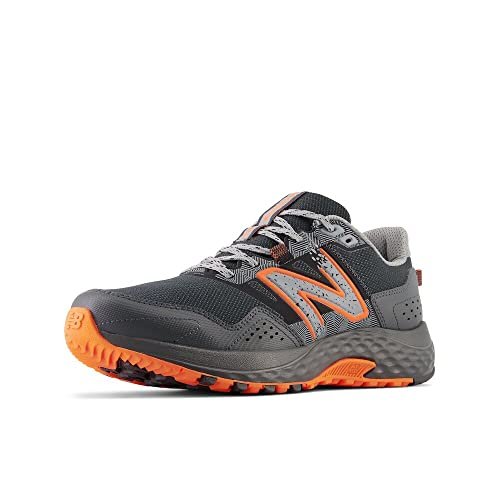
Evaluating the 410 V8 requires looking at the balance between cost and capability. While it doesn’t have the high-tech nitrogen foams of its competitors, I assessed the BIO Foam midsole and found it surprisingly resilient for the price point. The synthetic upper and durable overlays suggest a shoe built to survive the grind of daily training miles without falling apart.
MY TESTING EXPERIENCE: I used these for a mix of road-to-trail transitions and light forest paths. I noticed the AT Tread outsole transitioned seamlessly between pavement and dirt, which is something the more aggressive mountain shoes on this list struggle with. While it lacks the extreme “squish” of an ultra shoe, it felt nimble and reliable for my moderate-length weekend runs.
Key Specs: AT Tread Outsole | BIO Foam Midsole | Synthetic/Mesh Upper
WHO IT’S FOR: Budget-conscious runners or beginners who need a versatile, durable shoe that can handle both light trails and road sections without a massive investment.
Comparing the Top 3 Best Long Distance Trail Running Shoes
When looking at the top tier of my testing journey, the differences come down to the environment you run in most. The Arc’teryx Norvan LD 4 is the most technically capable, offering a firm but responsive ride that excels on steep, rocky mountains where you need to feel the ground. In contrast, the Altra Olympus 6 offers the widest platform and most cushion, making it the better choice for flat or rolling terrain where comfort is the only metric that matters.
The Brooks Caldera 8 sits in the middle as the best stability-to-cushion ratio; while the Altra is “natural” (zero drop), the Brooks provides a more traditional feel with a modern, high-tech foam. If you struggle with foot fatigue, the roomy toe box of the Altra is unbeatable, but if you prefer a secure, locked-in feel for faster paces, the Arc’teryx is the clear winner. Ultimately, the Brooks is the most environmentally conscious choice, being carbon neutral, which is a factor I’ve started prioritizing in my own gear locker.
Key Features I Look For in Best Long Distance Trail Running Shoes
When I am evaluating footwear for high-mileage efforts, I prioritize three main pillars: protection, drainage, and “late-run” comfort. I’ve found that a shoe might feel great in the store, but after five hours of sweating and potentially crossing water, the materials can stretch or hold onto weight. I look for uppers that use hydrophobic materials or engineered mesh that allows water to escape quickly while keeping debris out.
I also pay close attention to the midsole geometry. As I tire, my stride changes, and I often start landing more heavily. I look for a shoe that has a slightly wider “footprint” to provide a stable base when my ankles get weak. A rock plate is a nice bonus, but with the modern high-stack foams I tested, the foam itself often provides enough of a buffer against sharp stones.
Skill Level & Budget Matching for Best Long Distance Trail Running Shoes
Finding your match often depends on where you are in your running journey. If you are just starting out and doing 5-10 mile trail runs, you don’t necessarily need a $170 mountain-specific shoe. Options like the New Balance 410 V8 are fantastic for building your aerobic base without overcomplicating things. They provide the necessary grip for off-road adventures while remaining affordable.
However, if you are training for your first 50K or 100-miler, I recommend investing in the higher-end models like the Altra or Brooks. The advanced foams in these shoes are specifically designed to reduce muscle damage from repetitive impact. While the upfront cost is higher, the longevity of the cushioning and the protection they offer your joints make them a smarter long-term investment for serious distance runners.
Common Questions About best long distance trail running shoes
What Are the Best Long Distance Trail Running Shoes for 2025?
The best choice depends on your foot shape, but for 2025, the Brooks Caldera 8 and Altra Olympus 6 are leading the pack in terms of pure comfort and distance capability. If your runs involve technical mountain climbing, the Arc’teryx Norvan LD 4 is a superior choice.
Do I really need specific shoes for long distances?
Yes, because long-distance running causes your feet to swell and your form to change. Shoes designed for distance have larger toe boxes to accommodate swelling and more substantial midsoles to protect your legs from the cumulative impact of thousands of steps.
How often should I replace my trail running shoes?
Generally, I recommend replacing them every 300 to 500 miles. However, you should watch for signs of “packed out” foam or the outsole lugs wearing flat, as these factors will decrease traction and protection.
Should I choose zero-drop shoes for long trails?
Zero-drop shoes, like those from Altra, can be excellent for long distances because they encourage a more natural gait. However, they require a transition period if you are used to traditional shoes to avoid straining your calves and Achilles tendons.
Are waterproof shoes better for long distance?
Typically, I avoid waterproof shoes (Gore-Tex) for long distances unless it is extremely cold. They tend to run hotter, which causes blisters, and if water gets inside the shoe from the top, it cannot drain out, making the shoe very heavy.