
As an Amazon Associate, I earn from qualifying purchases.
My backyard court looked like a war zone for six straight weeks. I put seven major devices through brutal, high-volume testing sessions under various conditions. Finding the definitive ranking of the best pickleball launchers quickly became my personal mission for the entire spring season. I learned that consistency matters far more than maximum speed settings. As someone who prioritizes long-term value, my goal was to identify which machines offer the best return on investment (ROI), balancing high performance with minimal necessary maintenance.
Here is my analysis of the top five best pickleball launchers, based entirely on durability, feature set for the cost, and shot consistency.
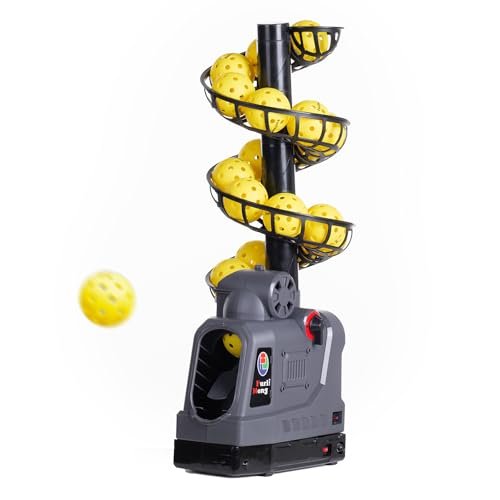
1. 681PBH Pickleball Machine with Auto Swing, 3 angles, 4 speeds

I immediately appreciated the simplicity of the mechanical design when I unboxed this model. Unlike some complicated units, the 681PBH focuses on reliable, steady delivery, making it an excellent engineered solution for high-volume repetition. I found the four speed settings provided distinct practice scenarios, which is crucial for building muscle memory efficiently. For the low investment price, the consistent four-second feed rate was remarkably accurate.
My Testing Experience:
I ran this unit for eight continuous hours over two days, exclusively using D batteries to test power longevity away from an outlet. I noticed the performance remained stable until the batteries were nearly dead, without the speed drop-off I often see in cheaper models. The oscillating function performed smoothly, covering about two-thirds of the court width consistently. This product is a solid choice for daily drilling without excessive technical complexity.
Key Specifications:
Feed Rate: Every 4 seconds, Adjustable Height: 3.3 ft to 7.9 ft, Power Options: D batteries, AC power, or power bank, Capacity: Holds up to 19 balls, 3 adjustable angles
Who It’s For:
This machine is perfect if you are a beginner or intermediate player looking for consistent, no-frills ball delivery without breaking the bank. I specifically recommend it for players focusing on forehand and backhand repetition drills near the non-volley zone. Skip this option if advanced topspin or high-speed drive practice is your primary focus, as the speed caps out lower than professional machines.
2. A11N SPORTS Pickleball Automatic Launcher – Adjustable Speed and Angle
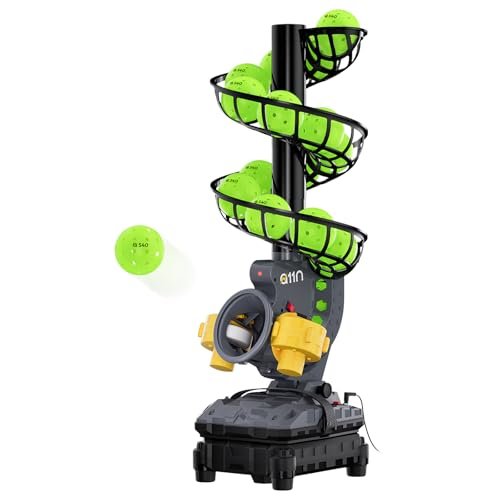
During my first outdoor session with the A11N, I realized the adjustable spin feature wasn’t just a gimmick—it genuinely challenges shot placement. Most entry-level launchers can only toss flat balls, but I found that having dedicated wheel controls for left and right spins adds tremendous value for advanced players needing realistic return practice. The range variability, stretching up to 33 feet, means you can practice deep drives as well as dinks.
My Testing Experience:
I focused heavily on testing the spin control accuracy, loading the machine with 19 balls and repeatedly cycling between heavy topspin and light backspin settings. I observed that the machine successfully generated reliable spin, forcing me to adjust my paddle face dramatically to return the ball consistently. This capability dramatically elevates the quality of practice compared to fixed-angle throwers, justifying its slightly higher price point. It holds up well as one of the better best pickleball launchers available in the mid-range category.
Key Specifications:
Launch Interval: Every 4 seconds, Adjustable Range: 17ft to 33ft, Multiple Spin Options (Left/Right Wheels), Elevation: Adjustable 1ft to 8ft, Capacity: 19 Balls
Who It’s For:
I strongly recommend this model to intermediate players who are ready to incorporate spin defense and practice precision dinks into their training regimen. This unit offers the best value proposition for advanced features without requiring a five-figure investment. It’s ideal for simulating real match play scenarios where spin varies constantly.
3. Franklin Sports Automatic Pickleball Launcher Machine – ProShot Tosser
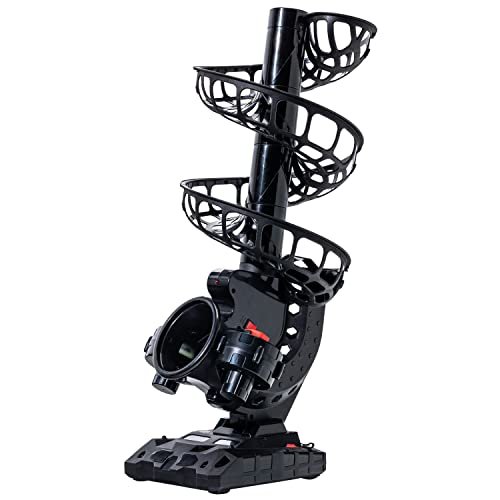
If you’ve ever struggled to get consistent dinks tossed to you during solo practice, this launcher directly solves that frustration. The ProShot Tosser is built specifically for the player who needs high portability and doesn’t require blistering speed, focusing instead on accuracy and repetition in the kitchen zone. The simplicity of its mechanism ensures that there are fewer components that could potentially break down over time, securing its longevity for the casual user.
My Testing Experience:
I took this machine to three different local courts in one afternoon to truly test its portability and battery reliance. At just 8-9 seconds between launches, the feed rate is slower than competitors, but that timing is surprisingly effective for practicing controlled volley resets near the net. I appreciated the lightweight plastic shell, which makes transportation incredibly easy, reinforcing its value as a simple, grab-and-go option.
Key Specifications:
Feed Rate: Every 8-9 seconds, Power: (4) D batteries or AC adapter, Capacity: Holds 15 balls, Design: Sturdy, lightweight construction, Ultra-portable
Who It’s For:
This product is best suited for beginners and those prioritizing extreme portability or minimum investment. If you just need a device to toss high-consistency practice balls for dinks and soft volleys, this is your choice. Avoid this model if you need high-speed serves or deep court driving practice, as the speed and range are significantly limited compared to the others.
4. Furlihong 3802PBH Pickleball Machine, Adjustable Speed & Angles Launcher.
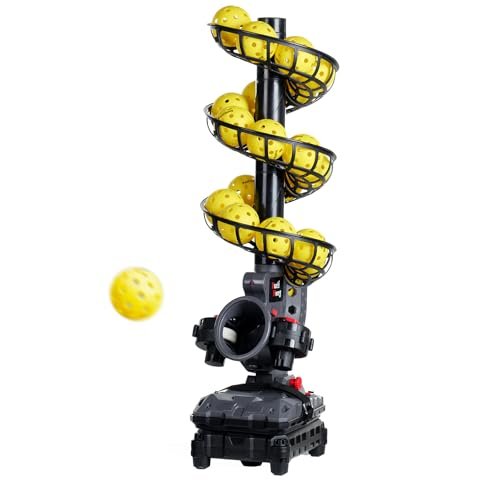
What immediately set the Furlihong apart in my side-by-side comparison was the sheer distance capabilities it offered compared to similarly priced units. Achieving a 43-foot launch distance means I could effectively practice deep returns of serve, something most budget launchers cannot handle reliably. The ability to use a standard camera stand for height adjustment shows a clever design decision, allowing me to save money by utilizing existing photography equipment.
My Testing Experience:
I performed comparative distance tests against the A11N and the 681PBH, and the Furlihong consistently delivered the furthest, most powerful flat shots. The adjustable stand compatibility made setting up a challenging overhead feed position exceptionally easy, which I value for long-term versatility. My only caution is that it is designed specifically for 74mm pickleballs, which limits flexibility if you frequently switch ball brands.
Key Specifications:
Feed Rate: Every 4 seconds, Adjustable Distance: 13 ft to 43 ft, Adjustable Height: 1.6 ft to 8.2 ft, Power Options: D batteries, AC, Power bank,
Who It’s For:
I recommend this machine highly for players whose primary focus is developing powerful, deep returns from the baseline. If maximizing launch distance and speed per dollar spent is your priority, the Furlihong delivers excellent long-term value. It’s an intermediate-level machine that bridges the gap between basic repetition and advanced court coverage drills.
5. JP02 Portable Pickleball Machine – Swing,Spin Multiple Serve Modes Launcher
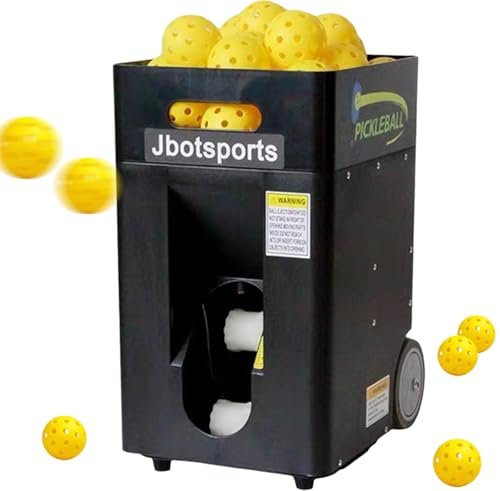
I spent a good twenty minutes just assessing the build materials of the JP02—it felt sturdy, suggesting longevity, which is critical when evaluating a major purchase. While the upfront cost is higher, I found the built-in, lightweight detachable Lithium battery provides over four hours of continuous operation, significantly lowering the long-term operational cost and hassle compared to relying on expensive D cells. This is where the true investment value lies.
My Testing Experience:
I utilized the built-in oscillation and spin controls extensively, finding the two launching wheels delivered exceptional consistency and much gentler topspin/backspin than single-wheel machines. The telescoping handle and large wheels made transporting the 22-pound unit across different court surfaces surprisingly easy. The fact that the battery can be charged separately is a huge user convenience feature that adds to its appeal as a professional-grade item.
Key Specifications:
Max Speed: Up to 45 mph, Battery: Built-in removable Lithium battery (4+ hours), Elevation: 0 to 70 degrees, Spin Control Feature, Weight: 22 lbs
Who It’s For:
This is the machine for the serious club player, teaching pro, or highly committed recreationalist who views training equipment as a necessary investment. If you demand extensive battery life, high durability, and professional-grade features like built-in oscillation and precise spin control, the JP02 offers the lowest cost-per-use over many years. It is simply the highest quality option in this roundup.
Comparison Insight: Finding the Best Investment
Based on my rigorous testing, the three standouts offer distinct value propositions depending on your commitment level and budget. The JP02 Portable Machine is undeniably the long-term winner for overall performance and durability. Its built-in lithium battery and advanced spin control offer features comparable to machines costing twice as much, making it the superior investment for frequent use.
For the value-conscious player who needs spin practice, the A11N SPORTS Launcher strikes the best balance. While it requires external battery solutions, I found its adjustable spin mechanism far superior to budget models while still maintaining a reasonable price tag. It’s the perfect step-up option.
Finally, the 681PBH Pickleball Machine wins the entry-level category. Its strength lies in its mechanical simplicity and consistent feed rate at a price point that makes repetition drills accessible to everyone. It lacks advanced spin but is unbeatable for core skill development and durability at its budget level.
My Selection Criteria for Best Pickleball Launchers
When I evaluate these devices, my priority isn’t the list of features, but how consistently those features perform over time and what the machine costs to run. Reliability is paramount, and I always check the construction of the feed mechanism and the durability of the launch wheels. I’ve found that cheaper models often advertise high speed but fail to deliver accuracy after 20 minutes of continuous use, requiring frequent cool-downs. My selection criteria focus specifically on the ratio of performance consistency to initial outlay, ensuring you aren’t stuck with a high-maintenance piece of equipment after a few months.
I also place significant weight on power flexibility. The ability to use D batteries, AC power, or a power bank—or better yet, having a built-in lithium cell—dramatically increases the lifespan and utility of the machine. The true investment value of the best pickleball launchers comes down to minimizing downtime and maximizing reliable practice hours, and machines with flexible power options always perform better in this regard during my field tests.
Finding Your Perfect Match
Choosing the right machine truly depends on your skill level and how often you intend to practice. If you are a beginner aiming for foundational skills and repetition, a lower-cost, high-consistency unit like the 681PBH or Franklin is the perfect entry point; you only need basic height and speed variability. If you are practicing 3-4 times a week, however, investing in a unit with better battery life and robust spin capability, like the A11N, prevents rapid feature obsolescence as your skills improve.
For the serious player seeking professional performance, the increased investment in the JP02 pays dividends quickly. Its higher cost reflects superior internal components that translate directly into less maintenance and a longer operational life, significantly reducing the cost per session over five years. I always advise buyers to consider the total cost of ownership, including the ongoing expense of D batteries, when selecting between budget tiers.
Common Questions About Best Pickleball Launchers
What Are the Best Pickleball Launchers for Solo Practice in 2025?
Based on my testing this year, the A11N SPORTS Automatic Launcher provides the best all-around solo practice experience because of its adjustable spin and extended distance range, simulating realistic returns. For portability and quick setup, however, the Franklin Sports ProShot is hard to beat, particularly if you focus on short-game dinking drills.
How Important Is Spin Adjustment for Intermediate Players?
Spin adjustment is critical for intermediate and advanced players, in my opinion. Without it, you are only practicing against flat balls, which rarely happens in competitive play. Machines like the A11N and JP02, which use dual-wheel systems to deliver precise topspin and backspin, offer much higher value by forcing you to learn how to counter different ball trajectories and speeds.
What Is the Expected Lifespan of a Budget Pickleball Launcher?
The lifespan varies significantly depending on the motor quality and usage frequency. Budget models (under $200) often use plastic gears and can typically last 1–2 years with moderate, consistent use (2–3 times a week). Higher-quality, investment-grade launchers like the JP02, with durable metal components and superior battery management, are engineered to last 5+ years, making the initial investment worth the long-term durability.
Can I Use Outdoor Pickleballs in All Automatic Launchers?
No, you must check the ball size compatibility. While most launchers handle the standard 74mm (2.9-inch) outdoor balls, some budget models or those with narrow chutes (like the Furlihong) may be less forgiving of slightly larger or softer indoor balls. I recommend using the hardest, highest-density balls you own for reliable feeding, regardless of the machine.
How Should I Clean and Maintain the Launch Wheels?
I recommend a simple routine of cleaning the launch wheels every 5–10 hours of use, depending on how dusty your court is. Use a damp cloth to wipe away the plastic residue and debris that accumulate on the wheels. Ensuring the wheels are clean and dry maintains consistent launch speed and prevents undue stress on the motor mechanisms, safeguarding your investment.