
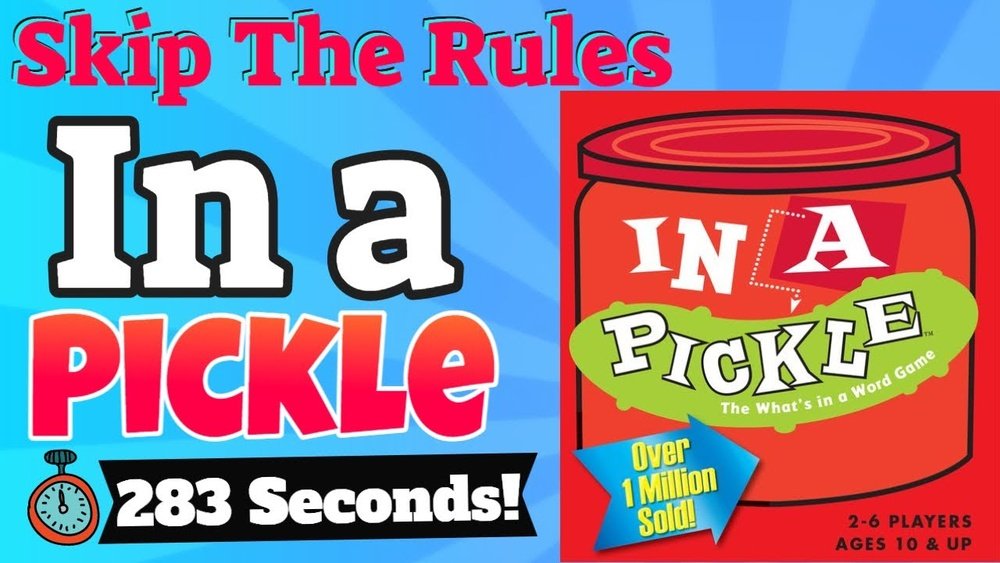
Have you ever heard of the game called “In a Pickle”? It is a fun word game. People of all ages can play it. It helps to think and be creative. This game is not about real pickles or food. It is about words and how they fit together.
What is “In a Pickle”?
“In a Pickle” is a card game with nouns. Nouns are words that name things. For example, “dog,” “house,” and “river” are nouns. In this game, players put noun cards in piles. They explain how one noun fits inside or is bigger than another noun. It is like a puzzle with words.
Why Play “In a Pickle”?
- It is easy to learn and play.
- It helps improve your thinking skills.
- You practice using your imagination.
- It is good for groups and families.
- It is fun and makes you laugh.
What Do You Need to Play?
To play “In a Pickle,” you need a set of noun cards. These cards have different words on them. You also need two or more players. Each player gets some cards to start. The game is quick to set up and play.

Credit: www.wikihow.com
How to Start the Game
- Shuffle the noun cards well.
- Deal an equal number of cards to each player.
- Place four cards face up in the center. These cards start four piles.
- Decide who goes first. It can be the youngest player or anyone you want.
How to Play “In a Pickle”
The goal is to place your cards on the piles. But you must explain how your card fits. The rule is simple: your card must fit “in” or be “larger than” the card it touches.
What does “in” or “larger than” mean? Here are some examples:
- “Juice” fits in a “pickle” because juice is inside a pickle.
- “Oven” is larger than a “pie” because an oven is bigger than a pie.
- “Baby” fits in a “library” because a baby can be inside a library.
Each turn, a player puts one card on one pile. Then, the player says why the card fits. For example, if the top card is “house,” you can put “room” on it. You say, “A room fits in a house.”
What Happens When You Can’t Play?
Sometimes, you may not have a card that fits. When this happens, you skip your turn. Or you can draw a new card if you play with a draw pile. The game moves on to the next player.
Winning a Pile
When a player puts a card that is the biggest or the last possible card, they win that pile. This is called winning the “pickle.” The player takes all cards from that pile and keeps them.
The game continues until all cards are played. Then, players count their cards. The player with the most cards wins the game.
What if Someone Makes a Silly Play?
If a player makes a strange or silly play, others can challenge it. A challenge means players vote if the play is good or not. If most say no, the player loses that turn or returns the card.
Tips for Playing Well
- Think about where things fit in real life.
- Use your imagination to connect strange ideas.
- Listen carefully to other players’ explanations.
- Be honest when you explain your card.
- Have fun, even if you lose.
Example Game Play
Imagine the four piles have these cards on top: pickle, pie, river, and library.
Player 1 puts “juice” on “pickle.” They say, “Juice fits in a pickle.” This is true, so the card stays.
Player 2 puts “oven” on “pie.” They say, “An oven is larger than a pie.” This makes sense, so it stays.
Player 3 wants to put “baby” on “library.” They say, “A baby fits in a library.” Other players agree, so it stays.
The game goes on like this until someone wins a pile by playing the last or biggest card.
Other Ways to Play “In a Pickle”
Some people play with different rules. Here are a few ideas:
- Play with a time limit per turn to make it fast.
- Use only cards from a certain category, like animals or places.
- Play in teams to help each other think.
- Keep score for many rounds and add points.

Credit: www.youtube.com
Why This Game is Good for Everyone
“In a Pickle” helps with English skills. It teaches new words and how to use them. You practice thinking fast and clearly. It is great for classrooms, family nights, or parties.
Also, it helps players understand how things relate in the world. That is important for learning and talking with others.
Summary Table: How to Play “In a Pickle”
| Step | What to Do |
|---|---|
| 1 | Shuffle and deal noun cards to players. |
| 2 | Place four cards face up in the center. |
| 3 | Take turns placing cards on piles. |
| 4 | Explain how your card fits “in” or is bigger. |
| 5 | Challenge if a play seems wrong. |
| 6 | Win piles by playing the last or biggest card. |
| 7 | Count cards at the end to find the winner. |
Final Thoughts
Playing “In a Pickle” is simple and fun. It helps you learn words and think clearly. Anyone can play this game. It works well for friends, family, or even classes.
Try it today. See how many funny and smart ideas you can make. You will enjoy the challenge and the laughter.
Frequently Asked Questions
How Do You Play The Game In A Pickle?
To play “In a Pickle,” place noun cards onto piles, fitting them “in” or “larger than” the card below. Explain your move, then the last player to add a card wins that stack. Players may challenge questionable plays, and everyone votes to accept or reject them.
What Are The 10 Rules Of Pickleball For Beginners?
The 10 pickleball rules for beginners: Serve underhand, serve diagonally, ball must bounce once each side, no volley in kitchen, alternate serves, score only on serve, switch sides, faults lose points, use paddle only, and play best of 11 or 15 points.
What Are Five Rules In Pickleball?
Five key pickleball rules: Serve underhand and diagonally. Ball bounces once per side after serve. No volleying in the kitchen. Only serving side scores points. Alternate serves between teams in doubles.
What Is The Proper Way To Play Pickleball?
Pickleball starts with an underhand serve into the opposite service court. The ball must bounce once on each side before volleys. Players cannot volley inside the kitchen (non-volley zone). Points score only on your serve. Rally continues until a fault or missed return.