
Pickleball is a fun sport that many people enjoy. It is easy to learn and great for all ages. When you play pickleball, you need to know how to keep score. One way to keep score is called rally scoring. This article will explain rally scoring in pickleball. You will learn the rules and how it is different from other scoring methods.
What is Rally Scoring?
Rally scoring means you get a point on every rally. A rally is when the ball is hit back and forth between players. In rally scoring, it does not matter who serves. Either team can score a point after each rally.
This is different from the old way called side-out scoring. In side-out scoring, only the team that is serving can get a point. If the other team wins the rally, they get the serve but no point.
With rally scoring, the game moves faster. Both teams try hard every rally because a point is always at stake.
How Rally Scoring Works in Pickleball
Here is how rally scoring works step by step:
- A point is scored after every rally.
- The team that wins the rally gets one point.
- Serve passes to the other team after each rally.
- Players stay in their service positions during the game.
- The server changes sides based on the team’s score.
Let’s look at these steps in more detail.
A Point Is Scored After Every Rally
In rally scoring, a point happens after each rally. For example, if Team A and Team B hit the ball back and forth, the team that hits the ball last without mistake gets the point.
This rule makes the game fast and exciting. Both teams want to win every rally.
The Team That Wins The Rally Gets One Point
Any team can get a point at any time. It does not matter if they are serving or receiving. This is the big difference from old scoring.
Serve Passes To The Other Team After Each Rally
After a rally ends, the serve moves to the other team. This means teams take turns serving after every point. The serving team tries to score a point. If they lose the rally, the other team gets the serve.
Players Stay In Their Service Positions
Players do not change sides during the game. They stay in the same service box they started in. This is different from traditional scoring where players may change sides.
Server Changes Sides Based On The Score
The server’s position depends on the team’s score:
| Team Score | Server Position |
|---|---|
| Even number (0, 2, 4, etc.) | Right side of the court |
| Odd number (1, 3, 5, etc.) | Left side of the court |
This rule helps to keep the game organized and fair.
Why Use Rally Scoring?
Rally scoring is becoming more popular in pickleball. Many players like it because:
- The game moves faster and is more exciting.
- Both teams have a chance to score on every rally.
- It is easy to follow and understand.
- Games finish quicker, which is good for tournaments.
Because points happen every time, players stay focused. This keeps the energy high throughout the match.
How Rally Scoring Differs from Traditional Pickleball Scoring
Traditional scoring is also called side-out scoring. Let’s compare the two types:
| Feature | Rally Scoring | Traditional (Side-Out) Scoring |
|---|---|---|
| Who scores a point? | Any team can score on every rally | Only the serving team can score |
| Serve change | After every rally, serve changes | Only after the serving team loses a rally |
| Player positions | Players stay in same positions | Players switch sides after scoring |
| Game speed | Faster and more continuous play | Slower, with breaks after points |
Rally scoring is newer and not yet official everywhere. But many players and clubs try it for fun.
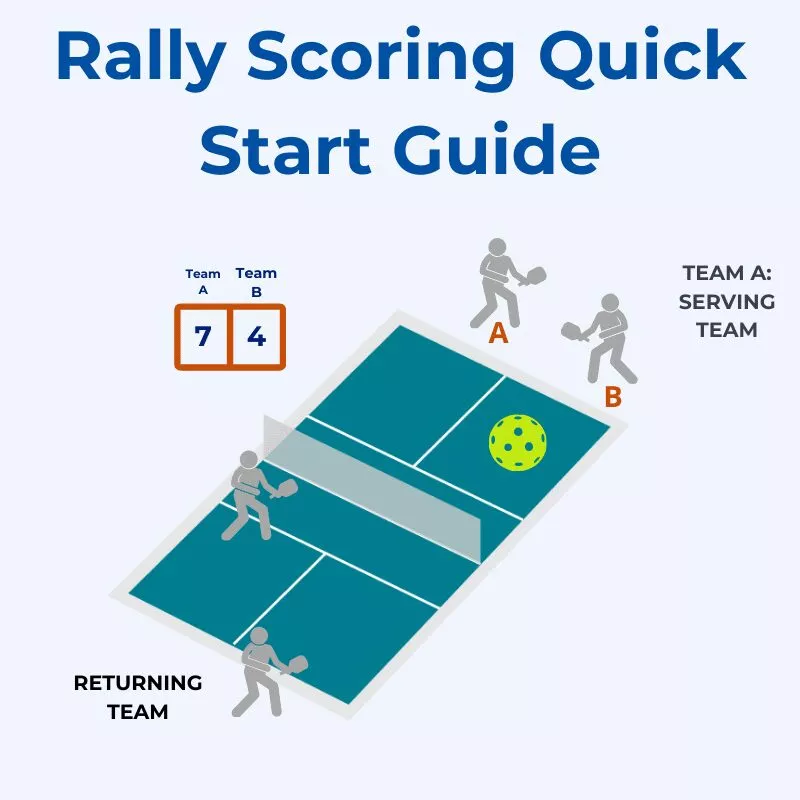
Credit: pickleland.com
Special Rules in Rally Scoring
Some games add extra rules when using rally scoring. Here are two common ones:
Winning On Serve
In some games, the final point can only be scored by the serving team. This means if the score is close, the team must be serving to win.
Freeze Rule At The End
A freeze rule may stop players from changing positions at the end of the game. This keeps the game fair and less confusing.

Credit: betterpickleball.com
How to Keep Score Using Rally Scoring
Keeping score is easy with rally scoring. Follow these steps:
- Start with 0-0.
- Each time a rally ends, give one point to the winning team.
- Change the serve to the other team.
- Watch which side the server should be on, based on the score.
- Repeat until one team reaches the winning score.
Most games go to 11 points. A team must win by 2 points.
Summary
Rally scoring in pickleball means you get a point every time. The team that wins a rally gets the point, no matter who serves. This makes the game faster and more fun.
Players keep their service position. The server side depends on the team’s score. The serve changes after every rally. These rules make the game clear and easy to follow.
Rally scoring is different from traditional side-out scoring. It is gaining popularity because it keeps players active and games short.
If you want to try rally scoring, ask your pickleball club. You might enjoy the fast pace and new style of play.
Frequently Asked Questions
How Do You Rally Scoring In Pickleball?
Rally scoring in pickleball awards a point after every rally, regardless of the serving team. Players serve based on their team’s score parity. Serve alternates between partners until a rally is lost. Players stay in their original service positions throughout the game.
What Is The Difference Between Rally Scoring And Traditional Scoring?
Rally scoring awards a point on every rally, regardless of the server. Traditional scoring only scores when the serving team wins a rally. Rally scoring speeds up the game and keeps players in fixed positions, while traditional scoring involves side-out rules and changing servers only after losing a rally.
What Is The Golden Rule Pickleball?
The golden rule in pickleball requires players to serve underhand and below the waist. This ensures fair play and consistency.
What Is The Difference Between Side-out Scoring And Rally Scoring?
Side-out scoring awards points only to the serving team, while rally scoring awards points to either team after every rally. Rally scoring speeds up the game and keeps players in their service positions throughout. Side-out scoring requires winning points on serve only.